Dec 03, 2025
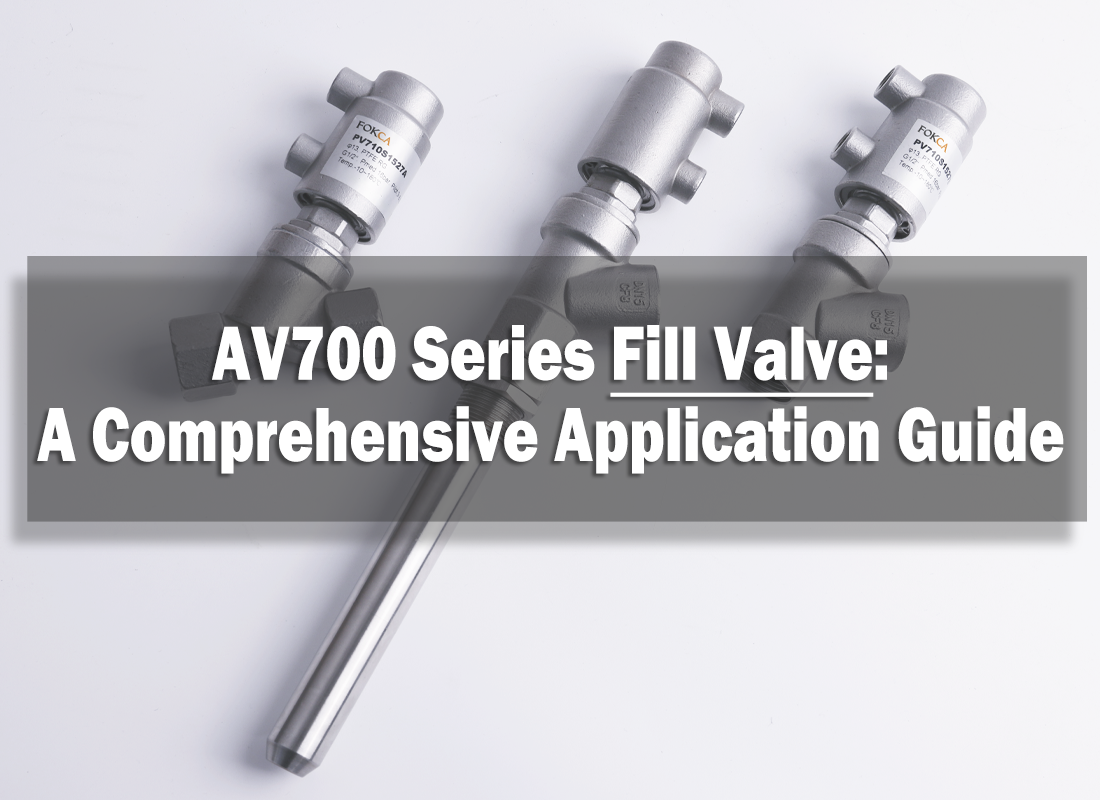
In automated production lines, consistency and cleanliness are everything. A leak during filling can ruin a batch; an unstable flow can throw off weight control and invite customer complaints. That’s where the AV700 Series fill valve steps in—engineered for factories that want predictable dosing, fast cycles, and long service life under real-world conditions.
The AV700 Series is designed as a purpose-built pneumatic fill valve rather than a generic on/off valve repurposed for filling. In daily operations, it shows its value in three ways: cycle speed, sealing reliability, and control stability.
Fast actuation shortens each fill cycle and raises throughput without redesigning the line.
Stable sealing resists drips and post-fill tailing, helping you keep target weights within tolerance.
Predictable control makes it easy for PLC timing to stay repeatable shift after shift.
For plants upgrading from manual dosing or aging actuators, the AV700 often pays back quickly through reduced waste and shorter downtime.

A production floor is not a lab. Air quality varies, temperature fluctuates, and cleaning cycles can be aggressive. The AV700 Series pneumatic filling valve is built with that reality in mind:
Rigid valve body for dimensional stability under pressure
Low-friction sealing geometry to minimize wear during high-frequency cycles
Balanced flow path that reduces turbulence and foaming when filling liquids with dissolved gas or light viscosity
Actuator tuning that delivers smooth opening/closing to avoid splash and stringing
| Feature | AV700 Series Fill Valve | General Pneumatic Valve |
|---|---|---|
Primary Function | Designed specifically for filling and dosing operations | Simple open / close control |
| Flow Control | Balanced flow path reduces turbulence and foaming | Straight-through opening without flow optimization |
Sealing Performance | Multi-layer sealing design to prevent dripping | Basic sealing, higher leakage risk |
| Cycle Stability | Supports high-frequency filling cycles | Not recommended for continuous dosing |
Dosing Accuracy | Optimized for repeatable output | Inconsistent under variable pressure |
| Application Fit | Bottling, dosing, packaging lines | Air or water control only |
Unlike a “converted” valve, a true filling valve focuses on what matters during dispensing—clean cutoff, accurate repeatability, and resistance to fatigue.
Different products demand different behavior from a valve. The AV700 Series auto fill valve adapts well across multiple industries because its control profile remains consistent even as conditions change.
Bottle and pouch filling in food & beverage
Detergents, coatings, and chemicals with mild corrosivity
Cosmetics and personal care liquids
Pharmaceuticals where stable dosing prevents batch deviation
Agricultural liquids that require reliable shutoff in dusty environments
If your process involves frequent start/stop cycles, the AV700’s pneumatic actuation keeps timing tight and maintenance predictable.

Unplanned splashing or overfill doesn’t just waste product—it forces rework and sanitation. The AV700 Series fill valve is engineered to deliver clean flow control:
Quick, controlled opening reduces pressure shock (and the mess that comes with it)
Positive sealing prevents after-drip and sticky residues on the nozzle
Repeatable timing keeps volumetric accuracy aligned with setpoints
When paired with a PLC or controller, the valve’s response window stays consistent—ideal for batching lines that rely on precision rather than operator judgment.
Many operations shift from electric actuators to a pneumatic fill valve for reliability and serviceability. The AV700 Series reinforces that choice:
Operational benefits
Simpler mechanics = fewer failure points
Compressed air tolerates moisture and dust better than electronics
Faster recovery after emergency stops
Lower repair cost and easier stock of spares
In short, pneumatic power keeps uptime high and troubleshooting simple.
Engineers don’t want a valve that forces a redesign of pipes, brackets, or wiring. The AV700 Series pneumatic filling valve is built to drop into real lines:
Flexible port orientation for compact layouts
Mounting options that fit both retrofit and new builds
Compatible with standard air preparation and control components
Easy timing adjustment during commissioning
This plug-in approach prevents a reliable valve from becoming a complicated project.
Selection is straightforward when you focus on four parameters:
<1> Media type (water-like, viscous, mildly corrosive)
<2> Temperature range and cleaning method
<3> Operating pressure and cycle rate
<4> Target volume accuracy
| Parameter | Recommendation | Notes |
|---|---|---|
| Fluid Type | Liquid / light chemical | For viscous media, confirm orifice size |
| Temperature Range | ≤ 120°C (standard) | High-temp versions available |
| Operating Pressure | 0.3 – 0.8 MPa | Compatible with compressed air systems |
| Control Method | Solenoid + PLC | Enables automatic fill operation |
| Installation Position | Vertical preferred | Improves cut-off reliability |
| Maintenance Cycle | Inspection every 6 months | Replace seals if leakage observed |
Match these to valve size, seal material, and actuation style, and the AV700 Series fill valve will run at its sweet spot—delivering both speed and accuracy.
A valve that’s easy to service keeps the line moving. The AV700 Series auto fill valve uses modular internals, so replacing a seal doesn’t mean replacing the valve. Routine inspection focuses on wear parts, not the entire assembly. That keeps planned maintenance short and unplanned stoppages rare.
If your current setup struggles with drips, inconsistent weights, or slow cycle times, the AV700 Series pneumatic fill valve offers a proven alternative. It is built for operators who want fewer adjustments, engineers who want predictable commissioning, and managers who want stable output.
If you also need to use any type of pneumatic valves in your system, you can contact us directly.
(FK9025)
 Pneumatic Actuator: The Core Power Unit Behind Industrial Automation
 Why Food Grade Diaphragm Valve Has Become the Standard in Hygienic Piping Systems
 AV700 Series Fill Valve: A Comprehensive Application Guide
 Pilot Pressure vs Working Pressure in Industrial Valves: Key Differences and Selection Guide
 Water Hammer Explained: Why Angle Seat Valves Are the Optimal Solution
You May Interest In

Get a free sample

FOKCA ©1998-2025 All Rights Reserved Sitemap