- sales@fokca.com info@fokca.com
- WhatsApp: +86 150 5749 1870

Custom Cylinders & System Solutions Manufacturer | Est. 1998
Custom Cylinders & System Solutions Manufacturer | Est. 1998

Dec 04, 2025
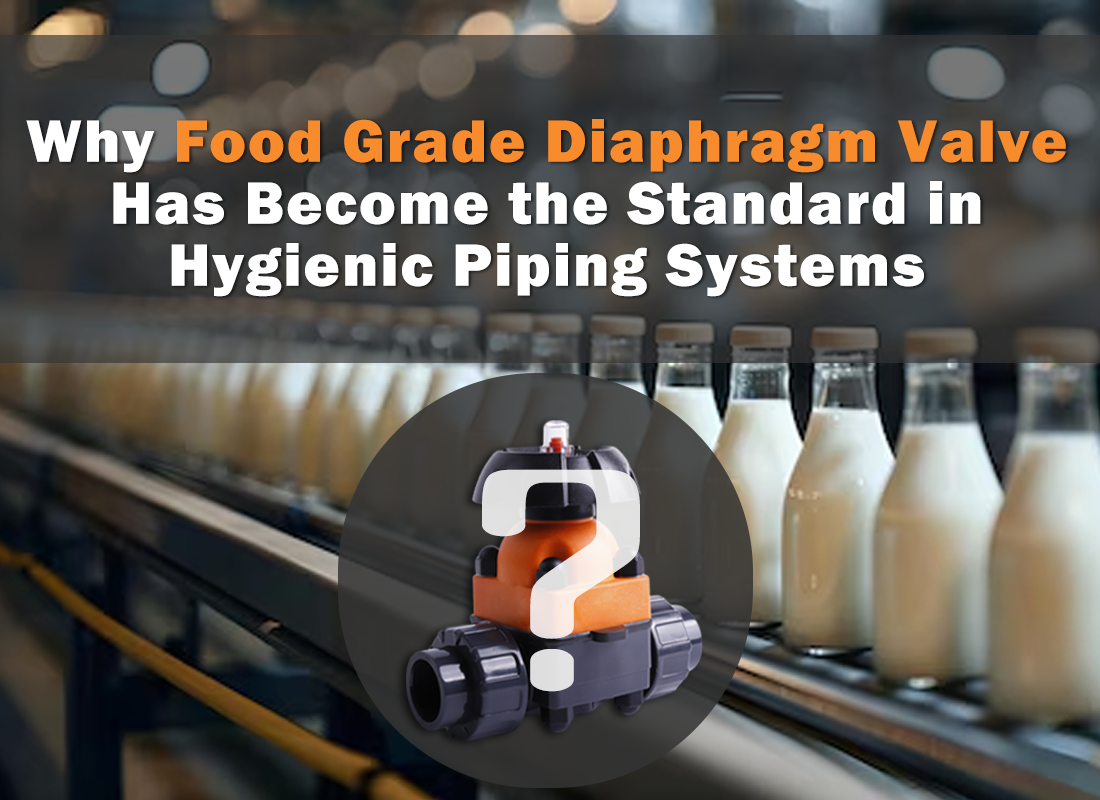
In the food processing industry, valves are not just simple “on/off” components — they directly determine product safety and quality stability. Any contamination, residue, or bacterial growth can lead to costly rework or even product recalls. That is why more and more beverage plants, dairy factories, and water treatment facilities are choosing the diaphragm valve as a core control component to build truly hygienic, cleanable, and reliable piping systems.

Unlike ball valves or gate valves, diaphragm valves feature a unique sealing structure that physically separates the fluid chamber from the actuator mechanism. The flowing medium is completely isolated from all moving parts, lubricated sections, and metal components inside the actuator, eliminating the risk of secondary contamination.
This design plays a critical role in modern food production facilities where hygiene compliance is strict. Engineers favor this configuration because even after long operating cycles, there is no concern that grease, condensate, or metal particles from the actuator will enter the product line. That is why food plants increasingly standardize food grade valves across their main pipelines.
In food processing, being able to clean equipment thoroughly is even more important than performance alone. Traditional valve designs often contain cavities or internal dead zones where liquid accumulates, encouraging bacterial growth. A high-quality diaphragm valve addresses this problem with a smooth internal passage that allows full draining.
During CIP (Clean-in-Place) or SIP (Sterilize-in-Place) procedures, cleaning solution and steam can flow directly through the entire valve body without disassembly. This enables efficient online cleaning and significantly reduces downtime.
For automated systems, the pneumatic diaphragm valve is particularly advantageous because it allows frequent switching without compromising internal hygiene.
The core component of any diaphragm valve is the diaphragm itself — and material choice determines performance. Most food industry valves are equipped with EPDM diaphragm materials due to their excellent resistance to heat, water, and mild acids or alkalis.
Key benefits of EPDM seals include:
•High resistance to hot water and steam
•Excellent compatibility with dairy and beverage products
•Strong aging resistance and crack prevention
•Cost-effective replacement over long service life
In real-world operation, a well-designed epdm seal can last for years under stable conditions. Many users report minimal maintenance requirements and consistent sealing performance throughout the product lifecycle.
| Application Area | Typical Media | Why Diaphragm Valve Is Used |
|---|---|---|
| Dairy processing | Milk, cream, yogurt | Shock-free shutoff, hygienic and easy to clean |
| Beverage production | Beer, juice, soft drinks | No dead zone in flow path, prevents contamination |
| Drinking water systems | Purified water, mineral water | Non-toxic EPDM diaphragm ensures water safety |
| Brewing industry | Wort, beer, fermentation liquid | Stable sealing under frequent operation |
| Food ingredient transfer | Syrup, oil, sauces | Resistant to fat and weak acids/alkalis |
| CIP cleaning systems | Hot water, detergents | High-temperature resistance, long diaphragm life |
| Pharmaceutical pre-treatment | Purified solutions | Clean structure meets hygiene requirements |
As food factories continue upgrading automation levels, manual valve operation no longer supports productivity and quality requirements. Accordingly, more plants integrate pneumatic diaphragm valve solutions for remote and automatic control. Pneumatic actuators respond quickly, require minimal maintenance, and integrate easily with PLC systems. They are ideal for continuous production environments where precision, consistency, and cleanliness are critical. In modern high-speed filling lines, diaphragm valves function as the “command units” of fluid control, ensuring accurate switching, repeatability, and safety.
When choosing a diaphragm valve for food processing, consider the following technical checkpoints:
①Is the diaphragm made of certified food-grade EPDM?
②Does the valve body meet hygienic surface finish standards?
③Is the valve suitable for CIP/SIP systems?
④Does it support pneumatic automation?
⑤Has the product undergone compliance testing or certification?
In the food industry, a truly reliable valve is not just “usable” — it is designed for long-term sanitary performance.
From structure to material, from automation compatibility to hygiene performance, diaphragm valves have become more than a product choice — they are now an industry standard. Whether for milk production, beverage processing, or water supply systems, investing in a high-quality diaphragm valve ensures safety, compliance, and operational efficiency.
If you are looking to upgrade your pipeline system with reliable, easy-to-clean, and automation-ready solutions, food grade diaphragm valves, you can contact us directly.
(FK9025)
You May Interest In





Get a free sample

FOKCA ©1998-2025 All Rights Reserved Sitemap