- sales@fokca.com info@fokca.com
- WhatsApp: +86 150 5749 1870

Custom Cylinders & System Solutions Manufacturer | Est. 1998
Custom Cylinders & System Solutions Manufacturer | Est. 1998

Dec 24, 2025
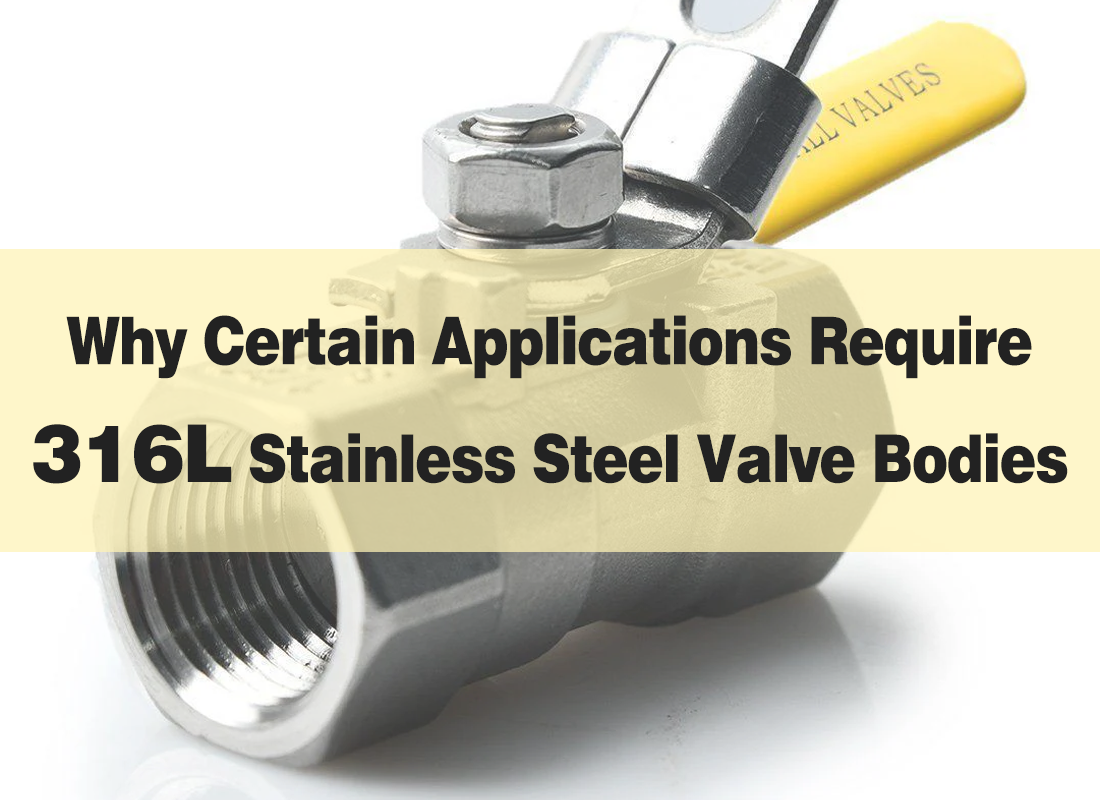
In industrial valve applications, the material of the valve body directly affects corrosion resistance, high-temperature performance, and service life. 316L stainless steel is widely recognized for its superior overall performance and is often the material of choice in demanding environments. This article explains the special properties of 316L and its advantages in key industrial applications.
316L is an austenitic stainless steel and a low-carbon version of 316. The “L” stands for Low Carbon, which is the main difference from standard 316 stainless steel. The low carbon content significantly reduces the risk of carbide precipitation during welding or high-temperature operations, preventing intergranular corrosion.
Compared with other common stainless steel grades, 316L offers a well-balanced combination of corrosion resistance, stress corrosion cracking resistance, and high-temperature stability. Although it comes at a higher price, the long-term reliability and durability of 316L make it a cost-effective choice in critical systems.
Standard 316 stainless steel can be susceptible to intergranular corrosion at high temperatures. When exposed to heat, carbon in the steel reacts with chromium to form chromium carbides, reducing the local chromium content and lowering corrosion resistance. This phenomenon is particularly noticeable during welding or heat treatment.
In high-temperature steam, chemical media, or corrosive fluid applications, 316 stainless steel may develop early corrosion or leakage. 316L addresses this issue by reducing carbon content, maintaining the valve body’s corrosion resistance and structural integrity, especially under welding or high-temperature conditions.
| Feature | 316 Stainless Steel | 316L Stainless Steel |
|---|---|---|
| Carbon Content | Higher (≤0.08%) | Low (≤0.03%) |
| Risk of Intergranular Corrosion | Higher at high temperatures, especially after welding | Very low due to reduced carbon content |
| Weldability | Moderate; requires post-weld treatment to prevent corrosion | Excellent; minimal risk of carbide precipitation |
| High-Temperature Performance | Susceptible to corrosion in high-temp environments | Better stability and corrosion resistance at elevated temperatures |
| Cost | Lower | Higher, but justified for critical applications |
| Typical Applications | General-purpose chemical or water systems, non-critical pipelines | High-temperature, welding-intensive, corrosive chemical, petrochemical, and mining systems |
Chemical and petrochemical pipelines often carry acids, alkalis, salts, or organic solvents. 316L valve bodies can withstand long-term exposure to these corrosive media without degradation, ensuring safe operation. They also retain excellent corrosion resistance around welded areas, reducing leakage risk.
High temperatures during welding can trigger intergranular corrosion in conventional stainless steel. 316L’s low-carbon design prevents carbide precipitation, preserving corrosion resistance near welds—a critical advantage for industrial valves that require high-quality weld connections.
Mining slurries, acidic solutions, and corrosive mineral fluids can aggressively attack ordinary stainless steel. 316L’s superior corrosion resistance and low-carbon design allow valves to maintain long-term stability, reduce maintenance frequency, and prolong service life.
316L performs better than 316 in high-temperature steam, hot water, or high-pressure chemical systems. Even under long-term use or fluctuating temperatures, it resists intergranular corrosion and structural degradation.
While 316L is more expensive, its advantages are clear in critical industrial applications. Key factors for selecting 316L include:
Corrosive media: acids, alkalis, salts, slurries, organic solvents
High-temperature or welding environments: resistance to intergranular corrosion
Long-term operation requirements: reduce maintenance and replacement
System safety demands: prevent leaks that could compromise processes or the environment
In chemical, petrochemical, welding-heavy, and mining industries, 316L stainless steel valve bodies are often the standard choice. Their high reliability and corrosion resistance significantly reduce system risk and maintenance costs, making the higher initial investment worthwhile.
316L stainless steel offers low carbon content, excellent corrosion resistance, and high-temperature stability, making it one of the best-performing materials for industrial valve bodies. In applications such as chemical processing, petrochemical systems, welding environments, and mining, 316L ensures safe and stable operation while extending valve life and reducing long-term maintenance. Understanding its unique properties and application advantages is essential when selecting valves for demanding industrial conditions.
(FK9025)
You May Interest In





Get a free sample

FOKCA ©1998-2025 All Rights Reserved Sitemap