- sales@fokca.com info@fokca.com
- WhatsApp: +86 150 5749 1870

Custom Cylinders & System Solutions Manufacturer | Est. 1998
Custom Cylinders & System Solutions Manufacturer | Est. 1998

Jul 30, 2025
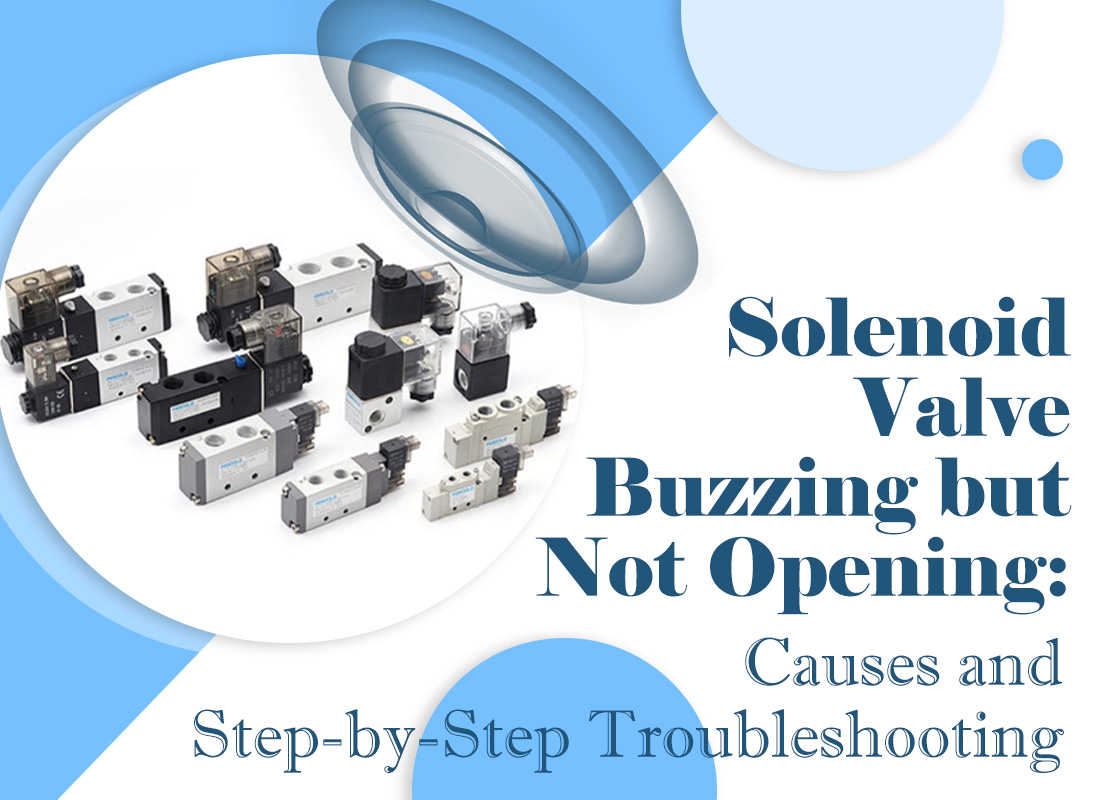
In many industrial systems, a solenoid valve may produce a noticeable humming or buzzing sound when energized, yet fail to actuate. This issue is common in pneumatic solenoid valves, water solenoid valves, and even gas solenoid valve applications. The sound indicates that the coil is powered, but the internal mechanism is not moving as expected.
For engineers and maintenance teams working with electric solenoid valves, understanding this symptom is critical. A valve that hums without opening can interrupt process flow, reduce system efficiency, and even lead to equipment damage if not diagnosed properly.
A typical direct acting solenoid valve operates by energizing a coil that creates a magnetic field. This magnetic force pulls the plunger or valve core, opening or closing the flow path. Whether it is a normally closed solenoid valve or a 3 way solenoid valve, the principle remains the same.
When functioning correctly, the valve produces a brief clicking sound as it switches. A continuous humming sound without movement usually indicates that the coil is energized but mechanical movement is restricted or insufficient.
One of the most frequent causes is low voltage. The coil in a 12V solenoid valve or higher-rated unit requires sufficient voltage to generate enough magnetic force. If the supply voltage drops below 85–90% of rated value, the plunger may not fully actuate.
This situation is common in long cable runs or overloaded circuits in solenoid valve HVAC or industrial automation systems.
In many air solenoid valves and pneumatic solenoid valve systems, contamination or lack of lubrication can cause the valve core to stick. Even though the coil generates magnetic force, it cannot overcome the mechanical resistance.
This issue often appears in environments with dust, oil mist, or moisture, especially in solenoid valve for irrigation systems or outdoor installations.
Inside most normally open solenoid valves and normally closed designs, a spring is used to return the valve to its default position. Over time, repeated cycling can cause the spring to weaken or deform.
A fatigued spring may fail to balance the magnetic force properly, leading to unstable movement or complete failure to open in solenoid control valve applications.
Foreign particles can accumulate inside the valve body, especially in water solenoid valves or irrigation solenoid valves. These particles may block the pilot orifice or main flow channel.
In such cases, the valve coil works normally, but the internal path remains blocked, preventing fluid flow even if the plunger moves slightly.
Typical Fault Diagnosis Reference Table
| Symptom | Possible Cause | Inspection Method | Solution |
|---|---|---|---|
| Buzzing sound, no movement | Low voltage | Measure coil voltage | Stabilize power supply |
| Buzzing with slight vibration | Valve core stuck | Manual push test | Clean or replace valve core |
| Intermittent operation | Spring fatigue | Disassemble inspection | Replace spring |
| No flow despite actuation | Internal blockage | Check inlet filter | Clean internal passages |
These troubleshooting steps are commonly used in maintenance manuals for industrial solenoid valves and are applicable across different brands and applications.
In real-world applications, diagnosing a solenoid valve buzzing but not opening requires a structured approach. Engineers often follow a step-by-step method to isolate the issue efficiently.
First, check the electrical side. Measure the voltage at the coil terminals while the valve is energized. If the voltage is unstable or below specification, the issue likely lies in the power supply or wiring.
Next, inspect the coil itself. A damaged or overheated coil in an electric solenoid valve may still produce sound but fail to generate sufficient magnetic force.
Then move to the mechanical components. Remove the valve and check whether the plunger can move freely. In many pneumatic solenoid valves, manually pressing the core can quickly reveal sticking problems.
Finally, inspect for contamination. Disassemble the valve body and look for debris, rust, or oil buildup. Cleaning the internal components often restores normal operation in water solenoid valve and fluid control systems.
In industrial environments where solenoid valves operate continuously, preventing this type of failure is more efficient than repeated repairs. Maintenance teams often adopt several practical measures:
◆ Ensure stable voltage supply and proper wiring design
◆ Install filters to prevent debris entering the valve
◆ Schedule periodic inspection and cleaning of valve internals
◆ Replace worn springs and seals before failure occurs
When these practices are followed, most solenoid valve buzzing issues can be avoided, ensuring reliable operation across pneumatic, water, and gas control systems.
(FK9025)
You May Interest In
Jul 28, 2025 Blog
How to check air solenoid valve?
Jul 24, 2025 Blog
How to check the solenoid valve?

Jan 14, 2025 Blog
Attention to the Installation of Solenoid Valves



Get a free sample

FOKCA ©1998-2025 All Rights Reserved Sitemap