- sales@fokca.com info@fokca.com
- WhatsApp: +86 150 5749 1870

Custom Cylinders & System Solutions Manufacturer | Est. 1998
Custom Cylinders & System Solutions Manufacturer | Est. 1998

Feb 04, 2026
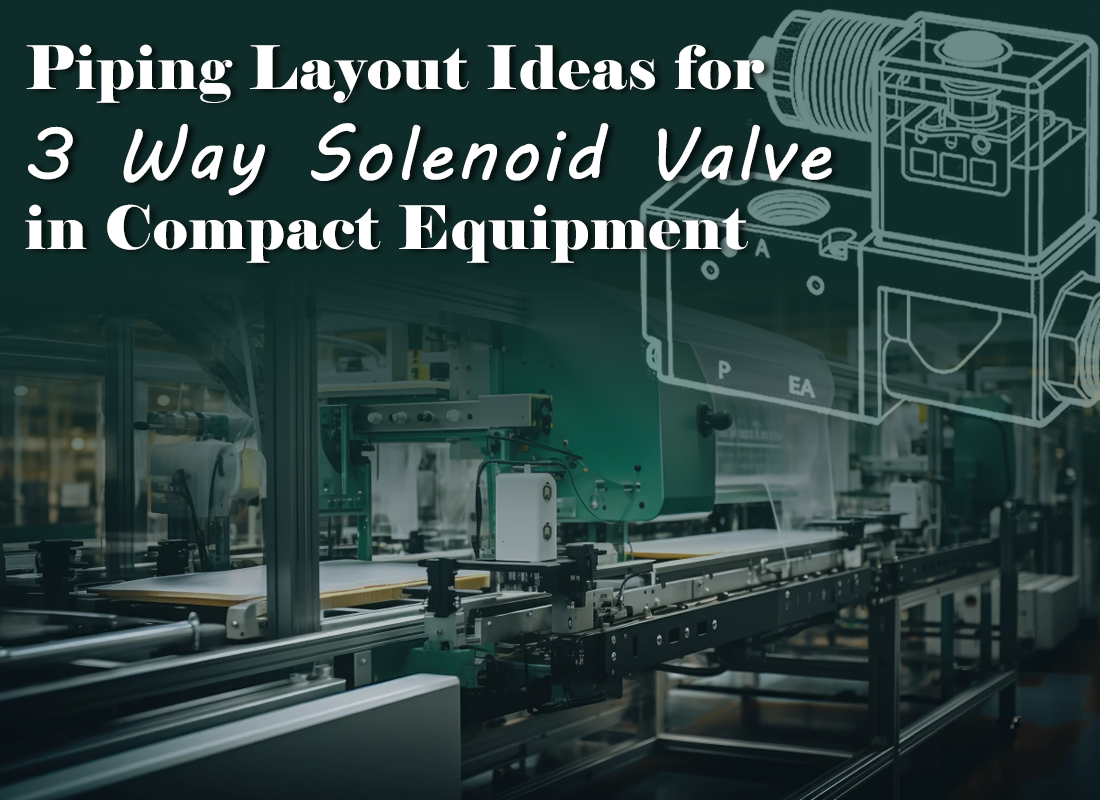
Space inside compact machinery is always limited, while functional requirements continue to grow. A 3 way solenoid valve can complete both supply and exhaust switching within one body, making it ideal for small automation units. However, the multi-port design also increases piping complexity, and many performance issues originate from poor layout rather than the valve itself.
Compared with a two-port valve, a 3/2 way solenoid valve includes inlet, working port, and exhaust port. If hoses are connected only based on the nearest distance, pipelines tend to cross each other and create excessive bends. These bends raise pressure loss and slow actuator response. In systems using a 3-way pneumatic solenoid valve to control single acting cylinders, blocked exhaust can directly cause incomplete return strokes.
A practical rule is to arrange the valve around the actuator instead of forcing the actuator to fit the valve position. Determining the cylinder location first and then planning the shortest path for the valve usually reduces both hose length and fitting quantity.
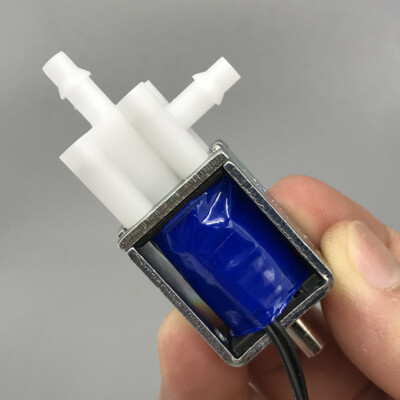
When installing a compact 3 way solenoid valve, mounting the valve and actuator on the same plate is effective. Centralized air supply through modular blocks shortens pipelines and simplifies maintenance. If flexible tubing must be used, avoid a sharp 90-degree turn at the valve port; add a short straight section or an elbow connector for transition.
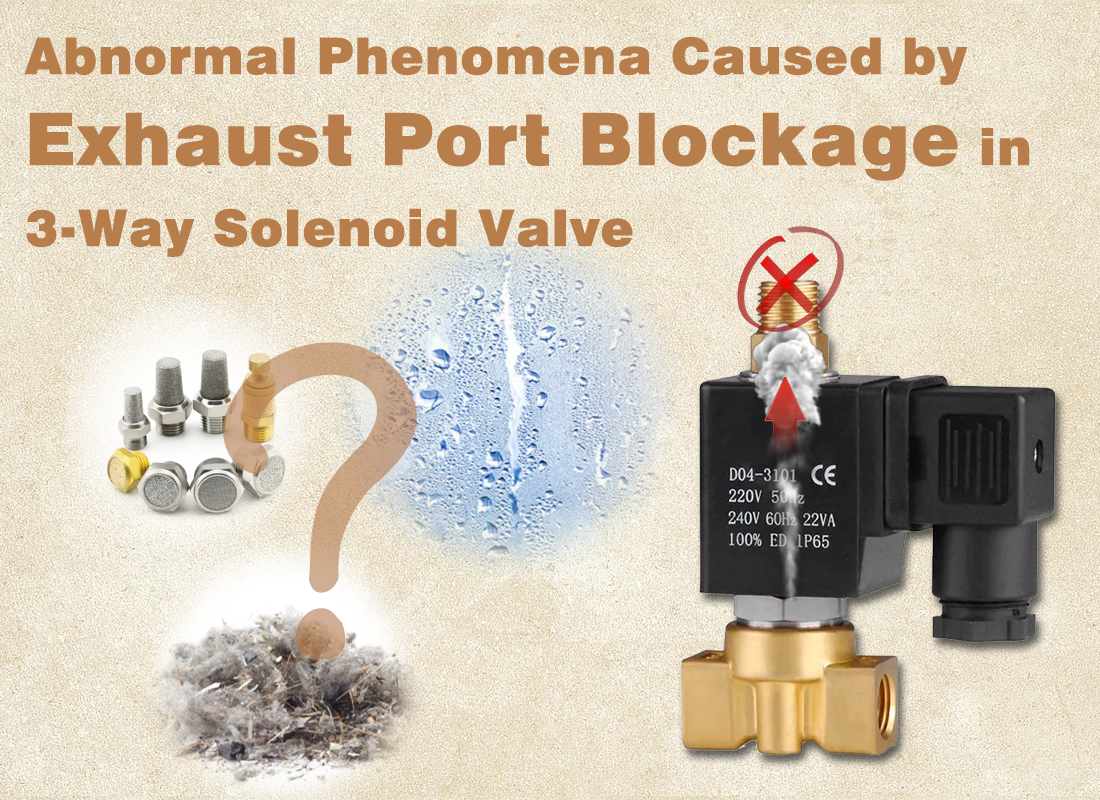
The exhaust side deserves special attention. An exhaust port valve 3 way facing inward may collect dust or be squeezed by cables. Guiding exhaust to a silencer or common exhaust block keeps the path clear. For applications driven by high speed 3 way solenoid valve, such as dispensing or sorting machines, smooth exhaust is essential for maintaining cycle rhythm.
Different structures show different friendliness to piping. A 3 way direct acting solenoid valve is compact and insensitive to mounting orientation, suitable for very small devices. A 3 way pilot operated solenoid valve provides higher flow but requires stable pilot pressure, so filters and regulators must be considered in the layout.
For batch equipment, 3 way solenoid valve manifold mounting is often the best solution. Unified port directions and standardized fittings reduce assembly time and make later expansion easier.
| Layout Method | Pressure Loss | Maintenance | Suitable Valve Type |
|---|---|---|---|
| Direct hose with sharp bends | High | Difficult | Any |
| Short straight + elbow | Medium | Good | 3 way solenoid valves |
| Manifold centralized | Low | Excellent | modular manifold solenoid valves |
| Exhaust centralized | Lowest | Excellent | industrial automation solenoid valves |
Complex crossing makes it hard for technicians to identify ports, leading to confusion between 3 way normally closed solenoid valve and normally open type. Over-long hoses create air volume that weakens the advantage of a fast response 3 way solenoid valve. Many cases considered as valve failure are finally traced back to piping design.
◆ Keep short straight sections near ports and avoid immediate sharp bends
◆ Direct exhaust to accessible area with silencer
◆ Consider wiring route when choosing coil voltage 3 way valve
◆ Add fixing points in vibration environments
◆ Mark ports clearly to prevent misconnection
A thoughtful layout allows 3 way valve automation to work at its real capability and makes maintenance easier for distributors and end users.
(FK9025)
You May Interest In



Get a free sample

FOKCA ©1998-2025 All Rights Reserved Sitemap