- sales@fokca.com info@fokca.com
- WhatsApp: +86 150 5749 1870

Custom Cylinders & System Solutions Manufacturer | Est. 1998
Custom Cylinders & System Solutions Manufacturer | Est. 1998

Apr 28, 2026
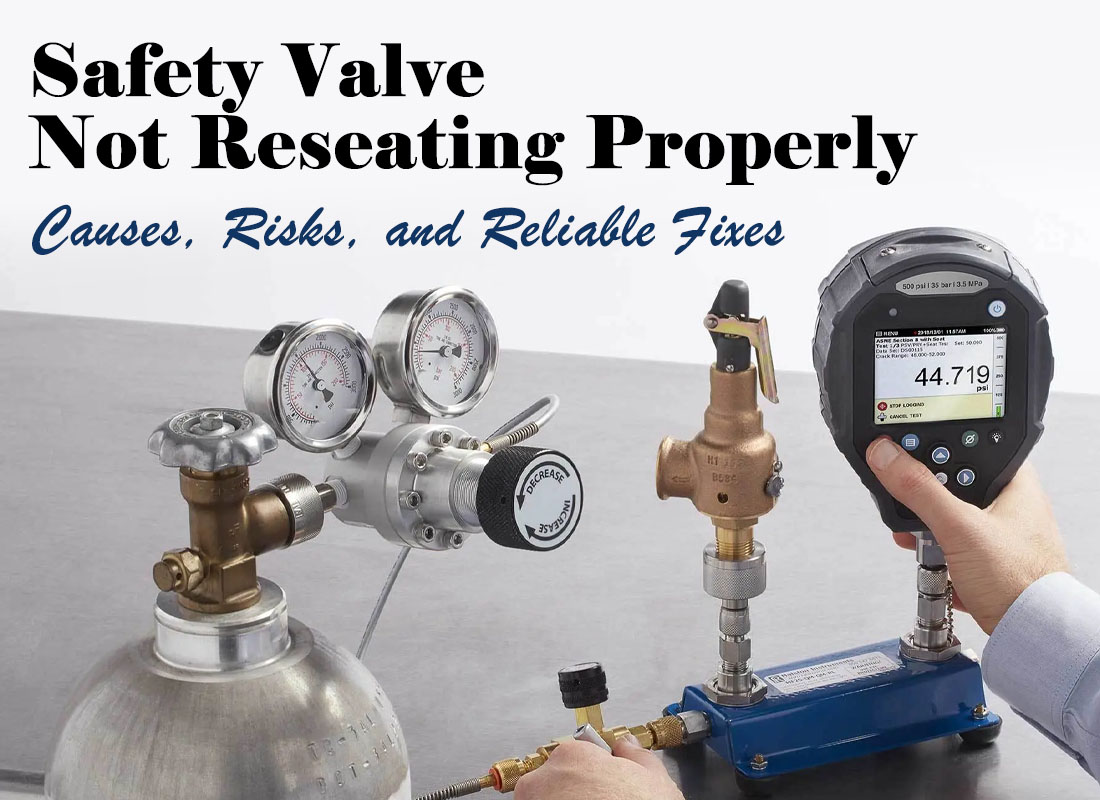
A safety valve not reseating properly is more than a minor leak—it signals that the system has lost its ability to maintain pressure integrity. In normal operation, a safety relief valve should open at a defined pressure and close tightly once conditions stabilize. When it fails to reseat, continuous leakage or pressure loss occurs, often reducing system efficiency and increasing safety risks.
In steam or compressed air systems, this issue often appears after repeated discharge cycles. A steam safety relief valve exposed to rapid pressure changes may experience wear on sealing surfaces, preventing full closure. Over time, even a small imperfection can lead to persistent leakage, especially in high-frequency operations.
The most frequent cause is contamination. Debris, scale, or corrosion particles can lodge between the disc and seat, preventing proper sealing. This is particularly common in older pipelines or systems without adequate filtration. A safety relief valve leaking under these conditions often requires cleaning rather than immediate replacement.
Spring fatigue is another key factor. In a spring loaded safety relief valve, the spring must return the disc to its seat with precise force. After thousands of cycles, the spring may weaken, reducing closing pressure accuracy. Similarly, improper installation or misalignment can cause uneven seating, especially in larger pressure safety valves.
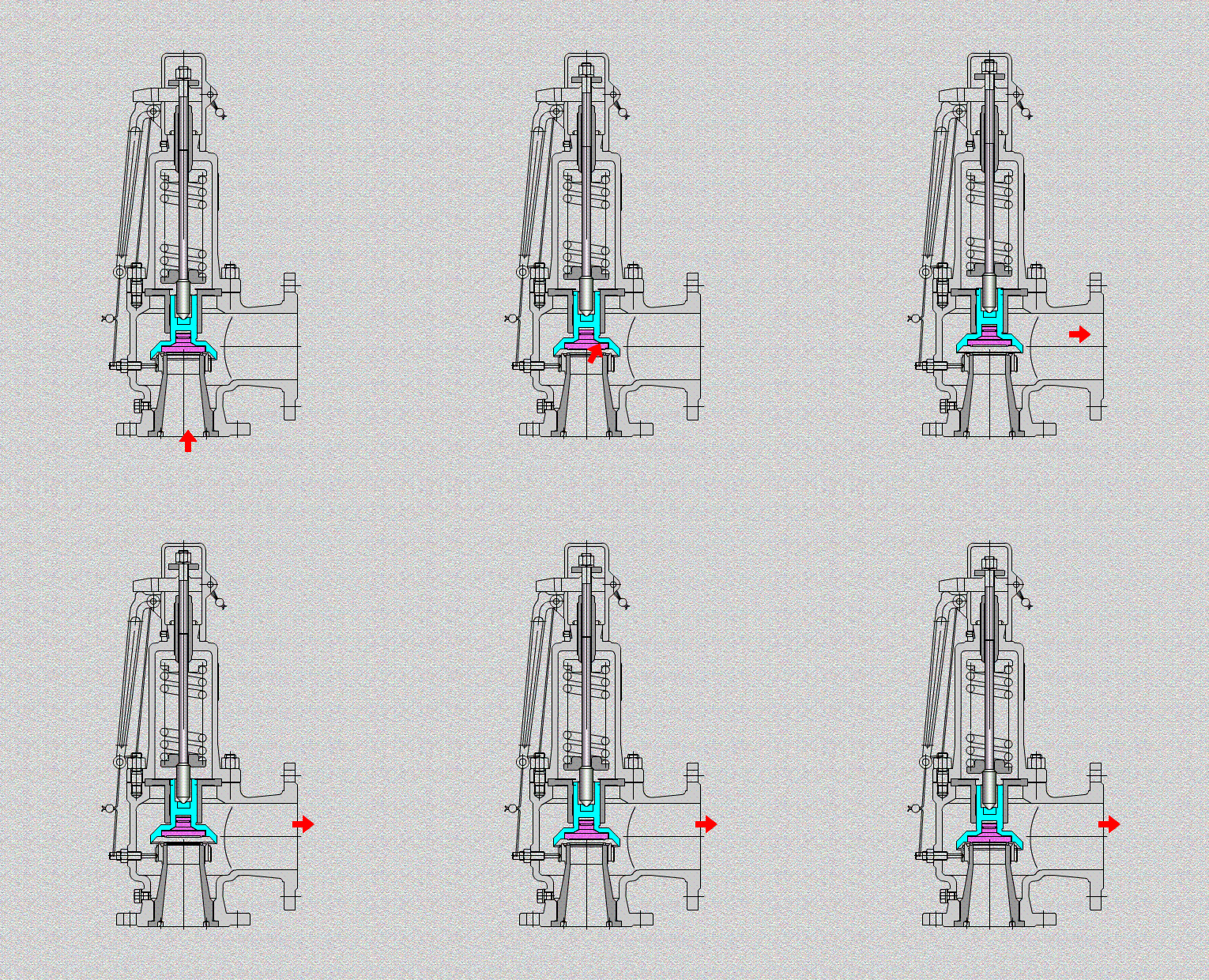
Temperature variations also play a role. In hot water systems, a water heater safety valve may fail to reseat due to thermal expansion or material deformation. According to valve maintenance studies, thermal stress contributes to nearly 20% of sealing failures in industrial valves.
Understanding how different valves respond helps diagnose reseating issues. A pressure relief valve and safety valve differ mainly in closing characteristics. Safety valves are designed for rapid opening and tight shutoff, while relief valves modulate flow gradually.
In liquid systems, gradual closing reduces shock but may increase the risk of minor leakage. In contrast, a boiler safety valve must snap shut quickly, making it more sensitive to seat damage. Selecting the correct valve type for the application directly affects reseating reliability.
When a valve fails to reseat, engineers typically evaluate both mechanical condition and system behavior. The following table summarizes typical causes and corrective actions:
| Problem | Root Cause | Recommended Solution |
|---|---|---|
| Continuous leakage | Debris on seat | Clean valve and inspect sealing surface |
| Partial reseating | Spring fatigue | Replace spring or recalibrate valve |
| Intermittent leakage | Pressure fluctuation | Stabilize upstream pressure |
| Persistent discharge | Valve damage or wear | Replace with new safety relief valve |
| Delayed closing | Oversized valve | Recalculate sizing and flow conditions |
Certain industries encounter this problem more often due to demanding operating conditions. In boiler systems, a boiler safety relief valve leaking can lead to energy loss and unstable pressure control. In compressed air systems, an air compressor safety valve may struggle to reseat if pressure spikes occur frequently.
Gas-related applications also require attention. A gas safety valve used in ovens or burners must maintain tight sealing to prevent leakage. Even small reseating failures in these environments can lead to safety hazards, making regular inspection essential.
In hydraulic or oil systems, a hydraulic safety valve may experience similar issues when fluid contamination is present. These systems demand higher cleanliness standards to ensure reliable operation.
Preventing reseating failure begins with proper system design. Installing filters upstream can significantly reduce contamination risks. Choosing a stainless steel safety relief valve improves resistance to corrosion and wear, especially in harsh environments.
For systems with fluctuating pressure, upgrading to a pilot operated safety relief valve provides better control and smoother operation. These valves reduce sudden pressure shocks, which helps preserve seat integrity over time.
Routine maintenance is equally important. Regular inspection intervals should include seat condition checks, spring testing, and verification of set pressure. A well-maintained safety pressure relief valve can operate reliably for years without leakage issues.
Addressing reseating problems requires both technical understanding and practical adjustments:
◆ Maintain clean system conditions to prevent debris buildup
◆ Ensure correct valve sizing for actual operating conditions
◆ Replace worn springs or sealing components promptly
◆ Monitor pressure fluctuations and stabilize system control
◆ Consider advanced valve designs for demanding applications
A properly functioning safety valve ensures not only compliance with safety standards but also long-term system efficiency. Even small improvements in maintenance and selection can eliminate persistent leakage and extend equipment life.
(FK9025)
You May Interest In
Sep 12, 2025 Blog
Staying protected with spring loaded safety valves
Apr 22, 2026 Blog
PVC vs Metal Check Valve: Real-World Selection Guide
Apr 20, 2026 Blog
Swing vs Lift Check Valve: Key Differences Explained


Get a free sample

FOKCA ©1998-2025 All Rights Reserved Sitemap



 None
None