- sales@fokca.com info@fokca.com
- WhatsApp: +86 150 5749 1870

Custom Cylinders & System Solutions Manufacturer | Est. 1998
Custom Cylinders & System Solutions Manufacturer | Est. 1998

Mar 06, 2026
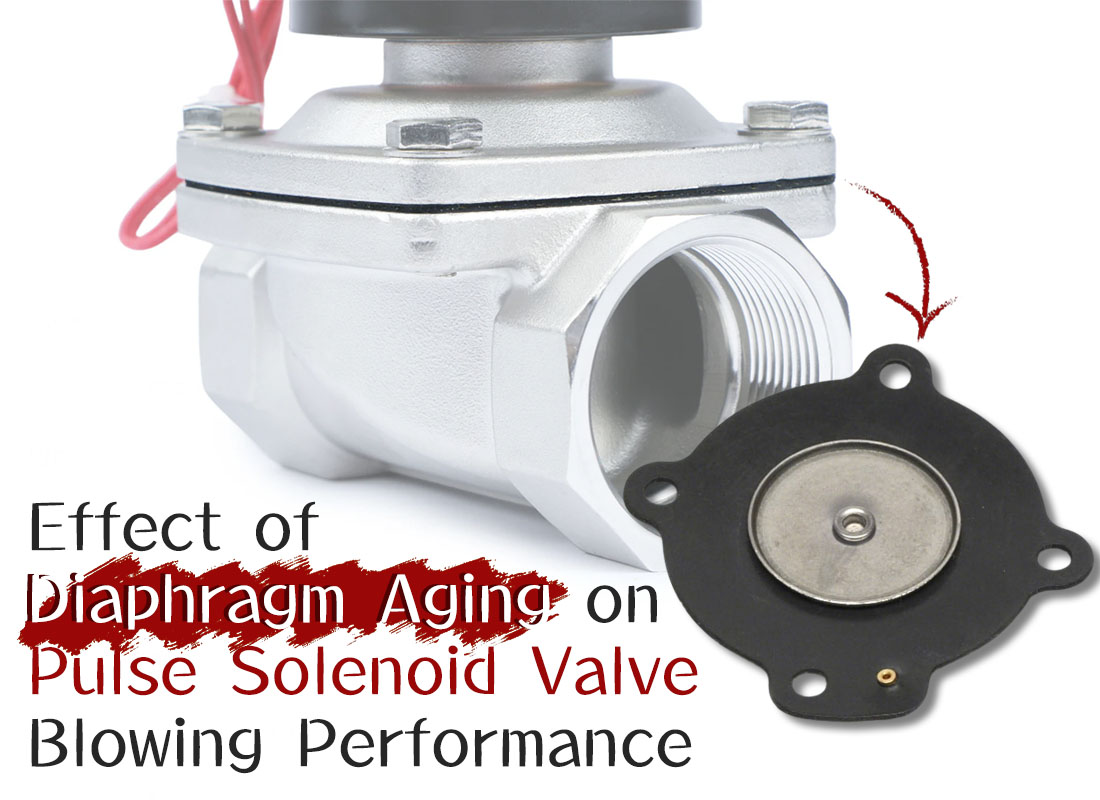
In industrial dust collection systems, the pulse solenoid valve is the key actuator responsible for cleaning filter bags through compressed air pulses. During operation, the valve releases a large volume of compressed air within milliseconds to generate a high-intensity air jet that removes dust from filter surfaces.
Inside most pulse jet solenoid valve designs, the diaphragm is the central functional component. It separates the air chambers and controls the rapid opening of the valve. Because of continuous pressure cycling and mechanical movement, the pulse valve diaphragm is also the most common wear component in the system.
When diaphragm elasticity decreases over time, the dynamic performance of the pulse solenoid valve for dust collector can change significantly, affecting both opening response and pulse airflow intensity.
A typical pilot operated pulse solenoid valve uses a diaphragm to control airflow between the compressed air chamber and the outlet port. When the solenoid pulse valve receives an electrical signal from the solenoid valve pulse controller, a small pilot channel opens first.
This releases pressure above the diaphragm, creating a pressure difference that lifts the diaphragm quickly. As a result, the main valve opens and compressed air is discharged rapidly into the cleaning pipe.
This structure allows a fast response pulse solenoid valve to generate a high-energy air pulse within milliseconds. Therefore, diaphragm-type valves are widely used in pulse solenoid valve for filtration system, pulse solenoid valve for baghouse, and pulse solenoid valve for pneumatic cleaning applications.
For optimal operation, the diaphragm must maintain good elasticity, fatigue resistance, and sealing capability.
As the diaphragm ages, rubber materials gradually lose flexibility due to heat, pressure cycling, and chemical exposure. In a pulse operated solenoid valve, reduced diaphragm elasticity directly affects the valve opening speed.
Instead of lifting instantly, an aged diaphragm reacts more slowly to the pressure differential created by the pilot signal. In a pulse solenoid valve control system, the electrical control timing may remain unchanged, but the actual airflow release becomes delayed.
This delay reduces the sharp peak of compressed air that normally occurs when the valve opens. In high-frequency cleaning systems using pulse frequency solenoid valve operation, even small delays can gradually reduce cleaning effectiveness.
Another important effect of diaphragm aging is the reduction of maximum lift height. When the diaphragm becomes stiff, it may not fully open during the pulse cycle.
For larger high pressure pulse solenoid valve installations or pulse solenoid valve for compressed air systems, this restriction can significantly reduce the instantaneous airflow rate.
| Diaphragm Condition | Opening Response Time | Peak Air Flow | Cleaning Efficiency |
|---|---|---|---|
| New diaphragm | Very fast (milliseconds) | Maximum | Stable |
| Slight aging | Slight delay | Slight reduction | Minor impact |
| Moderate aging | Noticeable delay | Reduced | Cleaning uneven |
| Severe aging | Slow response | Significantly reduced | Poor dust removal |
When airflow intensity decreases, the pulse cleaning solenoid valve cannot effectively detach dust layers from filter bags. As a result, dust accumulation increases and the pressure drop across the filtration system gradually rises.
In practical operation, engineers often detect diaphragm wear through early operational changes during pulse solenoid valve troubleshooting.
Typical early signs include:
◆ Weaker or irregular pulse blowing sound
◆ Longer air discharge duration
◆ Increasing dust collector pressure drop
◆ Uneven cleaning performance between valves
In large pulse solenoid valve for dust collector system installations, aging diaphragms can also lead to airflow imbalance across the cleaning manifold.
Another possible issue is a pulse valve leakage problem. When diaphragm sealing performance deteriorates, compressed air may leak slowly between pulse cycles, increasing air consumption.
The lifespan of a solenoid valve diaphragm depends on several operating factors.
High temperature conditions, oil contamination, and aggressive chemicals can accelerate rubber hardening in diaphragm solenoid pulse jet valve designs. Systems operating with very high cleaning frequency in a pulse cycle solenoid valve configuration also impose higher fatigue stress on the diaphragm.
Additionally, moisture or particle contamination in compressed air can cause abrasion or sealing damage over time.
For stable operation of pulse solenoid valve in pneumatic systems, routine inspection of diaphragm condition is recommended.
Engineers typically consider:
◆ Checking elasticity of the pulse solenoid valve diaphragm periodically
◆ Establishing replacement intervals based on pulse frequency
◆ Maintaining clean and dry compressed air supply
◆ Inspecting diaphragms when system pressure drop rises unexpectedly
For large pulse solenoid valve for bag filter systems, timely diaphragm maintenance ensures consistent pulse intensity, improves cleaning performance, and reduces compressed air consumption.
(FK9025)
You May Interest In


Apr 02, 2025 Blog
How Does the Pulse Valve Work





Get a free sample

FOKCA ©1998-2025 All Rights Reserved Sitemap