- sales@fokca.com info@fokca.com
- WhatsApp: +86 150 5749 1870

Custom Cylinders & System Solutions Manufacturer | Est. 1998
Custom Cylinders & System Solutions Manufacturer | Est. 1998

Feb 17, 2026

In systems that require frequent cleaning or product changeover, residual media is often the hidden cause of contamination and extended downtime. In many cases, the issue does not come from the process fluid itself, but from internal valve geometry. Traditional valve designs tend to create dead zones where fluid stagnates, making complete drainage difficult. This is where the diaphragm valve demonstrates a clear structural advantage.
In globe or ball valves, internal cavities around the seat, stem area, and sealing interfaces naturally form low-velocity zones. During operation, fluid can become trapped in these areas, especially in low-flow or intermittent processes. Even after draining, small volumes may remain, leading to cross-contamination or cleaning inefficiencies.
These limitations become more critical in hygienic or chemical processes, where even minimal residue can affect product quality or system safety.

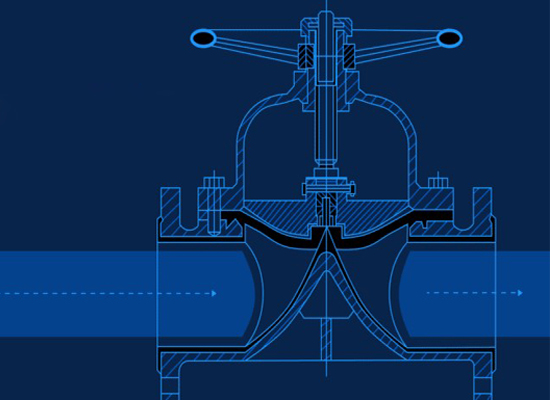
A straight-through diaphragm valve allows fluid to pass through the valve body with minimal directional change. The flow path closely follows the pipeline axis, reducing turbulence and eliminating enclosed cavities. When the valve opens, the continuous flow profile helps flush residual media out of the system more effectively.
In comparison, a weir-type diaphragm valve introduces a raised sealing weir, offering better throttling control while still maintaining good drainability. Both designs significantly outperform traditional valves in terms of cleanability.
The flexible diaphragm is the defining element of a diaphragm control valve. During operation, the diaphragm seals directly against the valve body without leaving voids behind. When lifted, it opens the flow path smoothly, avoiding the pocket formations seen in seat-based valves.
Materials such as PTFE are commonly used in PTFE diaphragm valve designs, providing chemical resistance and low surface adhesion, further reducing residual buildup.
In food, pharmaceutical, and biotechnology industries, CIP and SIP procedures are routine. A sanitary diaphragm valve supports these processes by allowing complete drainage and fast, repeatable cleaning cycles. This directly reduces water consumption, cleaning agents, and downtime.
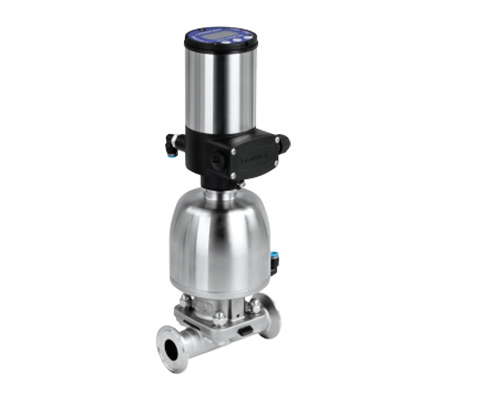
For automated systems, pneumatic diaphragm valve and automated diaphragm valve configurations enable remote operation without compromising hygiene. Actuation components remain fully isolated from the process fluid, preserving system integrity.

The comparison highlights why diaphragm valves are increasingly selected for applications where residual media must be minimized.
Despite their advantages, diaphragm valves must be selected carefully. High-temperature or high-pressure conditions require compatible diaphragm materials and proper maintenance planning. 316L stainless steel diaphragm valve bodies offer excellent corrosion resistance, but diaphragms remain wear components that should be inspected regularly.
For engineers and buyers, choosing a diaphragm valve should be driven by process cleanliness requirements, cleaning frequency, and automation needs rather than cost alone.
(FK9025)
You May Interest In


Get a free sample

FOKCA ©1998-2025 All Rights Reserved Sitemap