- sales@fokca.com info@fokca.com
- WhatsApp: +86 150 5749 1870

Custom Cylinders & System Solutions Manufacturer | Est. 1998
Custom Cylinders & System Solutions Manufacturer | Est. 1998

Dec 19, 2025
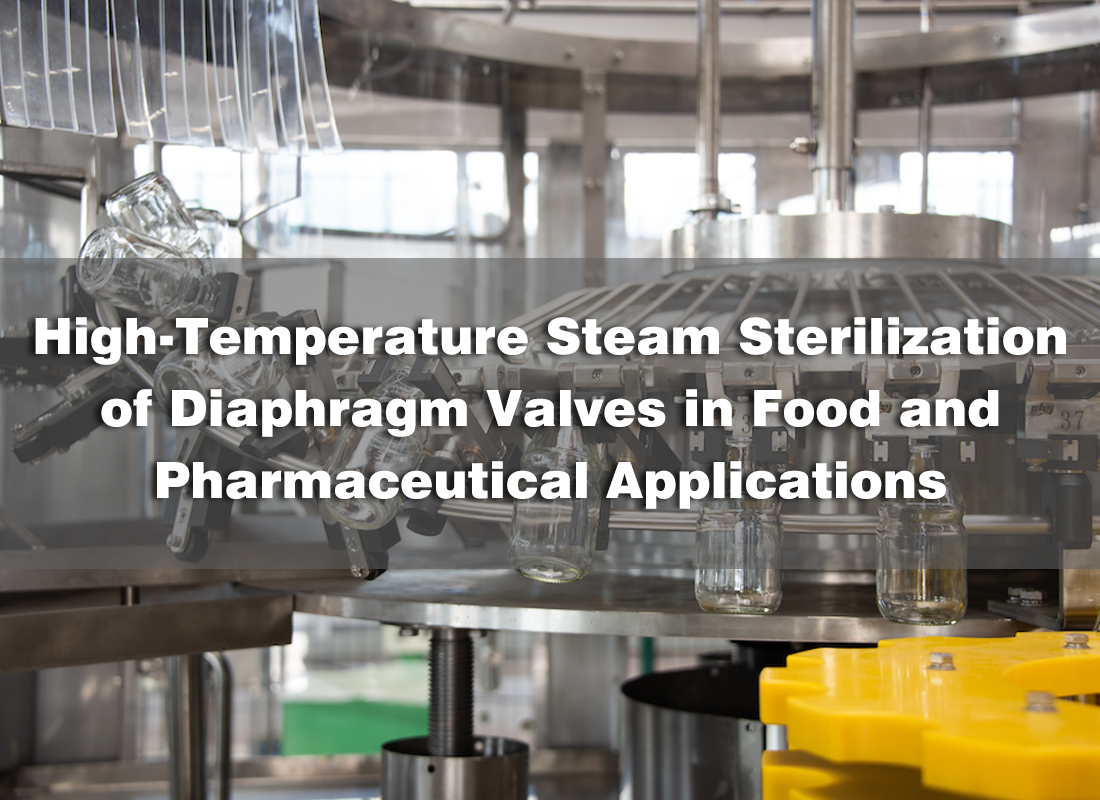
In food processing and pharmaceutical manufacturing, diaphragm valves are widely used for fluid control due to their simple structure and hygienic design. Because these industries require strictly controlled sterile environments, diaphragm valves are frequently operated in combination with high-temperature steam sterilization to ensure process safety and regulatory compliance.
The operating principle of diaphragm valves makes them particularly suitable for sterile systems. The diaphragm completely isolates the process medium from the actuator, preventing lubricants or external contaminants from entering the flow path. This design advantage becomes especially important during high-temperature steam sterilization, where steam must directly contact all wetted surfaces without affecting the drive mechanism.
Compared with ball valves or gate valves, diaphragm valves have minimal internal dead space. Steam can therefore reach the entire flow path more effectively, resulting in more reliable sterilization performance. For this reason, diaphragm valves are commonly used in aseptic filling lines, fermentation systems, and purified water distribution networks.
High-temperature steam sterilization typically operates within a temperature range of 121–135°C, with some processes reaching even higher temperatures. These conditions impose specific requirements on diaphragm valve materials and construction:
◆ Diaphragm heat resistance: Common diaphragm materials such as EPDM or PTFE composite diaphragms must retain elasticity and sealing performance at elevated temperatures.
◆ Valve body stability: Stainless steel valve bodies, especially 316L, offer excellent corrosion resistance under repeated steam exposure and cleaning cycles.
◆ Sealing reliability: Even after multiple sterilization cycles, the valve must maintain consistent sealing performance without micro-leakage.
If a diaphragm valve is not designed for steam sterilization, prolonged high-temperature exposure can accelerate diaphragm aging and lead to premature seal failure.
In practical applications, the impact of high-temperature steam sterilization on diaphragm valves is cumulative rather than instantaneous. Common issues include:
◆ Diaphragm hardening or deformation: Repeated exposure to high temperatures may cause elastomer diaphragms to lose flexibility, affecting valve responsiveness.
◆ Seal surface fatigue: Continuous thermal expansion and contraction can create stress at the diaphragm–seat interface.
◆ Heat transfer to actuators: Poorly designed valves may allow heat to reach the actuator, reducing its service life.
To minimize these risks, diaphragm valves should be selected specifically for steam-in-place (SIP) conditions, and sterilization parameters should be carefully controlled.
In pharmaceutical purified water and water-for-injection systems, diaphragm valves are often integrated into SIP processes. After production, steam sterilization of pipelines and valves effectively reduces microbial contamination risks. In the food industry, especially in dairy and beverage production lines, frequent product changeovers make steam sterilization an efficient way to shorten cleaning cycles and improve line utilization.
These real-world applications demonstrate that with proper selection and routine inspection, high-temperature steam sterilization does not compromise diaphragm valve reliability but instead supports long-term system stability.
Even diaphragm valves designed for steam sterilization require regular maintenance. Recommended practices include:
◆ Periodic inspection of diaphragms for signs of thermal aging
◆ Establishing replacement intervals based on sterilization frequency
◆ Checking valve bodies and sealing surfaces during scheduled shutdowns
A structured maintenance strategy helps ensure sterility while extending valve service life.
In food and pharmaceutical manufacturing, high-temperature steam sterilization of diaphragm valves plays a critical role in ensuring product safety and process reliability. Selecting appropriate valve designs and materials, combined with proper maintenance, is essential for achieving consistent, long-term sterile operation.
(FK9025)
You May Interest In

Dec 18, 2025 Blog
How Does a Shuttle Valve Work in Pneumatic Systems?





Get a free sample

FOKCA ©1998-2025 All Rights Reserved Sitemap