- sales@fokca.com info@fokca.com
- WhatsApp: +86 150 5749 1870

Custom Cylinders & System Solutions Manufacturer | Est. 1998
Custom Cylinders & System Solutions Manufacturer | Est. 1998

Feb 09, 2026
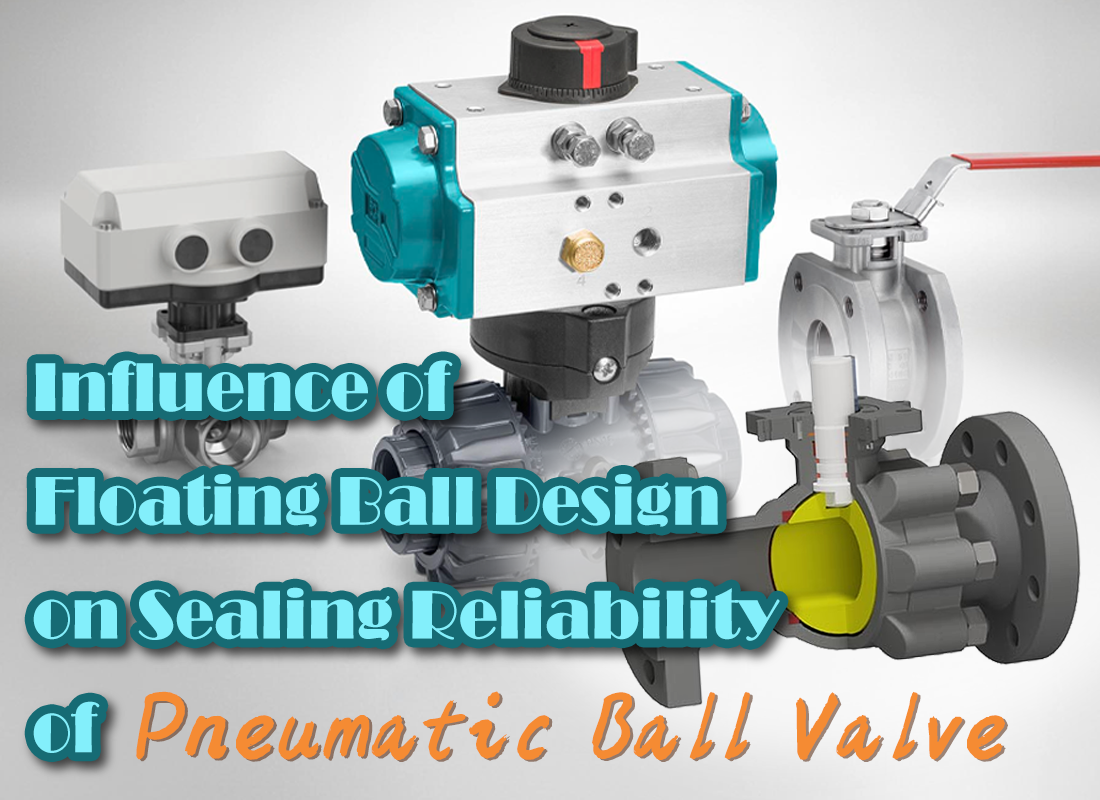
The pneumatic ball valve is widely used in industrial fluid control because of its simple structure and fast quarter-turn action. Among various designs, the floating ball is the most common. Many users focus on actuator type or connection size, while the internal force mechanism that determines sealing performance receives less attention. In a floating design, the ball is not rigidly fixed. It moves slightly under medium pressure, and this micro-displacement is exactly what creates reliable sealing. Understanding this behavior helps engineers choose the right valve for gas, high pressure, and mixed media conditions.
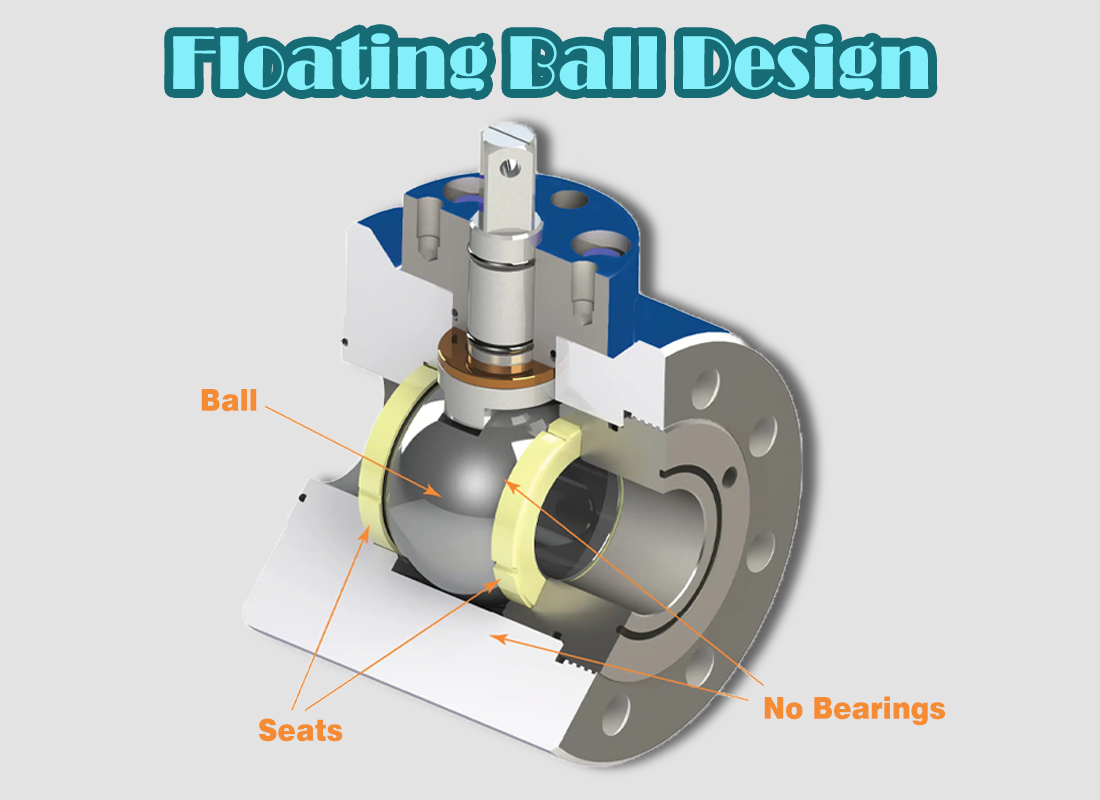
In a floating structure, the ball is only guided by the stem without additional bearings. When upstream pressure exists, the medium pushes the ball toward the downstream seat. This self-adjusting movement enables a pneumatic stainless steel ball valve to achieve tight shut-off even with machining tolerances. The displacement is usually tiny, but enough to compensate for seat deformation. In pneumatic ball valve for gas applications, such compensation is critical because gas can pass through extremely small gaps.
The floating ball design uses the energy of the medium itself. Higher pressure produces higher contact force between the ball and the seat, which explains why many high pressure pneumatic ball valve products achieve excellent leakage performance. Compared with spring-preloaded structures, the floating ball adapts automatically to pressure fluctuation, making it suitable for pneumatic ball valve for oil & gas systems. However, the seat material must have proper resilience, otherwise permanent indentation may occur.
When the ball is pressed against the seat, friction increases, directly affecting the pneumatic ball valve torque requirement. Selection of a pneumatic ball valve actuator must consider the worst differential pressure. For single acting pneumatic ball valve, the spring return force should overcome this additional resistance, otherwise incomplete opening may appear. In contaminated media, a higher safety margin is recommended.
Liquids and gases act differently on the floating ball. Liquids transmit pressure directly and provide stable surface contact, ideal for pneumatic ball valve for water system or steam. Gas is compressible and more sensitive to surface finish, which requires better seat materials for low temperature pneumatic ball valve applications.
| Medium type | Pressure transmission | Contact stability | Seat material suggestion |
|---|---|---|---|
| Water | Direct and stable | Very good | PTFE / RPTFE |
| Gas | Compressible delay | Sensitive | Filled PTFE |
| Steam | High temperature | Moderate | PEEK / metal seat |
| Oil | Lubricating effect | Excellent | PTFE / NYLON |
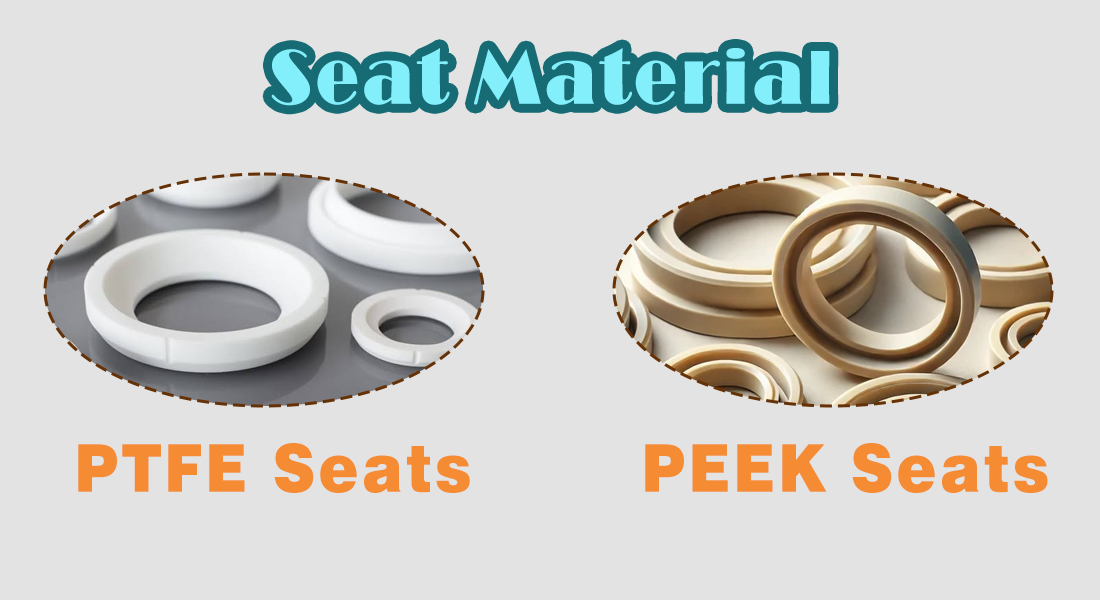
Sealing depends on both ball movement and seat elasticity. Stainless steel pneumatic ball valve 316 usually works with reinforced PTFE or PEEK seats. For pneumatic ball valve for chemical process, swelling resistance and aging must be evaluated. If the seat is too hard, the floating ball cannot fit properly; if too soft, extrusion may occur during frequent cycles.
Many leakage cases originate from pipeline stress rather than valve design. Following the pneumatic ball valve installation guide to keep alignment is essential. For compact pneumatic ball valve, improper piping force easily restricts ball movement. Regular inspection of seat wear and actuator output ensures stable performance of the pneumatic ball valve automation system.
For on-off service requiring reliable shut-off, floating design is a cost-effective solution. Whether pneumatic 2 way ball valve or pneumatic 3 way ball valve, the structure uses medium pressure to reinforce sealing. In ultra-high pressure or large size applications, fixed ball may be more suitable, but for most industrial automation tasks, floating ball remains the practical choice.
(FK9025)
You May Interest In
Feb 07, 2026 Blog
Medium Trapping in Pneumatic Ball Valve Rotation
Jan 08, 2026 Blog
Why Globe Valves Cannot Fully Replace Ball Valves


Get a free sample

FOKCA ©1998-2025 All Rights Reserved Sitemap