- sales@fokca.com info@fokca.com
- WhatsApp: +86 150 5749 1870

Custom Cylinders & System Solutions Manufacturer | Est. 1998
Custom Cylinders & System Solutions Manufacturer | Est. 1998

Feb 10, 2026
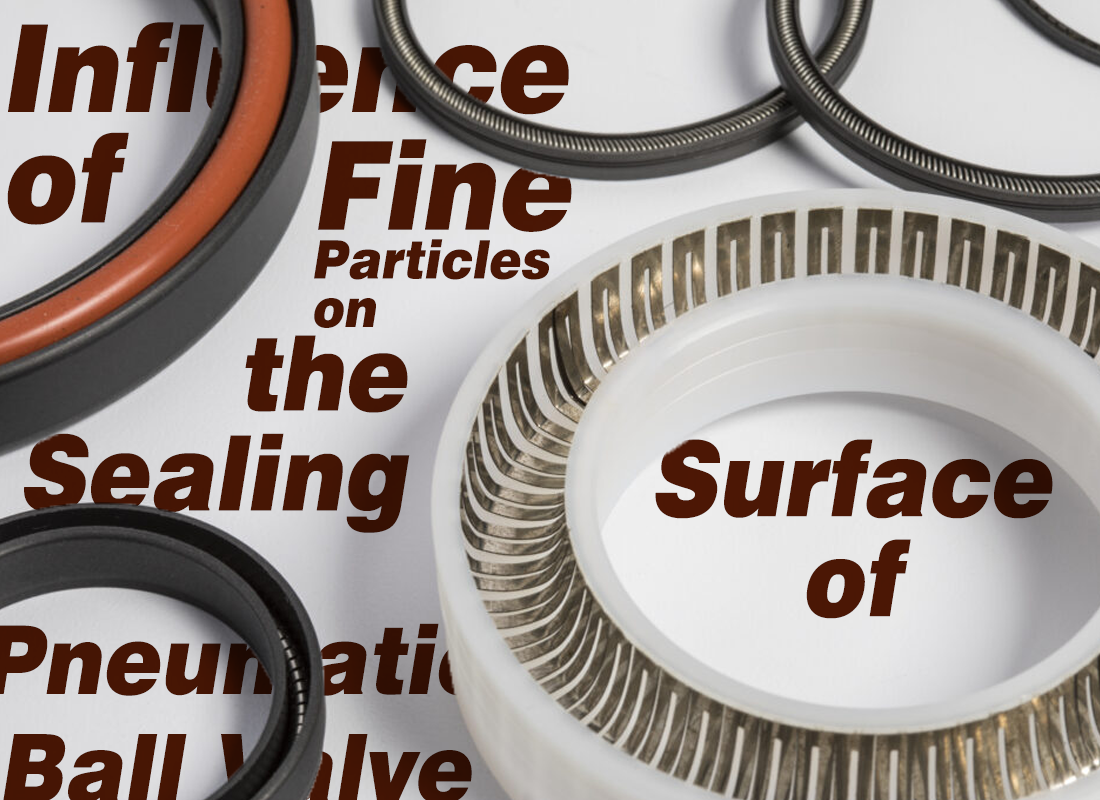
In real industrial environments, the medium entering a pneumatic ball valve is rarely perfectly clean. Rust debris in compressed air, sand in water systems, or crystals in chemical fluids may travel into the valve cavity. These tiny particles are a major reason for internal leakage and shortened service life. Understanding how they interact with the sealing surface is essential for reliable automation.
When fluid passes through a pneumatic stainless steel ball valve, a narrow contact band forms between the ball and the seat. During the 90-degree movement of a quarter turn pneumatic ball valve, particles can be dragged across this area. The effect is similar to abrasive grinding, even if the particle size is very small.
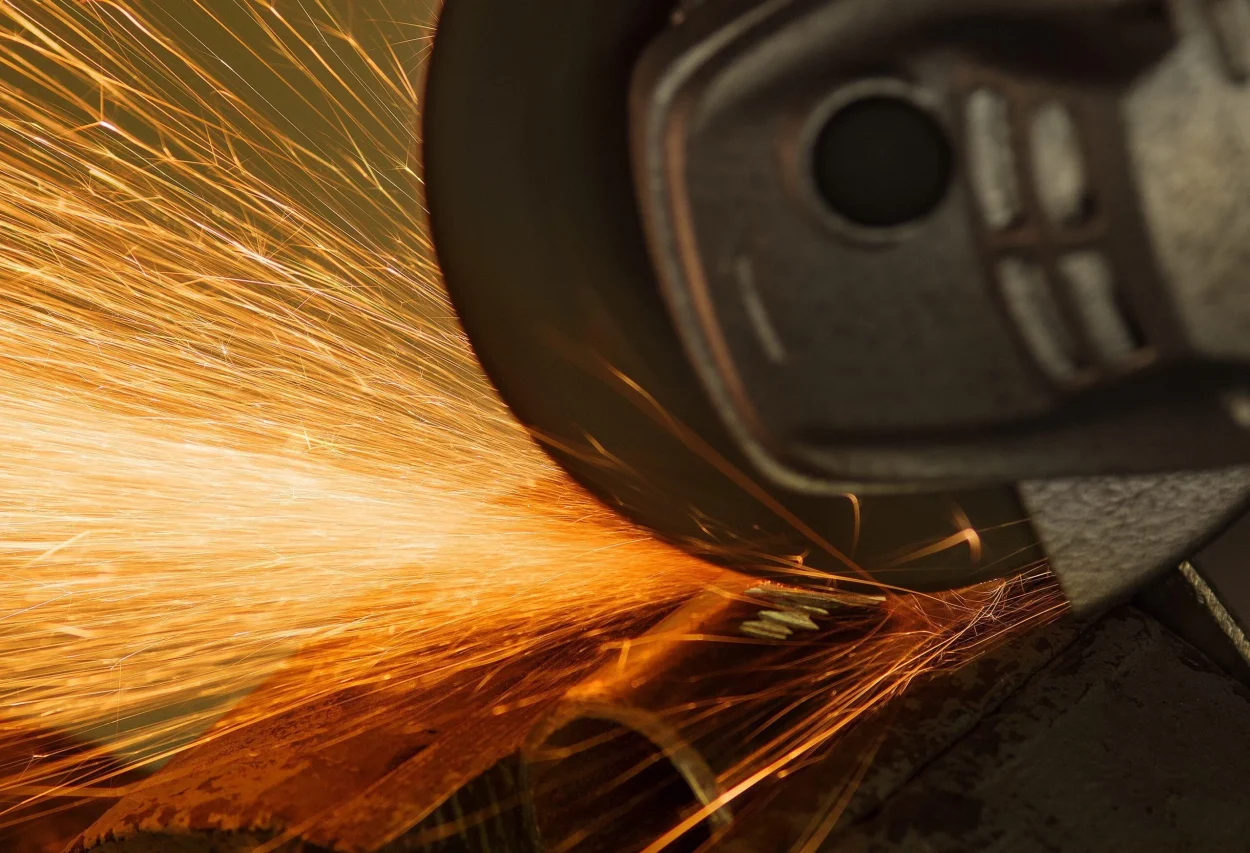
Hard particles above 50 μm are especially destructive. Soft fibers may wrap around the seat edge and affect reset. Even a high-grade stainless steel pneumatic ball valve 316 cannot maintain a perfect mirror surface under long-term particle attack.
Sealing depends on uniform contact pressure. Once scratches appear, micro channels are created. In a high pressure pneumatic ball valve, differential pressure pushes the medium through these channels. Early damage may be invisible, but after repeated cycles the valve can no longer close completely.
| Seat / Ball Material | Hardness | Resistance to Particles | Typical Application |
|---|---|---|---|
| PTFE | Low | Moderate | General water/air |
| RPTFE | Medium | Good | Pneumatic ball valve for HVAC |
| PEEK | High | Very good | Pneumatic ball valve for chemical process |
| Metal seat | Very high | Excellent | High temperature pneumatic ball valve |
The choice of material determines the durability of a pneumatic actuated ball valve. Soft seats seal well but wear faster; hard seats resist abrasion but require higher torque.
After particles embed into the seat, the pneumatic ball valve torque requirement increases. Actuators sized for clean media may fail to reach the end position. This is common on compact pneumatic ball valve designs where tolerance is limited.
◆ Rust from pipelines affecting air operated ball valve
◆ Crystallized chemicals in pneumatic ball valve for chemical process
◆ Sand in cooling water causing leakage in pneumatic ball valve for water system
These examples show that the issue is system-related rather than a single product defect.
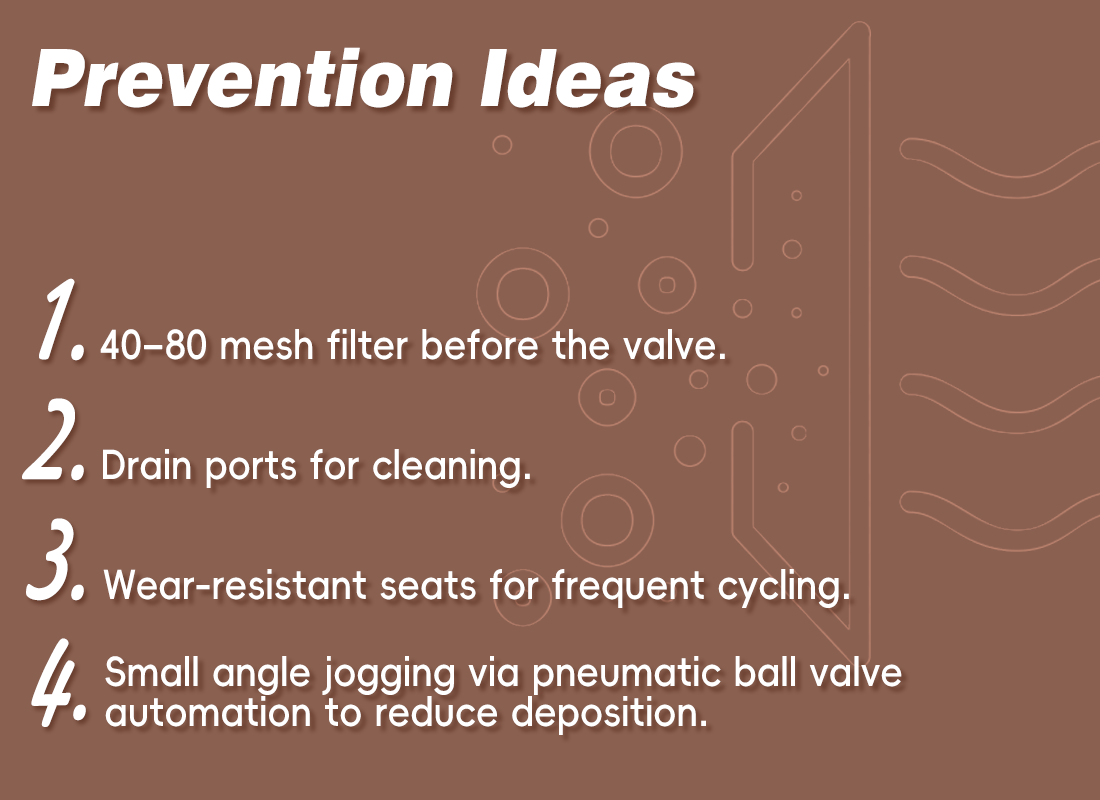
A proper pneumatic ball valve installation guide should include:
◆ 40–80 mesh filter before the valve
◆ Drain ports for cleaning
◆ Wear-resistant seats for frequent cycling
◆ Small angle jogging via pneumatic ball valve automation to reduce deposition
Instead of only comparing pneumatic ball valve vs electric ball valve, engineers should evaluate:
◆ Flow velocity and erosion risk
◆ Need for metal seat
◆ Use of double acting pneumatic ball valve for stable force
◆ Accessibility for maintenance
Monitoring cycle time and pressure drop helps judge degradation. Integrating feedback in a pneumatic ball valve control system allows early warning. For pneumatic ball valve manifold mounting, overall cleanliness is even more critical.
The impact of fine particles is gradual but decisive. Only by combining filtration, material choice, torque margin, and maintenance can a pneumatic ball valve for automation systems remain reliable. This practical view is valuable for distributors, engineers, and end users alike.
(FK9025)
You May Interest In
Feb 07, 2026 Blog
Medium Trapping in Pneumatic Ball Valve Rotation
Jan 08, 2026 Blog
Why Globe Valves Cannot Fully Replace Ball Valves


Get a free sample

FOKCA ©1998-2025 All Rights Reserved Sitemap