- sales@fokca.com info@fokca.com
- WhatsApp: +86 150 5749 1870

Custom Cylinders & System Solutions Manufacturer | Est. 1998
Custom Cylinders & System Solutions Manufacturer | Est. 1998

Mar 02, 2026
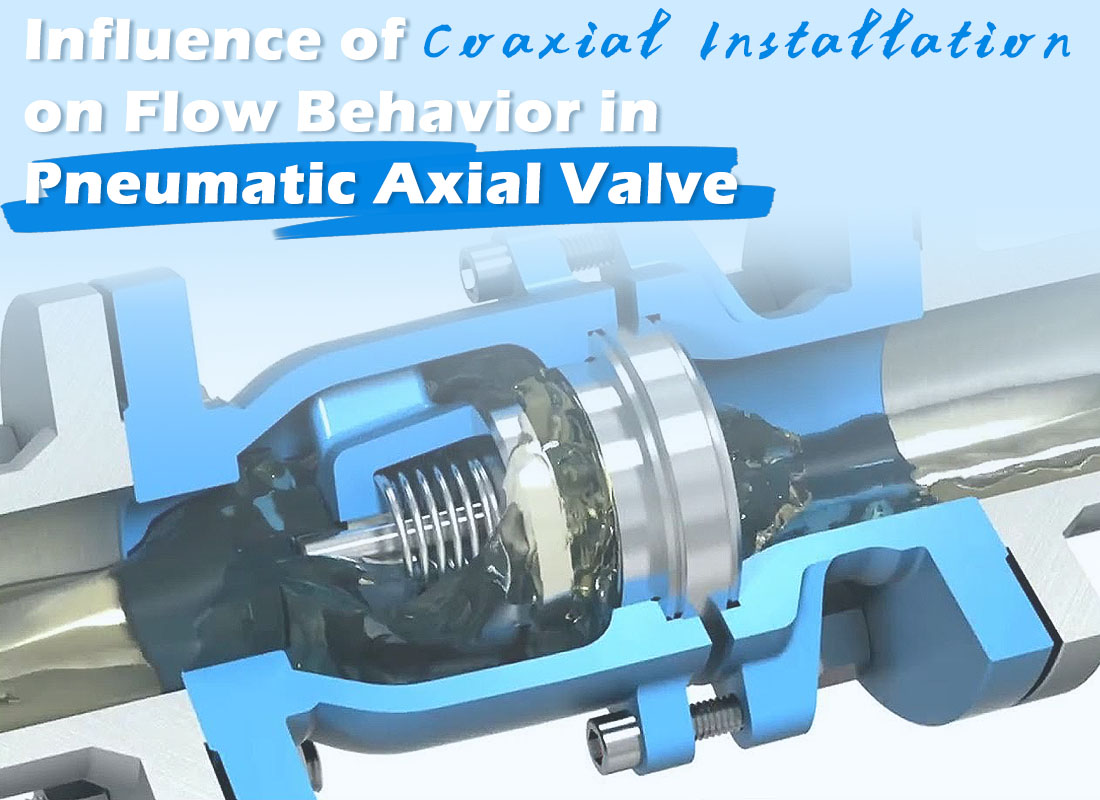
In modern pneumatic control systems, installation accuracy plays a critical role in overall valve performance. For a pneumatic axial valve, coaxial alignment between the pipeline and the valve body is particularly important. Unlike conventional rotary valves or some pneumatic flow control valves, axial structures rely on precise linear movement of the valve core along the flow axis. Even minor eccentric installation can significantly alter internal force distribution, flow characteristics, and sealing reliability.
In applications such as axial valve for pneumatic systems, axial valve for compressed air, and axial valve for fluid control systems, installation precision directly affects long-term stability. Many industrial designs, including products similar to parker control valves or the legris axial type pneumatic actuated valve, emphasize proper alignment during installation to maintain stable performance. The axial design offers excellent flow efficiency, but it is inherently more sensitive to misalignment.
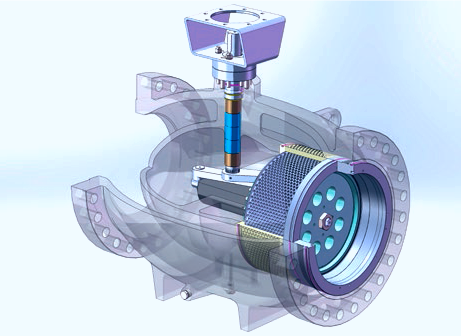
To understand why alignment matters, it is helpful to briefly consider how axial valves operate. The valve core moves linearly along the flow axis, compressing or releasing the sealing surface evenly around its circumference. Under ideal coaxial conditions, pressure distribution remains symmetrical, ensuring balanced axial forces and stable axial valve function.
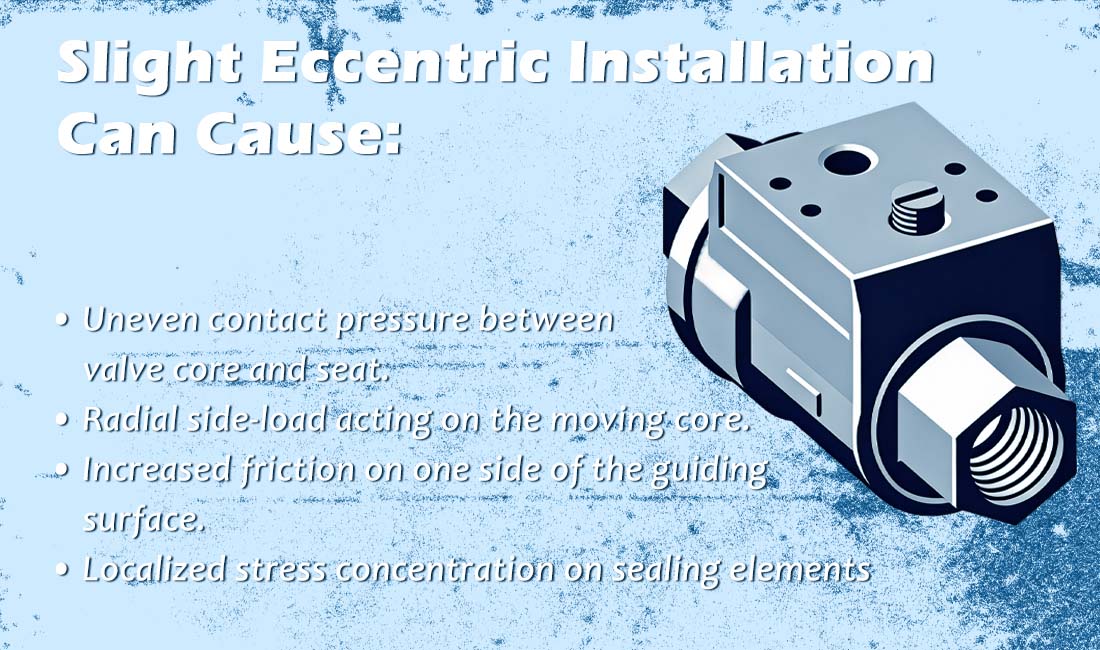
However, when eccentric installation occurs, the internal forces become uneven. The valve core may experience lateral stress, and the sealing surface can contact unevenly. In control architectures that also include a flow control valve or other auxiliary regulation devices, this imbalance may propagate through the system and influence overall control stability.
This imbalance increases the axial valve torque requirement (or actuation force in linear systems) and may reduce responsiveness of the pneumatic axial valve actuator. Over time, asymmetric wear develops, gradually shifting the original axial valve flow characteristic.
In high-pressure systems such as high pressure pneumatic axial valve applications, these force deviations become more pronounced due to amplified pressure loading.
Coaxial installation ensures that the flow path remains symmetric around the valve core. When the valve is properly aligned, the internal structure of an axial flow valve allows fluid to pass through in a nearly linear pattern with minimal turbulence.
When eccentricity occurs, the flow channel becomes partially restricted on one side, causing localized velocity increases and turbulence zones. Similar disturbances can also appear in systems that combine electronic flow control valve units or flow regulator valve devices for automated regulation.
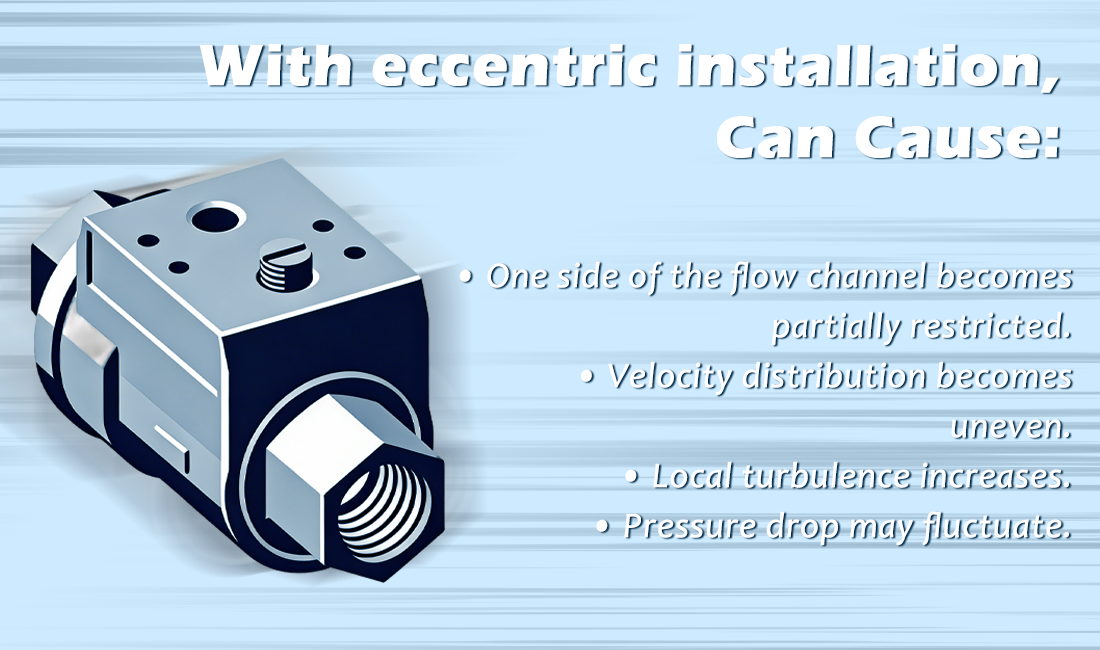
This change affects not only efficiency but also control precision in systems using a pneumatic axial control valve or axial pneumatic control valve. In automated environments such as axial valve for industrial automation or axial valve for chemical process, unstable flow can interfere with downstream sensors and control loops within the axial valve control system.
Compared to rotary designs, the difference in axial valve vs traditional valve behavior under misalignment is significant. Rotary valves tolerate minor eccentricity because sealing surfaces rotate into position, whereas axial valves depend on precise axial compression.
Sealing reliability is where installation accuracy becomes most critical. Under perfect coaxial conditions, a pneumatic axial flow control valve achieves uniform circumferential sealing contact. Compression forces are evenly distributed, minimizing wear.
When misaligned:
◆ One side of the seal experiences excessive compression
◆ The opposite side may have insufficient contact
◆ Micro-leakage can develop
◆ Seal aging accelerates
Over time, leakage risk increases, particularly in applications such as axial valve for oil & gas or high-cycle axial valve for pneumatic cylinder control systems. In certain specialized industrial products—such as the omal pneumatic axial valve or models similar to pneumatic axial valve dn15 pn10 ms58 pat—precise sealing contact is essential for maintaining long-term durability.
Uneven sealing pressure also causes progressive distortion of elastomeric or soft sealing materials.
The table below illustrates typical performance changes caused by installation deviation.
| Parameter | Proper Coaxial Installation | Eccentric Installation |
|---|---|---|
| Flow Symmetry | Balanced | Asymmetric |
| Seal Contact Pressure | Uniform | Uneven |
| Actuation Force Stability | Stable | Fluctuating |
| Torque / Force Requirement | Nominal | +10–25% |
| Local Turbulence | Low | Increased |
| Seal Wear Pattern | Even | One-sided wear |
| Leakage Risk Over Time | Low | Moderate to High |
These variations demonstrate why following an axial valve installation guide is essential during system assembly.
In long-term operation, even small installation errors can compound. Increased friction leads to higher energy consumption, especially in systems using low power axial valve configurations. Fluctuating actuation force reduces control accuracy, which may affect applications such as axial valve for HVAC systems or precision process control.
In some modern pneumatic architectures, axial valves operate together with components such as motor driven flow adjustment valves or hydraulic flow control valve units. Misalignment in one component can influence the performance of the entire regulation chain.
For distributors and engineers referring to a pneumatic axial valve selection guide, it is important to consider not only sizing and pressure rating but also installation tolerances. In many cases, performance deviations attributed to product quality are actually caused by mounting misalignment.
Routine inspection and alignment verification should be included in axial valve maintenance tips, especially where vibration, thermal expansion, or pipe stress may gradually shift valve position.
Maintaining strict coaxial installation ensures that the structural advantages of the pneumatic axial valve—low turbulence, balanced axial compression, and predictable flow performance—are fully realized in demanding industrial environments.
(FK9025)
You May Interest In
Apr 29, 2025 Blog
A Guide To Master Pneumatic Axial Valves


Get a free sample

FOKCA ©1998-2025 All Rights Reserved Sitemap