- sales@fokca.com info@fokca.com
- WhatsApp: +86 150 5749 1870

Custom Cylinders & System Solutions Manufacturer | Est. 1998
Custom Cylinders & System Solutions Manufacturer | Est. 1998

Mar 23, 2026
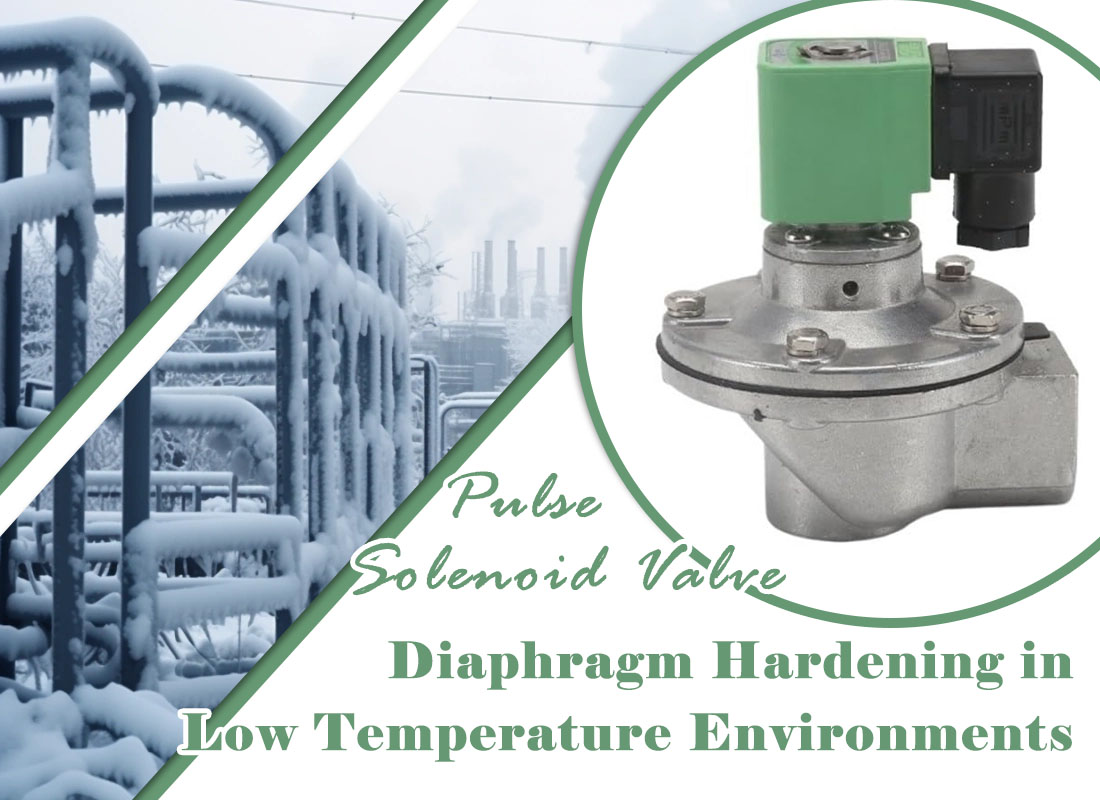
In many industrial filtration systems, especially outdoor pulse solenoid valve for dust collector installations, winter conditions introduce a hidden performance issue: diaphragm hardening. While a pulse jet solenoid valve is designed for fast and precise air release, low temperatures can significantly affect the flexibility of its diaphragm material, directly impacting valve response.
For engineers working with pulse solenoid valve control systems, this problem often appears as delayed opening, weak pulse output, or inconsistent cleaning cycles. Understanding how temperature affects diaphragm behavior is essential for maintaining stable system performance.
The diaphragm is the core moving component in a pulse operated solenoid valve. It separates the control chamber from the main air flow path and responds to pressure differences to open or close the valve.
In a typical pulse solenoid valve for filtration systems, the diaphragm must deform rapidly within milliseconds to release a high-pressure air pulse. This quick movement is what creates the shockwave needed for effective dust cleaning.
If the diaphragm loses flexibility, the valve cannot achieve its designed opening speed. Even a slight delay in deformation can weaken the pulse intensity and reduce cleaning efficiency.
Most diaphragms are made from rubber diaphragm materials such as NBR (nitrile), FKM, or composite reinforced materials. These materials are selected based on diaphragm material selection guidelines that consider temperature, pressure, and chemical compatibility.
At low temperatures, especially below 0°C, rubber materials begin to harden. Their elasticity decreases, and the material becomes less responsive to pressure changes.
For example, a diaphragm material NBR may lose up to 30–50% of its flexibility when exposed to sub-zero conditions (data based on industrial material testing reports). This directly affects the performance of pulse solenoid valves in pneumatic systems.
The key function of a fast response pulse solenoid valve is its ability to open almost instantly. When the diaphragm becomes rigid, several performance issues occur.
First, the opening delay increases. Instead of opening within milliseconds, the diaphragm reacts more slowly to pilot pressure changes. This disrupts the timing in pulse solenoid valve timing control systems.
Second, the valve may not fully open. A stiff diaphragm cannot deform enough to allow maximum airflow, reducing the pressure and volume of the air pulse.
Third, repeated delayed responses can lead to unstable cleaning cycles in pulse solenoid valve for baghouse systems, especially in large-scale installations.
Different diaphragm materials behave differently under low-temperature conditions. The table below shows typical characteristics of common materials used in pulse cleaning solenoid valves.
| Diaphragm Material | Temperature Range | Flexibility at Low Temp | Typical Application |
|---|---|---|---|
| NBR (Nitrile) | -10°C to 80°C | Medium (decreases quickly) | General dust collectors |
| FKM (Viton) | -20°C to 200°C | Better than NBR | High-temperature systems |
| PTFE Composite | -40°C to 150°C | High stability | Harsh environments |
| CR (Neoprene) | -20°C to 100°C | Moderate | Outdoor applications |
These values are commonly referenced in diaphragm material selection guides used by valve manufacturers and system integrators.
In practical applications, diaphragm hardening can reduce the effectiveness of a pulse solenoid valve for compressed air systems. When the pulse strength decreases, dust is not fully removed from filter bags.
This leads to higher differential pressure across the filter, forcing fans to consume more energy. Over time, the system may require more frequent cleaning cycles, increasing wear on both valves and filters.
In large pulse jet valve for industrial automation systems, even small delays in valve response can accumulate, resulting in uneven cleaning across multiple filter rows.
To maintain stable performance in cold environments, engineers must consider diaphragm material and system design together.
Selecting the right valve diaphragm material is the first step. Materials like PTFE composites or specially formulated low-temperature rubber offer better flexibility under cold conditions.
Another approach is system insulation. Protecting the pulse solenoid valve control system and air manifold from extreme cold can reduce temperature fluctuations.
In some cases, heating elements are added to maintain a stable operating temperature, ensuring consistent valve performance.
For engineers and maintenance teams managing pulse solenoid valve systems, several practical measures can improve reliability in low temperatures:
◆ Choose diaphragm materials suitable for low-temperature environments
◆ Avoid using standard NBR diaphragms in sub-zero conditions
◆ Inspect valve response time during winter operation
◆ Consider insulation or heating for critical valve installations
By addressing diaphragm material behavior early in the design stage, pulse solenoid valves can maintain fast response and stable cleaning performance even in harsh environments.
(FKF9025)
You May Interest In















Get a free sample

FOKCA ©1998-2025 All Rights Reserved Sitemap