- sales@fokca.com info@fokca.com
- WhatsApp: +86 150 5749 1870

Custom Cylinders & System Solutions Manufacturer | Est. 1998
Custom Cylinders & System Solutions Manufacturer | Est. 1998

Apr 02, 2026
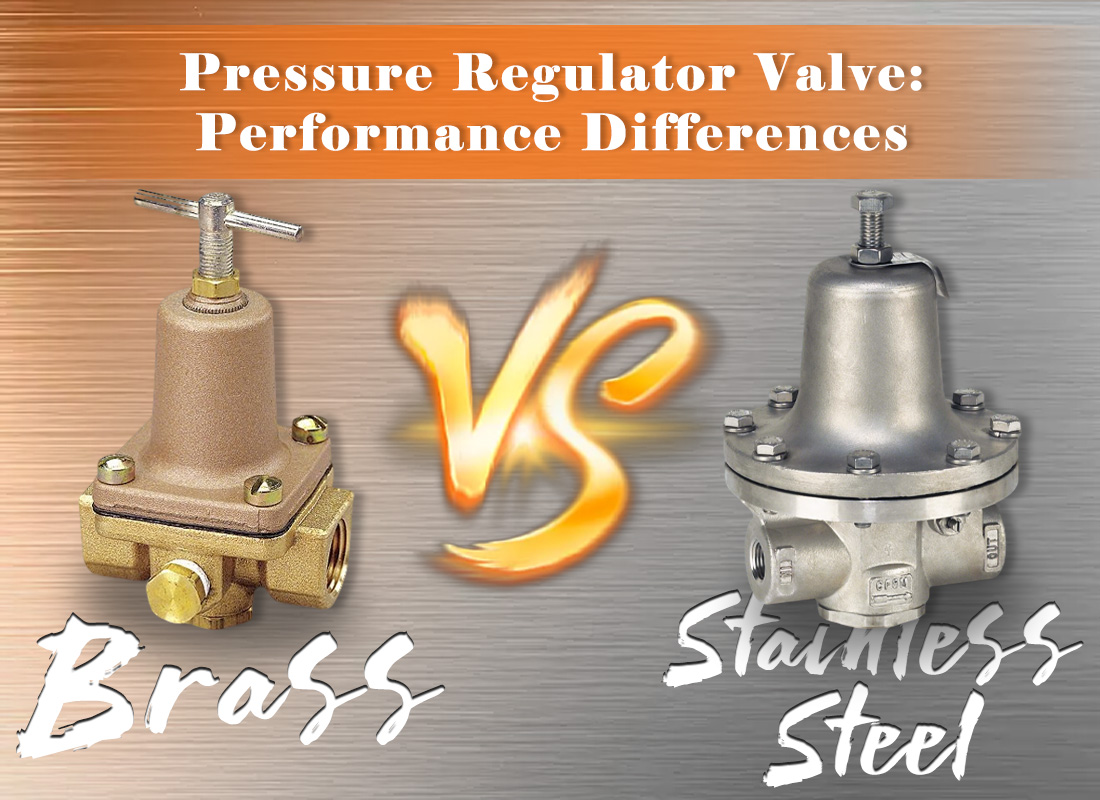
In industrial systems, selecting the right pressure regulator valve is not only about pressure range or flow capacity. Material choice—especially between brass and stainless steel—directly affects durability, corrosion resistance, and long-term reliability.
For applications such as a water pressure regulator valve or gas pressure regulator valve, the operating environment determines whether brass or stainless steel performs better.
Ignoring material compatibility often leads to premature failure, leakage, or costly maintenance.
Corrosion resistance is one of the most critical factors in valve performance.
Brass pressure regulating valves offer good resistance to clean water and mild environments. They are widely used in residential and commercial plumbing systems, including home water pressure regulator valve installations.
However, brass is more vulnerable in aggressive environments. High salinity, acidic fluids, or certain industrial chemicals can accelerate corrosion.
Stainless steel pressure regulator valves, particularly grades like 304 or 316, provide excellent corrosion resistance. They are ideal for harsh environments such as chemical processing, marine systems, or high-purity applications.
Service life is closely tied to both material strength and environmental conditions.
Brass valves are durable in standard conditions and offer a cost-effective solution. In typical pressure regulator valve for water systems, they can operate reliably for many years with minimal maintenance.
Stainless steel valves, however, are designed for long-term operation under demanding conditions. They resist wear, corrosion, and high pressure more effectively, resulting in longer service life in industrial environments.
In applications where downtime is costly, stainless steel often delivers better lifecycle value despite higher initial cost.
Different media require different material properties.
Brass pressure valve regulator designs are suitable for water, air, and non-corrosive gases. They are commonly used in HVAC systems, domestic water supply, and light industrial setups.
Stainless steel valves support a broader range of media, including steam, chemicals, and aggressive gases. In steam pressure regulating valve systems or pharmaceutical production, stainless steel is often the preferred choice due to its hygienic and corrosion-resistant properties.
This expanded compatibility makes stainless steel valves more versatile in complex industrial processes.
| Parameter | Brass Pressure Regulator Valve | Stainless Steel Pressure Regulator Valve |
|---|---|---|
| Corrosion Resistance | Moderate | High |
| Service Life | Good (standard conditions) | Excellent (harsh environments) |
| Strength | Moderate | High |
| Cost | Lower | Higher |
| Media Compatibility | Water, air, mild gases | Steam, chemicals, aggressive media |
| Maintenance | Low | Low to moderate |
| Typical Application | Home water pressure regulator valve | Industrial and chemical systems |
In a residential water system using a water pressure regulating valve, brass valves provide sufficient performance at a lower cost. They are easy to install and widely available in standard sizes such as 1 inch pressure regulator valve models.
In contrast, industrial plants handling chemicals or high-temperature steam require more robust solutions. Stainless steel valves are commonly used in these environments to ensure stability and prevent material degradation.
For example, in a chemical dosing system, even minor corrosion can affect control accuracy. Stainless steel eliminates this risk and maintains consistent performance over time.
Initial cost is often a deciding factor, especially for distributors and procurement teams.
Brass pressure regulator valves are more affordable and suitable for large-scale residential or commercial projects.
However, stainless steel valves offer better long-term value in demanding applications. Reduced maintenance, longer service life, and improved reliability often offset the higher upfront investment.
For systems where failure could disrupt production, stainless steel becomes the more economical choice over time.
◆ Use brass valves for clean water and low-corrosion environments
◆ Select stainless steel for chemical, marine, or high-temperature systems
◆ Consider lifecycle cost, not just purchase price
◆ Match material with media composition and operating conditions
◆ Evaluate long-term maintenance requirements during selection
(FK9025)
You May Interest In








Get a free sample

FOKCA ©1998-2025 All Rights Reserved Sitemap