- sales@fokca.com info@fokca.com
- WhatsApp: +86 150 5749 1870

Custom Cylinders & System Solutions Manufacturer | Est. 1998
Custom Cylinders & System Solutions Manufacturer | Est. 1998

Mar 03, 2026
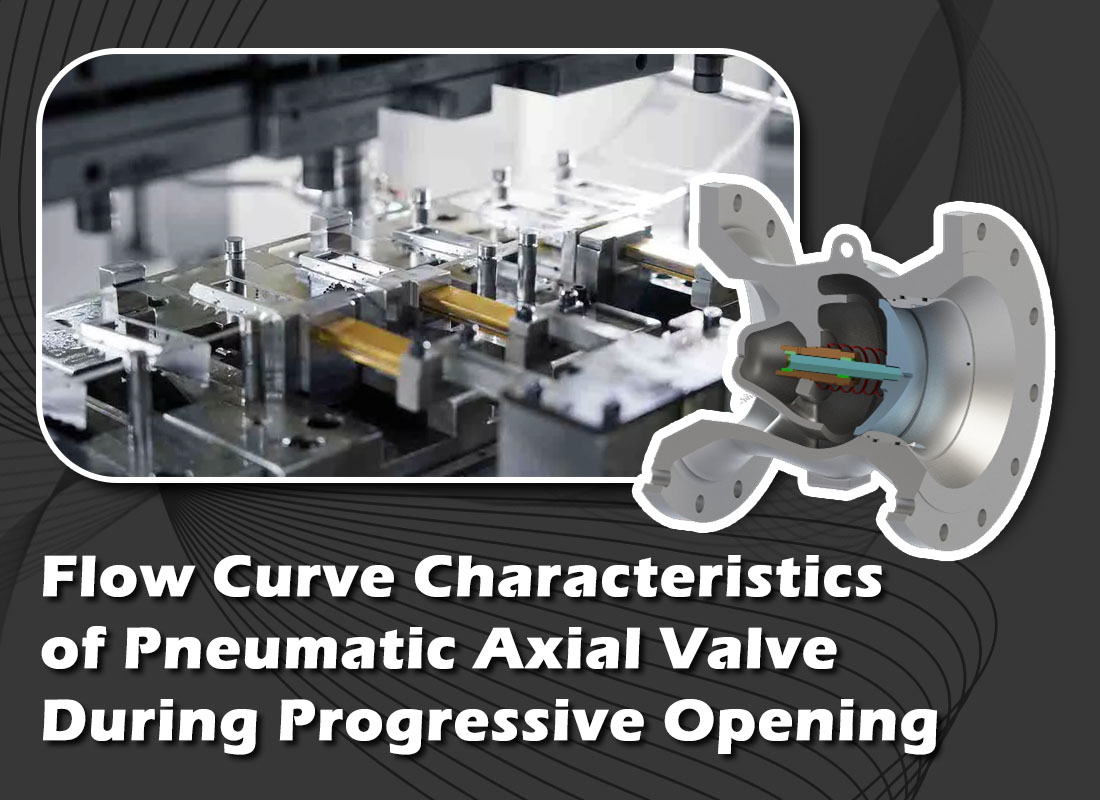
In process control systems, valve opening behavior directly determines flow regulation accuracy and system stability. A pneumatic axial valve demonstrates a flow curve that is closer to linear during progressive opening, which offers significant advantages in precision control applications.
Unlike many rotary valves where flow increases rapidly at small opening angles and then stabilizes, axial valves allow gradual and proportional flow expansion as the valve core moves along the axis. This structural characteristic results in a predictable and stable axial valve flow characteristic, especially in automated environments where pneumatic flow control valves are used for continuous regulation.
Understanding how a pneumatic axial valve operates helps clarify why the flow curve tends to be linear. The valve core moves axially, enlarging the flow passage symmetrically around the centerline. As stroke increases, the effective flow area expands proportionally.
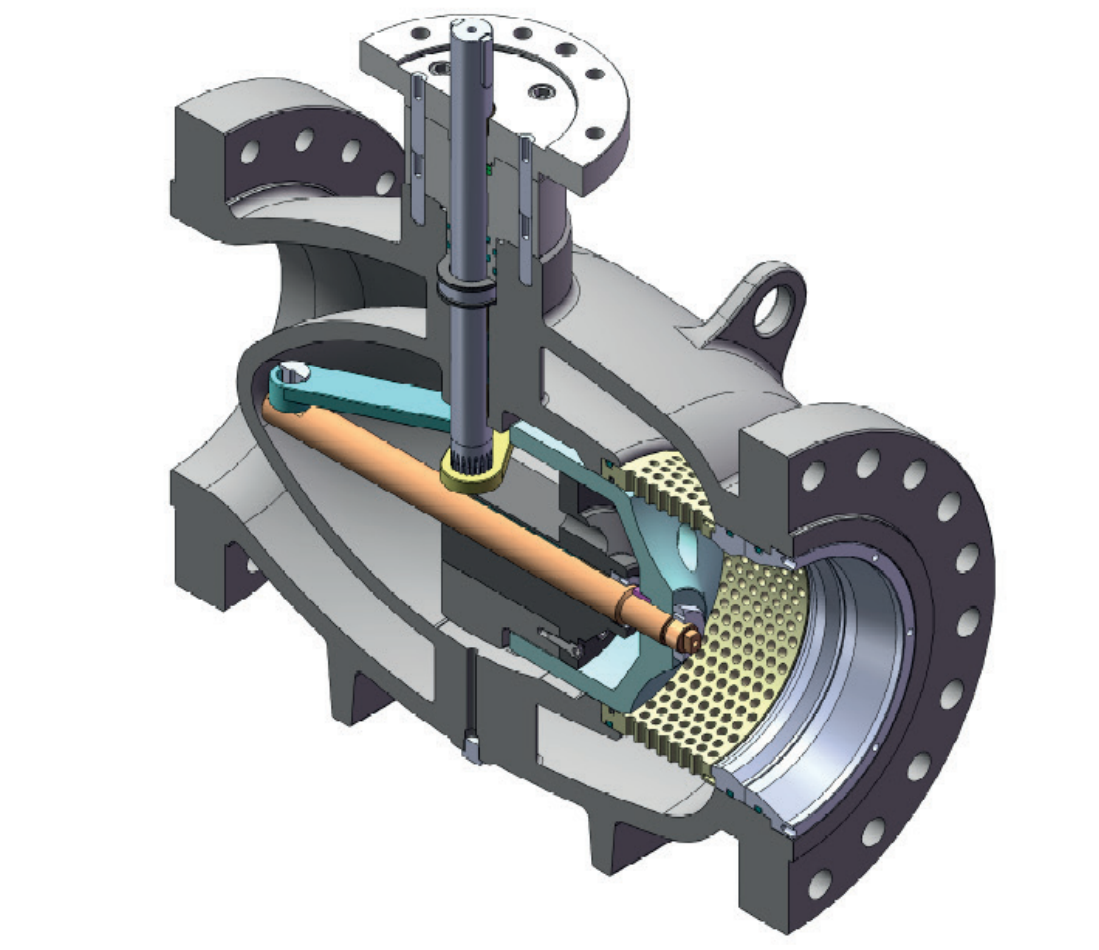
In most axial pneumatic control valve applications, the relationship between stroke percentage and flow coefficient (Cv) remains nearly proportional across a wide operating range. This principle reflects the fundamental axial valve function, where linear displacement directly controls the effective flow cross-section.
In many industrial systems, this valve type may work alongside components such as a flow control solenoid valve or a flow regulator valve that assist with auxiliary flow management and pressure stabilization.
This behavior is particularly beneficial in systems requiring stable modulation, such as:
◆ axial valve for HVAC systems
◆ axial valve for chemical process
◆ axial valve for industrial automation
◆ axial valve for fluid control systems
The linear stroke-to-flow relationship improves predictability within the axial valve control system, reducing tuning complexity for engineers.
The following table compares typical stroke-to-flow behavior between a pneumatic axial valve and a conventional rotary control valve:
| Valve Opening (%) | Axial Valve Flow (%) | Rotary Valve Flow (%) |
|---|---|---|
| 10% | 8–12% | 20–30% |
| 25% | 22–28% | 40–50% |
| 50% | 48–52% | 70–80% |
| 75% | 72–78% | 90–95% |
| 100% | 100% | 100% |
This comparison shows that a pneumatic axial flow control valve maintains a flow response that closely follows its stroke percentage, whereas traditional valves often exhibit quick-opening characteristics.
Such behavior reduces overshoot and minimizes control oscillation, particularly in high-precision systems. Some manufacturers of industrial valves, including solutions comparable to parker control valves or the legris axial type pneumatic actuated valve, apply similar linear flow design principles in their engineering approaches.
In continuous process industries such as axial valve for oil & gas, compressed air systems, and precision dosing applications, stable flow modulation is critical. A near-linear response simplifies controller tuning and reduces fluctuation within PID loops.
When paired with a pneumatic axial valve with positioner, stroke feedback becomes highly accurate. The positioner ensures that commanded displacement corresponds directly to predictable flow output. This advantage supports:
◆ Stable pressure regulation
◆ Accurate flow metering
◆ Reduced actuator cycling
◆ Lower mechanical stress
Compared to axial valve vs traditional valve performance, axial designs often demonstrate smoother modulation and lower sensitivity to minor position deviations. This stability can be particularly useful when integrated with other control components such as electronic flow control valve systems used in automated process regulation.
Several structural features explain this performance:
① Axial symmetric flow path
② Even circumferential sealing compression
③ Reduced turbulence compared to angled flow paths
④ Balanced axial force distribution
These characteristics make the adjustable pneumatic axial valve suitable for systems requiring gradual ramp-up of flow rather than abrupt changes. In high pressure pneumatic axial valve configurations, maintaining linear flow response also reduces mechanical shock to downstream equipment.
Because flow expansion occurs concentrically, energy loss is minimized, and the axial valve torque requirement remains stable across the operating range. This contributes to efficient actuator sizing and supports the use of a low power axial valve design where energy efficiency is a priority. Similar axial motion principles are also seen in certain axial piston valve mechanisms used in hydraulic and pneumatic control engineering.
For distributors and engineers consulting a pneumatic axial valve selection guide, evaluating flow curve behavior is as important as checking pressure rating or material compatibility. A properly sized valve based on a pneumatic axial valve sizing chart ensures that the linear range covers the intended operating window.
In systems involving frequent modulation—such as axial valve for pneumatic cylinder control or automated production lines—consistent stroke-to-flow proportionality reduces wear and enhances long-term reliability. Some standardized product models, including variants like pneumatic axial valve dn15 pn10 ms58 pat or well-known products such as the omal pneumatic axial valve, are designed to maintain stable linear flow characteristics across various operating conditions.
Regular inspection and adherence to an axial valve installation guide further preserve the designed flow characteristic by maintaining coaxial alignment and minimizing friction variation.
(FK9025)
You May Interest In

Apr 29, 2025 Blog
A Guide To Master Pneumatic Axial Valves


Get a free sample

FOKCA ©1998-2025 All Rights Reserved Sitemap