- sales@fokca.com info@fokca.com
- WhatsApp: +86 150 5749 1870

Custom Cylinders & System Solutions Manufacturer | Est. 1998
Custom Cylinders & System Solutions Manufacturer | Est. 1998

Mar 02, 2026
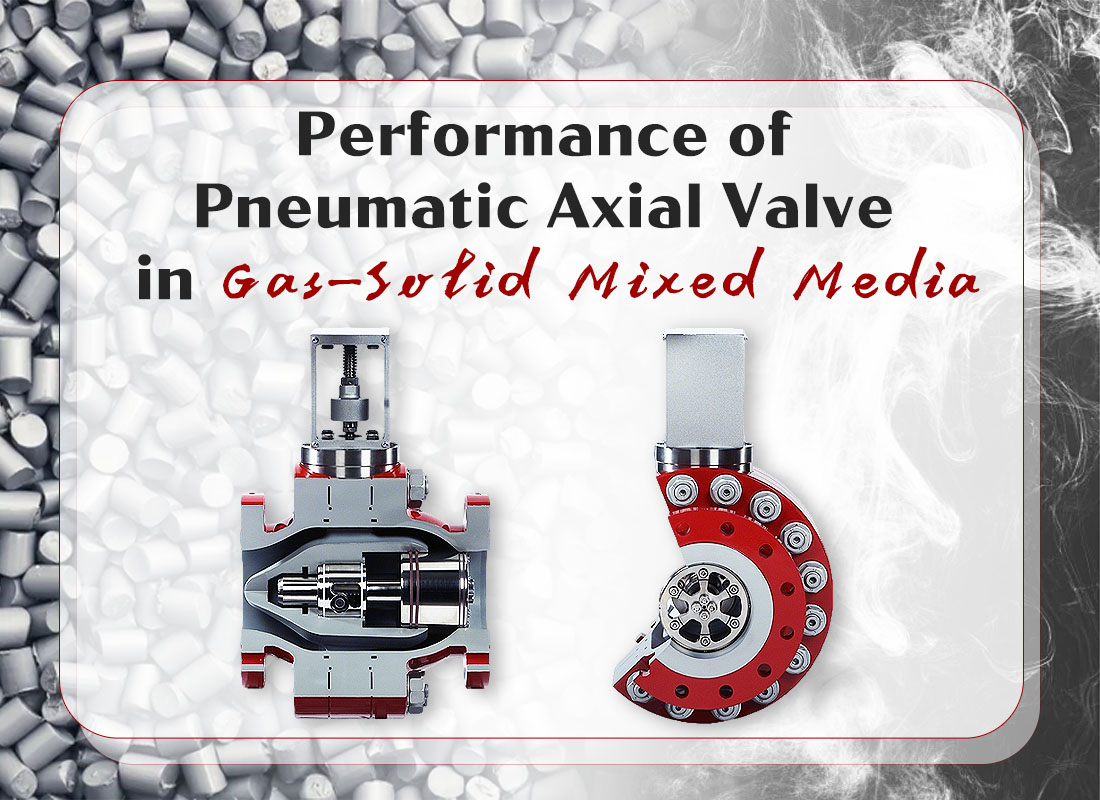
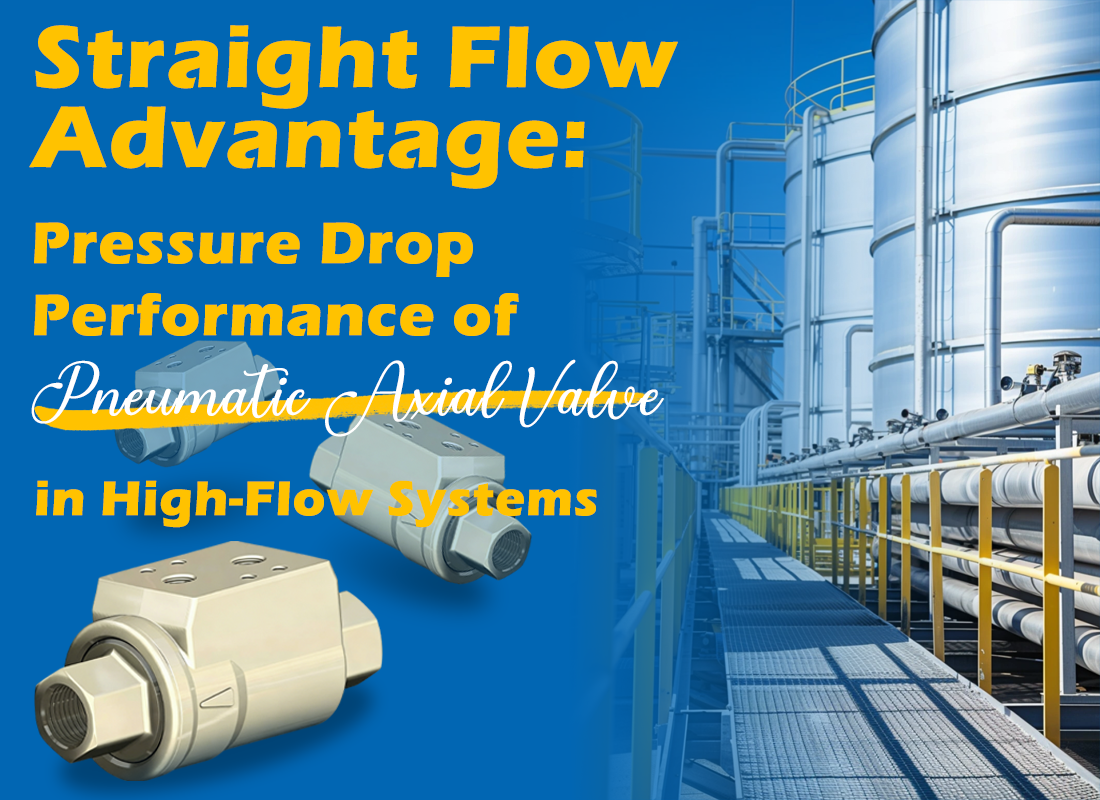
Gas-solid mixed flow is widely used in pneumatic conveying, catalyst circulation, cement transport, and powder processing systems. In such environments, solid particles carried by high-velocity gas streams repeatedly impact valve internals, accelerating erosion and reducing sealing reliability. In many industrial installations, these systems operate alongside pneumatic flow control valves and flow regulator valve assemblies that regulate conveying stability.
A pneumatic axial valve demonstrates structural advantages under these abrasive conditions due to its straight-through axial architecture. Compared with some traditional parker control valves or complex rotary structures, the linear internal path of axial valves allows particles to follow the gas stream more smoothly with fewer abrupt deflections.
In conventional angle-type or multi-turn valves, abrupt directional changes increase turbulence intensity. Solid particles deviate from airflow trajectories due to inertia and collide with internal surfaces. Similar wear patterns can also appear in systems using a flow control solenoid valve or hydraulic flow control valve when particles are entrained in the medium.
As particle size increases (50–300 μm typical industrial range) and conveying velocity exceeds 20 m/s, erosion rate rises exponentially. This directly affects sealing integrity and increases the axial valve torque requirement over time, influencing overall axial valve function within automated control loops.
The impact frequency also alters long-term axial valve flow characteristic, influencing control accuracy in automated systems that may also incorporate an electronic flow control valve for precision regulation.
| Parameter | Traditional Multi-Turn Valve | Pneumatic Axial Valve |
|---|---|---|
| Flow Direction Change | 45°–90° multiple bends | ≤15° near-linear |
| Estimated Particle Impact Frequency | High | Reduced by 30–50% |
| Internal Turbulence Intensity | High | Moderate |
| Seal Surface Exposure to Particles | Direct and repeated | Axial compression shielding |
| Erosion Rate (Relative Index) | 1.0 | 0.6–0.7 |
| Torque Fluctuation Over Time | ±20–30% | ±8–12% |
| Maintenance Interval | Shorter | Extended |
This comparison highlights how an axial flow valve reduces particle collision probability and distributes forces more uniformly across the sealing interface. Similar design principles can also be found in specialized configurations such as an axial piston valve, where axial motion helps maintain sealing stability under fluctuating pressure.
Because erosion increases friction, actuator stability becomes critical. A pneumatic axial valve actuator, especially in direct acting axial valve configurations, benefits from balanced axial force distribution.
Compared to conventional rotary valves or certain motor driven flow adjustment valves, the axial pneumatic valve experiences lower torque amplification caused by uneven wear. In systems such as axial valve for oil & gas or axial valve for chemical process, where abrasive media are common, this mechanical balance extends operational life.
For distributors and engineers reviewing documentation such as a legris axial valve pdf or technical data sheets for products like the omal pneumatic axial valve, evaluating particle size, conveying velocity, and pressure drop is essential. Proper sizing ensures durability and stable control within the broader axial valve control system.
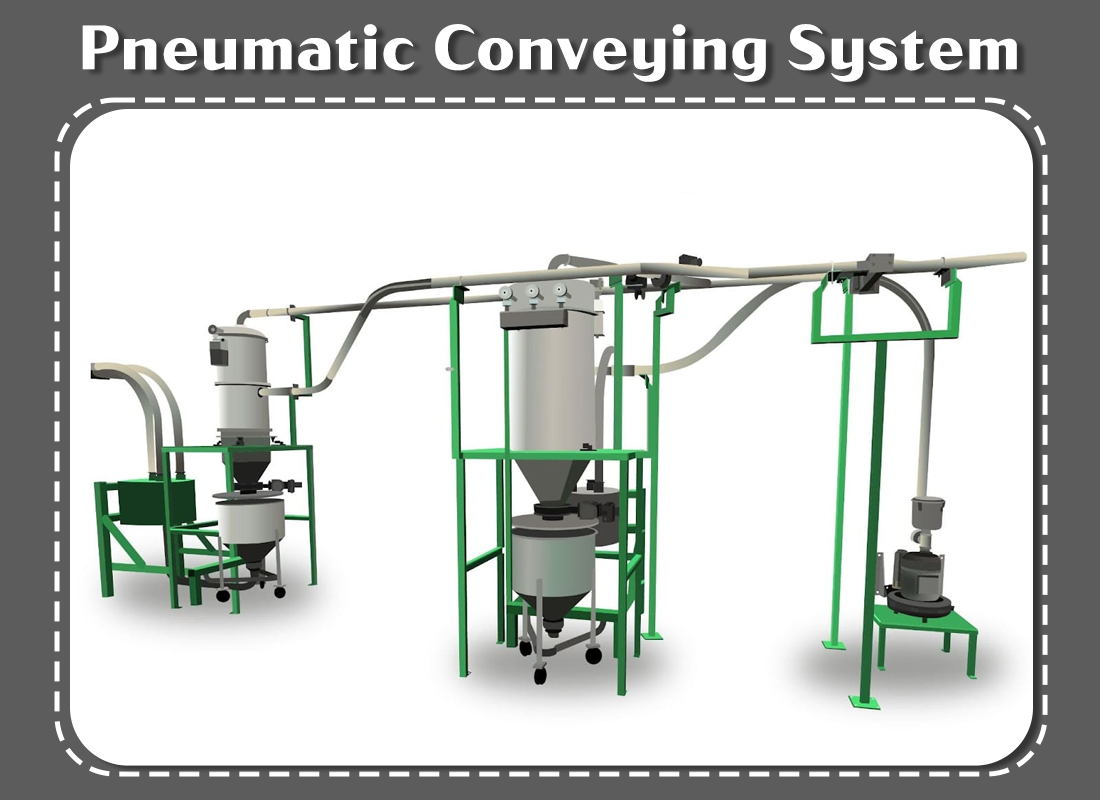
In high-cycle conveying applications, erosion-induced instability often leads to leakage and increased downtime. The straight-through configuration of a pneumatic axial flow control valve reduces turbulence zones and minimizes repeated particle rebound.
These pneumatic axial valve advantages translate into lower lifecycle cost and more predictable maintenance planning. For procurement teams comparing solutions in an axial valve performance comparison, axial architecture consistently shows better resistance to abrasive wear in gas-solid mixed media.
By reducing particle impact frequency and maintaining axial compression sealing, the pneumatic axial valve provides a mechanically stable solution for abrasive pneumatic transport and industrial automation systems, complementing other industrial control components such as pneumatic flow control valves and advanced flow regulation devices.
(FK9025)
You May Interest In
Apr 29, 2025 Blog
A Guide To Master Pneumatic Axial Valves


Get a free sample

FOKCA ©1998-2025 All Rights Reserved Sitemap