- sales@fokca.com info@fokca.com
- WhatsApp: +86 150 5749 1870

Custom Cylinders & System Solutions Manufacturer | Est. 1998
Custom Cylinders & System Solutions Manufacturer | Est. 1998

Feb 25, 2026
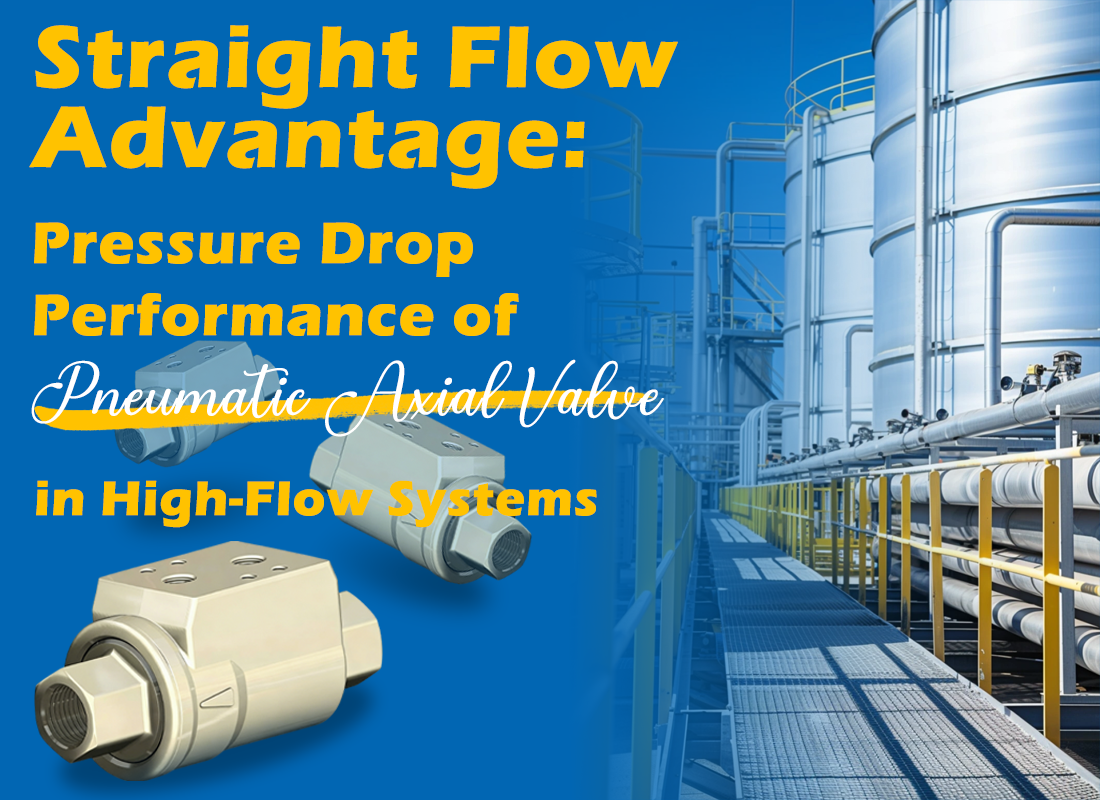
In many high-flow systems, engineers focus on pipe diameter or compressor capacity but overlook a critical factor: the valve itself can become the main source of resistance. In compressed air networks, water treatment lines, and chemical circulation systems, traditional valves with turning flow paths create significant pressure drop.
This is where the pneumatic axial valve demonstrates its structural advantage.
Conventional valves force fluid to change direction within the valve body. Each change of direction increases turbulence, energy loss, and localized resistance. Under high flow conditions, these effects are amplified.
When comparing axial valve vs traditional valve, the difference lies primarily in flow geometry. A straight-through design significantly reduces energy dissipation.
| Valve Type | Flow Path | Typical Pressure Drop | Flow Stability | Torque Requirement |
|---|---|---|---|---|
| Traditional Globe Valve | Multi-directional | High | Moderate | High |
| Ball Valve | 90° turn | Medium | Moderate | Medium |
| Axial Flow Valve | Straight coaxial | Low | High | Low |
Structurally, the axial valve torque requirement is generally lower than that of conventional valves, due to more uniform fluid force distribution. This also means a more compact actuator can be selected.
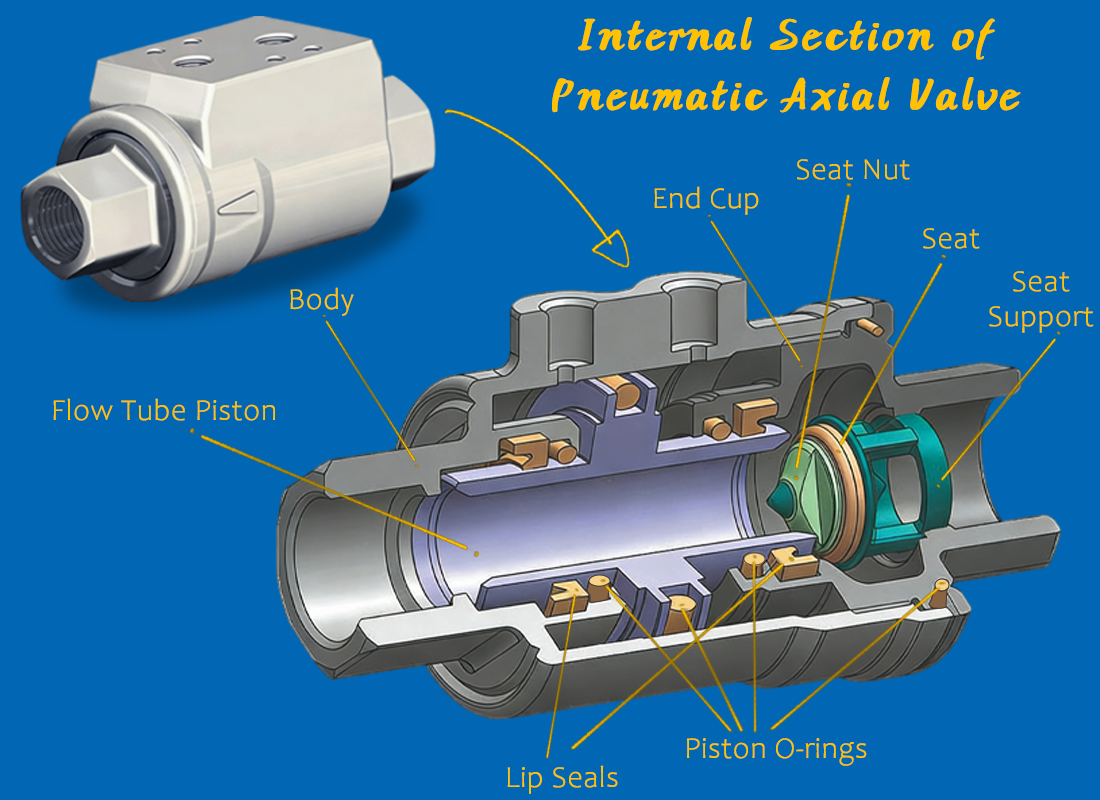
An axial flow pneumatic valve allows media to pass directly along the centerline. The internal plug or piston moves axially rather than rotating, maintaining a streamlined path.
Key benefits include:
◆ Reduced turbulence
◆ Lower pressure drop
◆ Stable downstream pressure
In compressed air systems, an axial valve for compressed air maintains consistent supply even during demand fluctuations.
An axial pneumatic control valve offers predictable axial valve flow characteristic, making it suitable for precise regulation. Configurations such as:
◆ Pneumatic axial valve actuator systems
◆ Pneumatic axial valve with positioner
◆ Pilot operated axial valve
◆ Direct acting axial valve
enable responsive and stable control within an integrated axial valve control system.
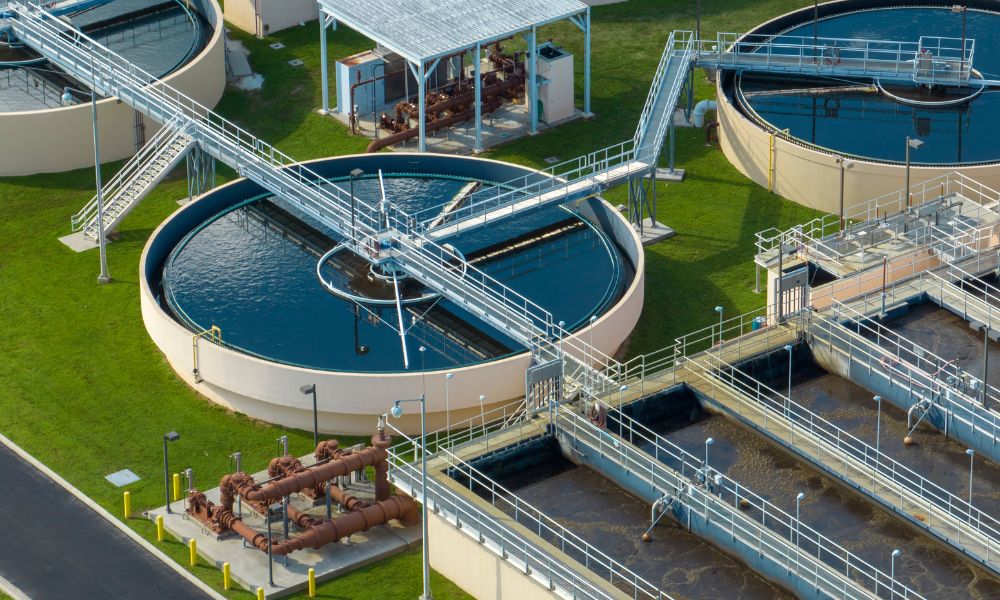
For water treatment facilities, an axial valve for water treatment reduces pump energy consumption. In chemical plants, an axial valve for chemical process improves reaction stability. Within industrial automation, an axial valve for industrial automation enhances efficiency in fluid control systems.
The compact pneumatic axial valve design also simplifies installation and supports manifold configurations.
From a sizing standpoint, a proper pneumatic axial valve sizing chart ensures optimal performance. Because of the reduced axial valve torque requirement, actuator selection becomes more efficient.
In high-pressure environments, a high pressure pneumatic axial valve maintains structural integrity while minimizing energy loss.
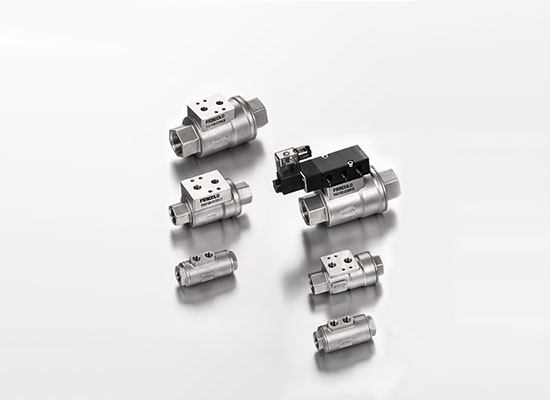
In high-flow applications, pressure stability is not just a design preference—it directly impacts system efficiency and operating cost. By adopting a straight coaxial structure, the pneumatic axial valve transforms the valve from a resistance point into a performance enhancer.
For distributors, engineers, and procurement teams, understanding this structural advantage provides a clear path toward more efficient and stable fluid control systems.
(FK9025)
You May Interest In
Apr 29, 2025 Blog
A Guide To Master Pneumatic Axial Valves




Get a free sample

FOKCA ©1998-2025 All Rights Reserved Sitemap