- sales@fokca.com info@fokca.com
- WhatsApp: +86 150 5749 1870

Custom Cylinders & System Solutions Manufacturer | Est. 1998
Custom Cylinders & System Solutions Manufacturer | Est. 1998

Feb 26, 2026
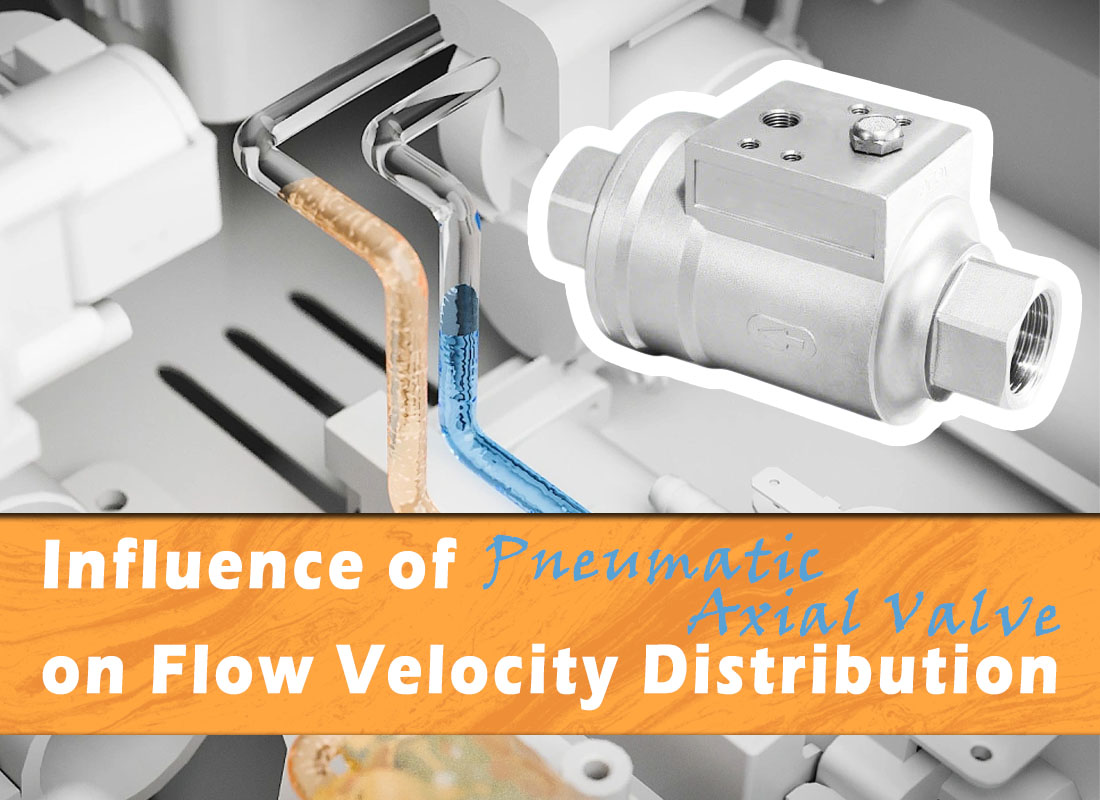
In fluid control systems, valve structure directly affects velocity profile and downstream stability. While pressure drop is often discussed, velocity distribution plays an equally important role in maintaining system performance.
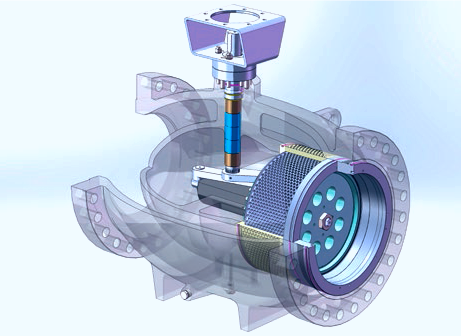
A pneumatic axial valve differs significantly from conventional valves because it allows fluid to pass through a straight coaxial path with minimal directional change.
In conventional designs, fluid must turn sharply inside the valve body. These turns generate turbulence, separation zones, and uneven velocity peaks. When comparing axial valve performance comparison, the differences become clear—traditional valves create more chaotic downstream flow patterns.
Such disturbances may affect measurement accuracy and equipment lifespan.
An axial flow pneumatic valve supports streamlined flow along the center axis. Because the passage is nearly straight, velocity distribution remains symmetrical across the cross-section.
This design improves:
◆ Flow uniformity
◆ Energy conservation
◆ Downstream pressure stability
In many axial valve for fluid control systems, this translates to smoother operation and reduced vibration.
Applications such as axial valves for industrial automation, HVAC systems, and compressed air distribution demand consistent flow. When flow velocity is evenly distributed, downstream equipment operates more stably. This is where structural differences create clear performance advantages. An adjustable pneumatic axial valve enables precise regulation without disturbing velocity symmetry.
| Parameter | Traditional Valve | Pneumatic Axial Valve |
|---|---|---|
| Flow Direction Change | Multiple turns | Straight axial flow |
| Velocity Distribution | Uneven, turbulent zones | Symmetrical, stable |
| Downstream Pressure Stability | Moderate | High |
| Equipment Vibration Risk | Higher | Lower |
Moreover, reduced turbulence lowers mechanical stress on actuators and piping systems. In water treatment systems, axial valves for water treatment help reduce flow meter errors. In compressed air networks, axial valves for compressed air minimize pressure pulsation that affects cylinder performance. In chemical processing plants, axial valves for chemical process support stable reaction conditions. This structural advantage explains why pneumatic axial valves are widely recognized for superior performance in high-flow applications.
Modern configurations combine the valve with positioners and smart control systems. An axial pneumatic control valve integrated into an automation loop maintains predictable behavior due to its stable flow characteristic.
Lower axial valve torque requirement also means actuator sizing can be optimized, improving overall efficiency.
In high-flow environments, velocity stability is not merely a theoretical parameter—it directly influences equipment lifespan, control accuracy, and energy consumption. By minimizing internal flow disturbance, the pneumatic axial valve offers a structurally efficient solution for distributors, engineers, and system designers seeking long-term operational stability.
(FK9025)
You May Interest In
Apr 29, 2025 Blog
A Guide To Master Pneumatic Axial Valves




Get a free sample

FOKCA ©1998-2025 All Rights Reserved Sitemap