- sales@fokca.com info@fokca.com
- WhatsApp: +86 150 5749 1870

Custom Cylinders & System Solutions Manufacturer | Est. 1998
Custom Cylinders & System Solutions Manufacturer | Est. 1998

Feb 13, 2026
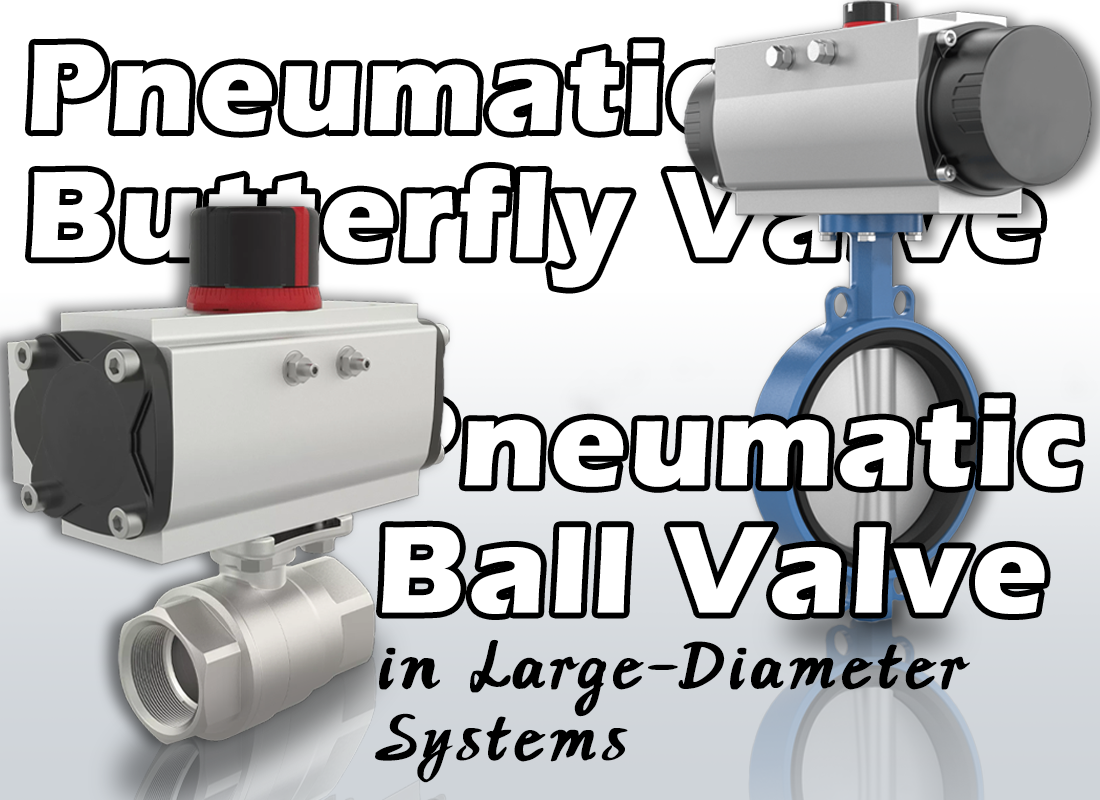
In large-diameter pipeline systems (DN100 and above, especially DN200–DN600), selecting between a pneumatic ball valve and a pneumatic butterfly valve is a common engineering decision. For distributors, procurement managers, and equipment engineers, the choice directly impacts cost, performance, and long-term reliability.
The comparison should focus on three core factors: weight, torque requirement, and operating characteristics.
As pipe diameter increases, the structural difference becomes significant.
A pneumatic actuated ball valve uses a full ball structure. In large sizes, the body and ball weight increase dramatically. In contrast, butterfly valves use a thin disc design, making them much lighter.
This difference affects:
◆ Installation cost
◆ Support structure design
◆ Transportation
◆ Actuator sizing
In municipal water or pneumatic ball valve for HVAC alternatives, lighter butterfly valves often reduce overall system cost.
One of the biggest differences lies in pneumatic ball valve torque requirement.
Due to tight sealing contact, especially in a high pressure pneumatic ball valve, breakaway torque can be substantial. A large pneumatic ball valve actuator (often double acting pneumatic ball valve type) may be required.
Butterfly valves generally demand lower torque under medium pressure conditions.
| Parameter | Pneumatic Ball Valve | Pneumatic Butterfly Valve |
|---|---|---|
| Weight (Large Size) | Heavy | Light |
| Torque Requirement | High | Medium / Low |
| Installation Space | Larger | Compact |
| Sealing Performance | Excellent | Good |
| Cost in Large Diameter | Higher | Lower |
| Suitable Pressure | High pressure | Low / Medium pressure |
In pneumatic ball valve for oil & gas or pneumatic ball valve for chemical process, torque demand is justified by superior sealing.
Both are quarter turn pneumatic ball valve types, but their flow characteristics differ.
A pneumatic 2 way ball valve typically provides quick-opening behavior, suitable for on-off duty. Butterfly valves offer more linear modulation in large pipelines.
For automation integration, a pneumatic ball valve control system may require careful sizing based on a pneumatic ball valve sizing chart.
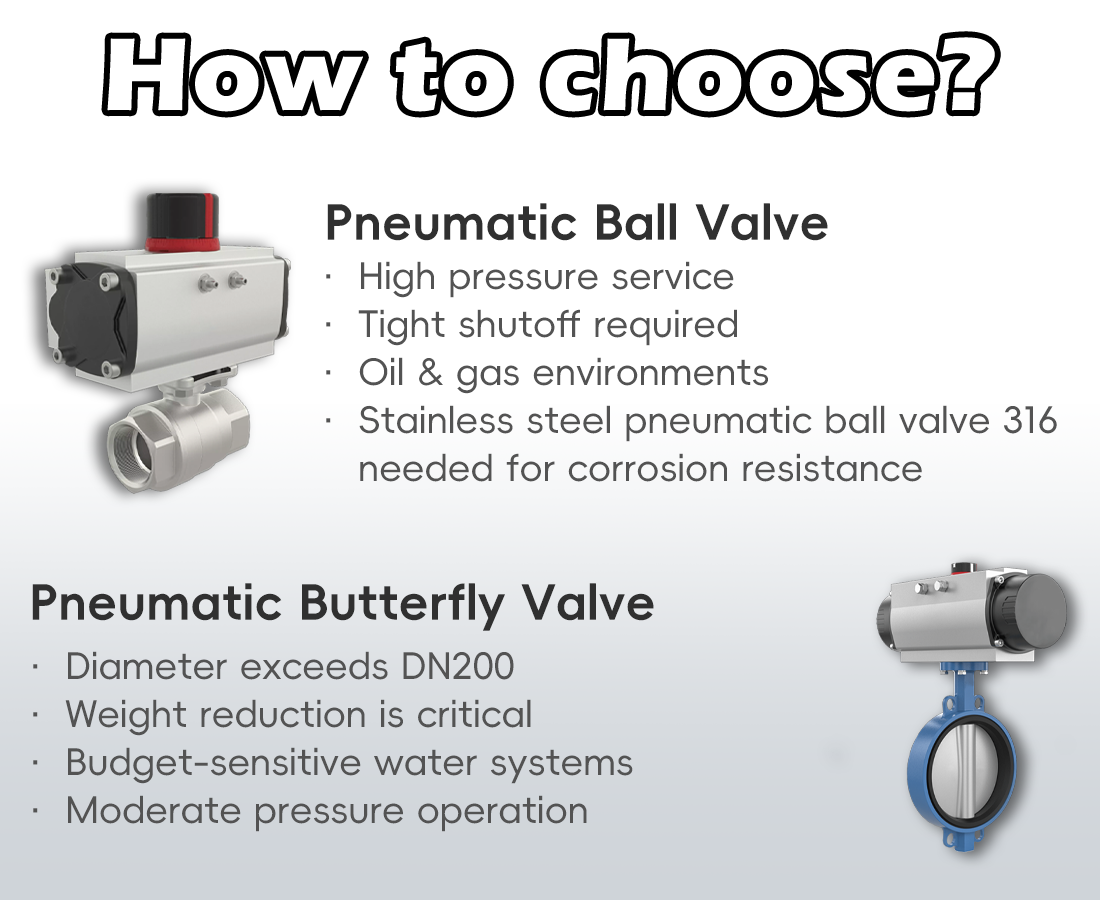
Choose a pneumatic ball valve when:
◆ High pressure service
◆ Tight shutoff required
◆ Oil & gas environments
◆ Stainless steel pneumatic ball valve 316 needed for corrosion resistance
Choose a butterfly valve when:
◆ Diameter exceeds DN200
◆ Weight reduction is critical
◆ Budget-sensitive water systems
◆ Moderate pressure operation
For automation projects, a well-designed pneumatic ball valve automation setup ensures reliability, but in large diameters, actuator size and energy consumption must be considered carefully.
In large-diameter systems, the debate between pneumatic ball valves and butterfly valves is not about which is better — it is about which is more suitable.
Understanding structural weight, torque requirements, and operational behavior helps engineers and distributors make informed decisions that balance performance and cost.
(FK9025)
You May Interest In
Feb 07, 2026 Blog
Medium Trapping in Pneumatic Ball Valve Rotation
Jan 08, 2026 Blog
Why Globe Valves Cannot Fully Replace Ball Valves

Get a free sample

FOKCA ©1998-2025 All Rights Reserved Sitemap