- sales@fokca.com info@fokca.com
- WhatsApp: +86 150 5749 1870

Custom Cylinders & System Solutions Manufacturer | Est. 1998
Custom Cylinders & System Solutions Manufacturer | Est. 1998

Feb 12, 2026
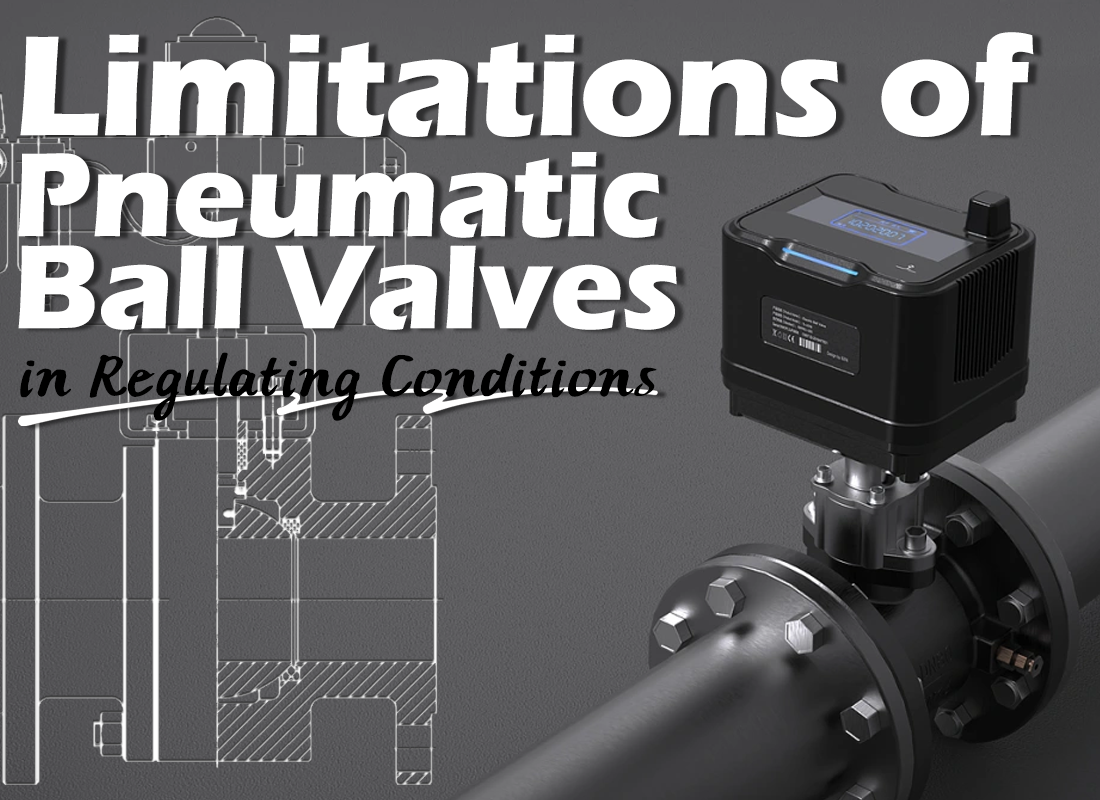
The pneumatic ball valve is widely used in industry, yet it is primarily designed for on–off service rather than precise regulation. Many engineers attempt to use it as a control valve and soon find unstable flow and shortened service life. Understanding its structural characteristics is essential for proper selection.
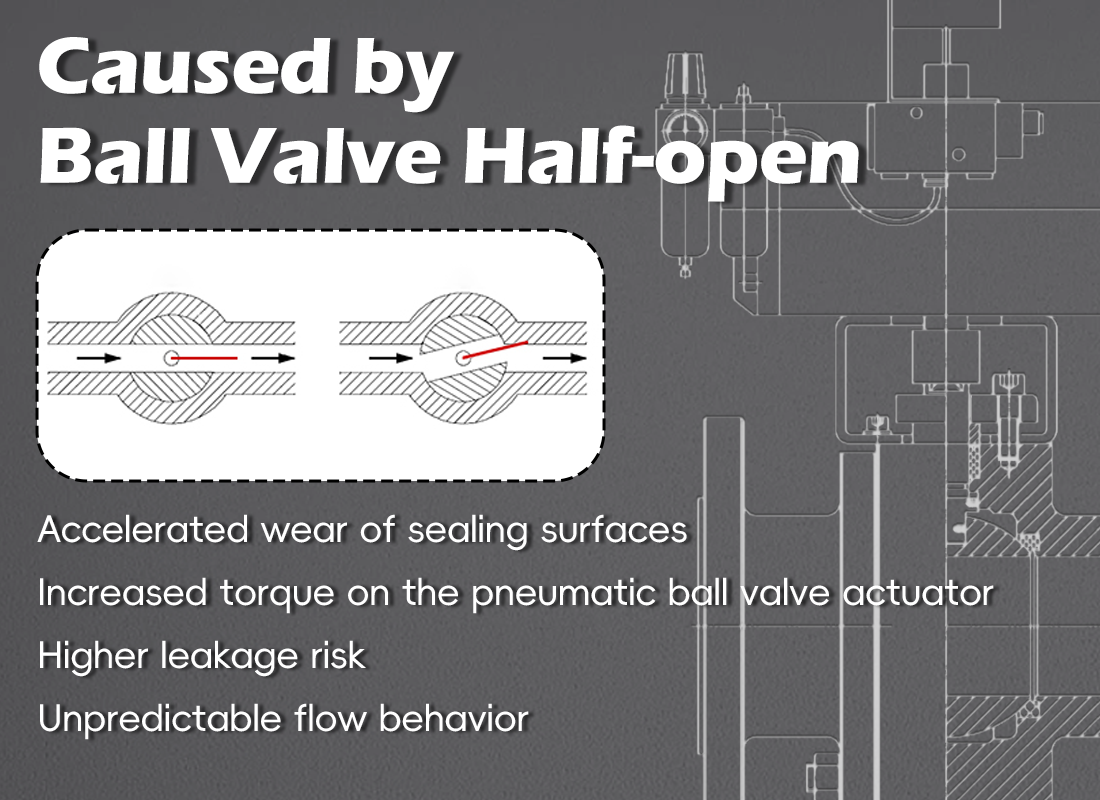
The ball valve uses a round bore structure, producing a quick-opening curve. When a pneumatic actuated ball valve operates at partial opening, the medium concentrates on the seat edge, leading to:
◆ Accelerated wear of sealing surfaces
◆ Increased torque on the pneumatic ball valve actuator
◆ Higher leakage risk
◆ Unpredictable flow behavior
This applies to pneumatic ball valves, including pneumatic stainless steel ball valve types used in demanding environments.
In throttling service, a high pressure pneumatic ball valve experiences strong erosion at the ball-seat interface. For pneumatic ball valve for steam or gas with particles, the seat may lose elasticity quickly, making zero leakage impossible even when fully closed.
| Working Mode | Suitability for Ball Valve | Risk Level |
|---|---|---|
| Full open / close | Excellent | Low |
| Long-term 30–70% opening | Poor | High wear |
| Throttling with particles | Not recommended | Seat damage |
| On-off frequent cycle | Good | Medium |
| Precise flow regulation | Limited | Unstable |
In clean media such as air or water, an adjustable pneumatic ball valve with actuator and positioner can provide rough control. However, the inherent pneumatic ball valve flow control characteristics remain non-linear, far from a real control valve.
◆ Use as on–off device in pneumatic ball valve for automation systems
◆ Avoid long-term mid-stroke operation
◆ Select V-port valve for true regulation
◆ Follow pneumatic ball valve sizing chart and torque calculation
◆ Consider stainless steel pneumatic ball valve 316 for corrosive media
Understanding these limitations helps users choose between air operated ball valve and dedicated control valves, reducing maintenance cost and downtime.
(FK9025)
You May Interest In
Feb 07, 2026 Blog
Medium Trapping in Pneumatic Ball Valve Rotation
Jan 08, 2026 Blog
Why Globe Valves Cannot Fully Replace Ball Valves


Get a free sample

FOKCA ©1998-2025 All Rights Reserved Sitemap