- sales@fokca.com info@fokca.com
- WhatsApp: +86 150 5749 1870

Custom Cylinders & System Solutions Manufacturer | Est. 1998
Custom Cylinders & System Solutions Manufacturer | Est. 1998

Dec 31, 2025
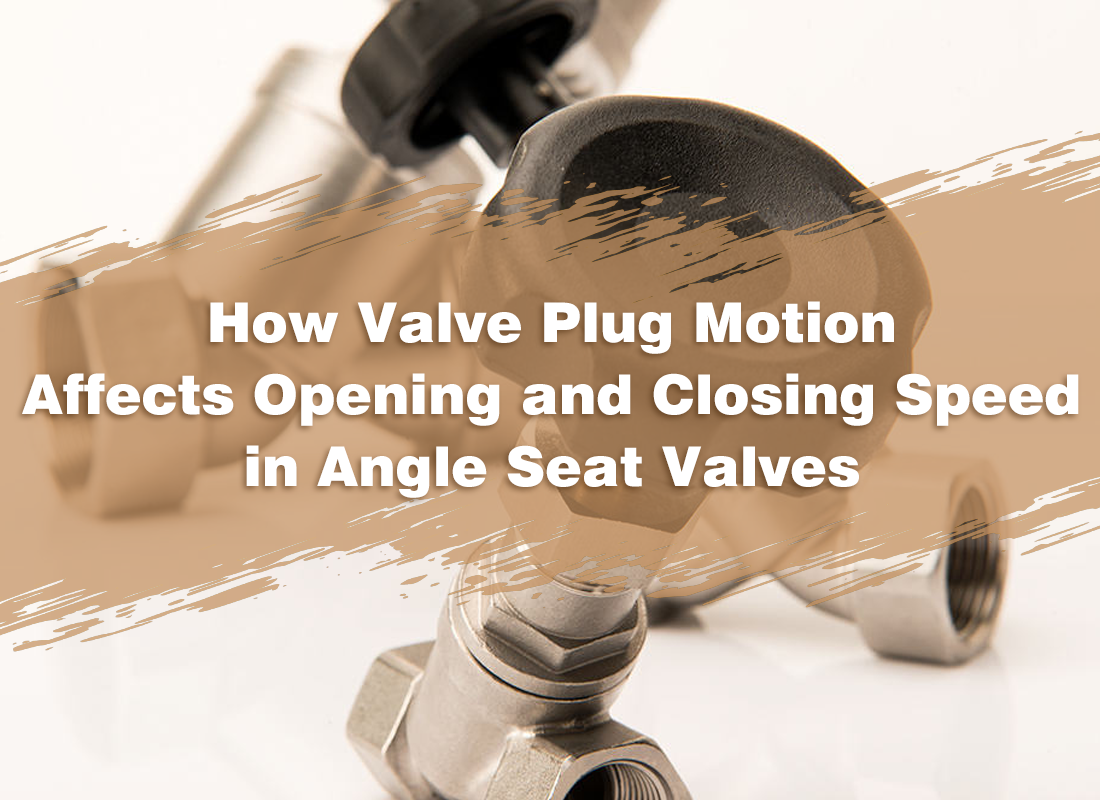
In industrial automation, engineers often judge a valve by how fast and consistently it opens and closes. Response time affects production rhythm, pressure stability, and overall system efficiency. Among different valve types, angle seat valves stand out due to their linear plug motion, which plays a key role in fast and repeatable actuation.
Fast actuation alone is not the goal. Excessively slow valves reduce efficiency, while overly fast movement can cause pressure shock and seal wear. Engineers focus on predictable and controllable response time.
The main factors affecting opening and closing speed include:
◆ Valve stroke length
◆ Pneumatic actuator thrust
◆ Motion resistance and force direction
◆ Stroke Length and Actuation Time
From a mechanical perspective, actuation time is closely related to stroke length. A shorter stroke allows faster transitions under the same actuator conditions. Angle seat valves are designed with compact strokes, enabling rapid open-close cycles compared to multi-turn valves.
Pneumatic actuators convert compressed air into axial force. In angle seat valves, this force is applied directly along the plug axis, minimizing friction and energy loss. This efficient force transfer allows quicker acceleration and deceleration during actuation.
Linear motion offers clear advantages in automation. The guided plug movement ensures predictable inertia and stable timing. Even under high-cycle operation, angle seat valves maintain consistent response times, making them suitable for automated control systems.
High-frequency operation demands both speed and durability. The simplified linear structure of angle seat valves reduces mechanical complexity and uneven wear, supporting long-term reliability in demanding environments such as steam and compressed air systems.
(FK9025)
You May Interest In

Dec 18, 2025 Blog
How Does a Shuttle Valve Work in Pneumatic Systems?


Get a free sample

FOKCA ©1998-2025 All Rights Reserved Sitemap