- sales@fokca.com info@fokca.com
- WhatsApp: +86 150 5749 1870

Custom Cylinders & System Solutions Manufacturer | Est. 1998
Custom Cylinders & System Solutions Manufacturer | Est. 1998

Risks and Limitations of Mid-Position Operation
Feb 13, 2026
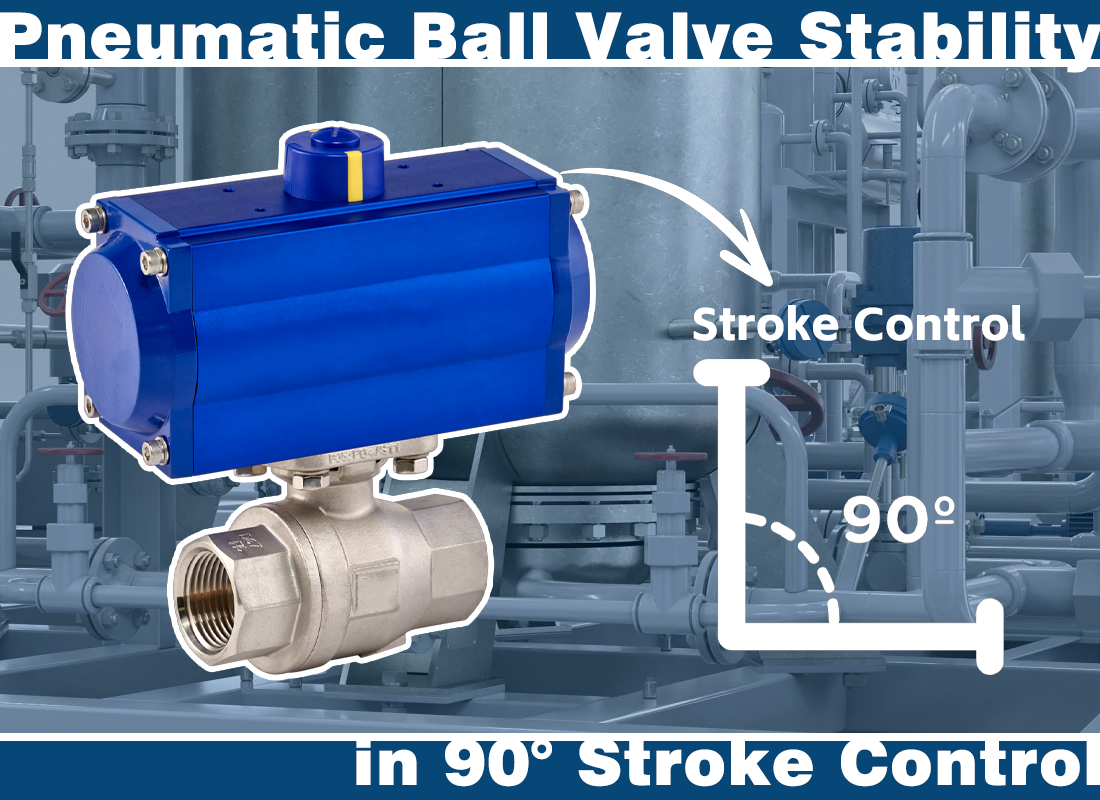
In industrial automation, pneumatic ball valves are widely used for on-off control because of their simple structure and fast response. However, when these valves are applied in 90° stroke control systems that require intermediate positioning, stability becomes a critical concern. Unlike control valves designed for throttling, a ball valve’s internal geometry creates uneven forces when the ball is neither fully open nor fully closed, making mid-position control inherently unstable.
This issue is often overlooked during system design, especially when compact pneumatic actuators are paired with standard quarter-turn ball valves. The result is oscillation, position drift, or accelerated wear during partial opening.
A ball valve regulates flow through a spherical ball with a bore. In fully open or fully closed states, pressure forces remain balanced. Problems arise when the valve operates at an intermediate angle—typically between 20° and 70°—where flow impinges unevenly on the ball surface.
At these positions, fluid generates unbalanced torque, acting against the pneumatic actuator. This torque fluctuates with flow rate and pressure, making precise positioning difficult. Compared with globe or segmented control valves, a pneumatic ball valve lacks inherent force symmetry for stable mid-position operation.
Most pneumatic actuators are optimized for end-position torque rather than continuous modulation. During 90° travel, torque output is not constant. When holding a mid position, the actuator must counter both spring force (in spring-return designs) and fluctuating fluid torque.
In air supply systems with pressure variation, even minor fluctuations can cause the actuator to creep. Over time, this leads to position instability, especially in systems without a positioner or feedback loop. For engineers expecting repeatable intermediate control, this behavior can be misleading.
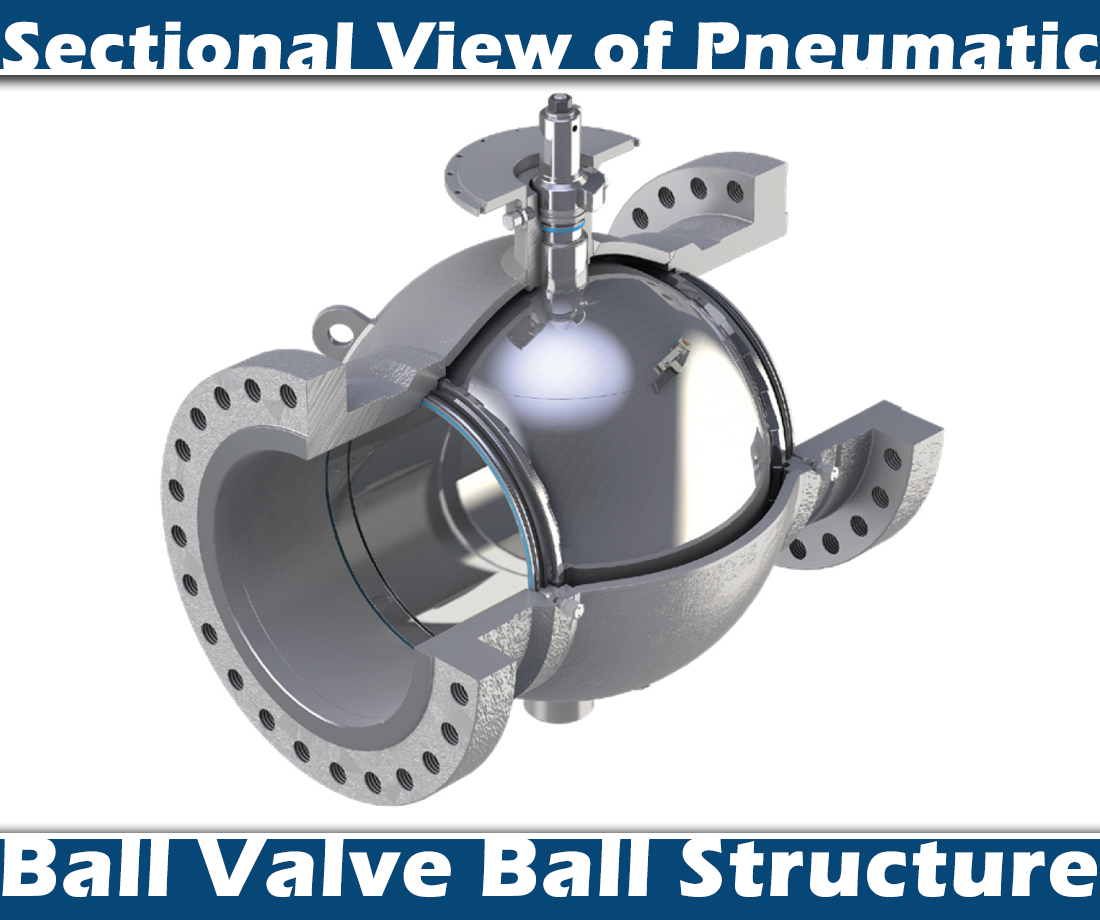
Ball valves are not linear throttling devices. In mid-position operation, a small change in angle can produce a large change in flow. This makes flow control accuracy difficult, especially in pneumatic or low-pressure systems.
Partial opening also accelerates erosion at the ball and seat interface. High-velocity flow concentrates at the seat edge, increasing wear and reducing sealing performance. In systems that require frequent modulation, this can significantly shorten valve service life.
When a pneumatic ball valve is used outside its intended on-off function, several risks emerge:
◆ Unstable holding position under fluctuating pressure
◆ Increased actuator air consumption due to constant correction
◆ Seat wear and leakage caused by high-velocity throttling
◆ Unexpected valve movement during pressure spikes
These risks are amplified in gas systems, where compressibility further increases torque variation.
| Feature | Pneumatic Ball Valve | Globe / Control Valve |
|---|---|---|
| Intended function | On-off control | Modulating control |
| Mid-position stability | Low | High |
| Torque balance | Uneven | More balanced |
| Throttling suitability | Poor | Good |
| Seat wear at partial open | High | Moderate |
In certain industrial valve applications, engineers may still require a ball valve to operate at intermediate angles due to space constraints or cost considerations. In such cases, several mitigation strategies can improve stability:

◆ Use double-acting pneumatic actuators instead of spring-return types
◆ Integrate a valve positioner for closed-loop control
◆ Limit operation to a narrow mid-range rather than full modulation
◆ Reduce system pressure fluctuations with regulators or accumulators
Even with these measures, performance will not match that of a valve designed specifically for modulation.
For applications requiring frequent mid-position control, a control valve, V-port ball valve, or segmented ball valve is usually a better choice. Standard quarter-turn pneumatic ball valves should remain dedicated to isolation duties.
Procurement teams often focus on valve size and pressure rating, but operating mode is equally important. Misapplication can lead to higher lifecycle costs, increased maintenance, and unexpected downtime.
In one packaging line retrofit project, a standard pneumatic ball valve was used to regulate compressed air flow at partial opening. Within months, operators reported unstable pressure and inconsistent actuator timing. Replacing the valve with a modulating control valve eliminated oscillation and reduced air consumption by nearly 15%, according to on-site maintenance records.
This type of scenario is common when mid-position behavior is underestimated during design.
(FK9025)
You May Interest In
Feb 07, 2026 Blog
Medium Trapping in Pneumatic Ball Valve Rotation

Jan 08, 2026 Blog
Why Globe Valves Cannot Fully Replace Ball Valves


Get a free sample

FOKCA ©1998-2025 All Rights Reserved Sitemap