- sales@fokca.com info@fokca.com
- WhatsApp: +86 150 5749 1870

Custom Cylinders & System Solutions Manufacturer | Est. 1998
Custom Cylinders & System Solutions Manufacturer | Est. 1998

Mar 25, 2026
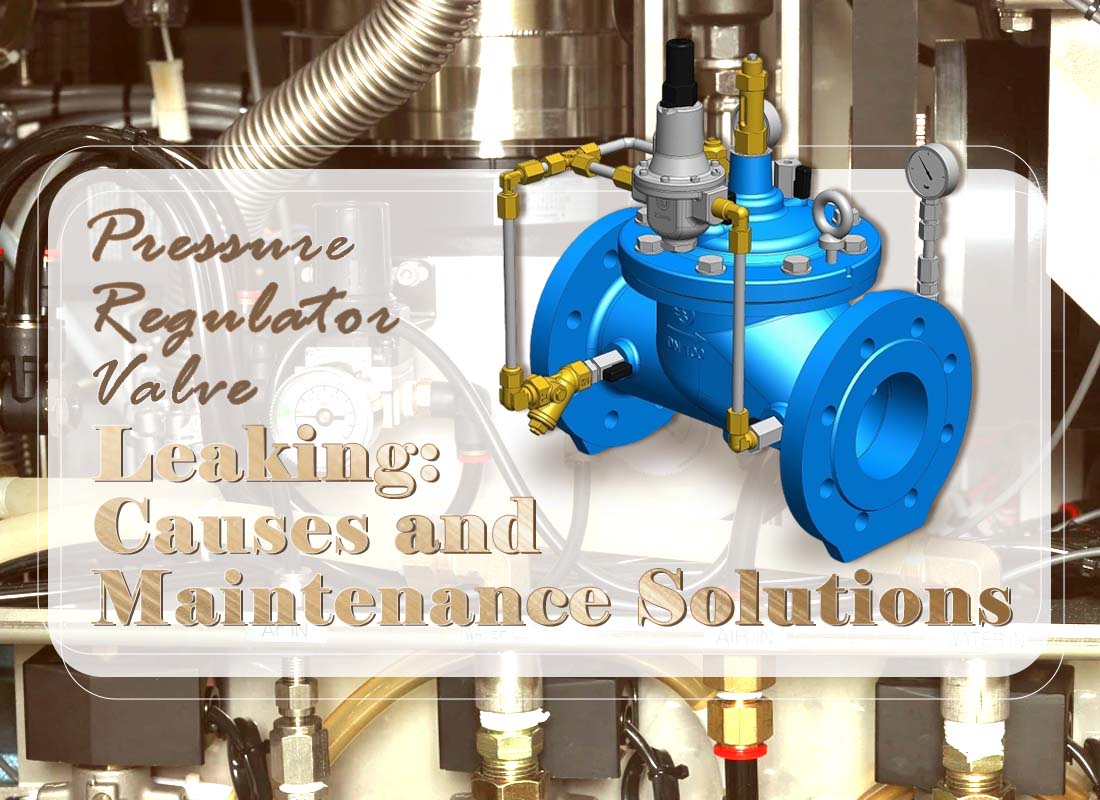
In many industrial and residential systems, a pressure regulator valve is expected to maintain stable downstream pressure by closing tightly when the set pressure is reached. However, a common issue observed in both water pressure regulator valve and air pressure regulator valve applications is continuous leaking.
This type of leaking is not always external. In most cases, it appears as internal leakage, where the valve fails to shut off completely, allowing fluid or air to pass through even when no demand exists. Over time, this leads to pressure instability, energy loss, and increased system wear.
For engineers managing pressure regulator valve for water or compressed air systems, identifying the root cause early can prevent costly downtime.
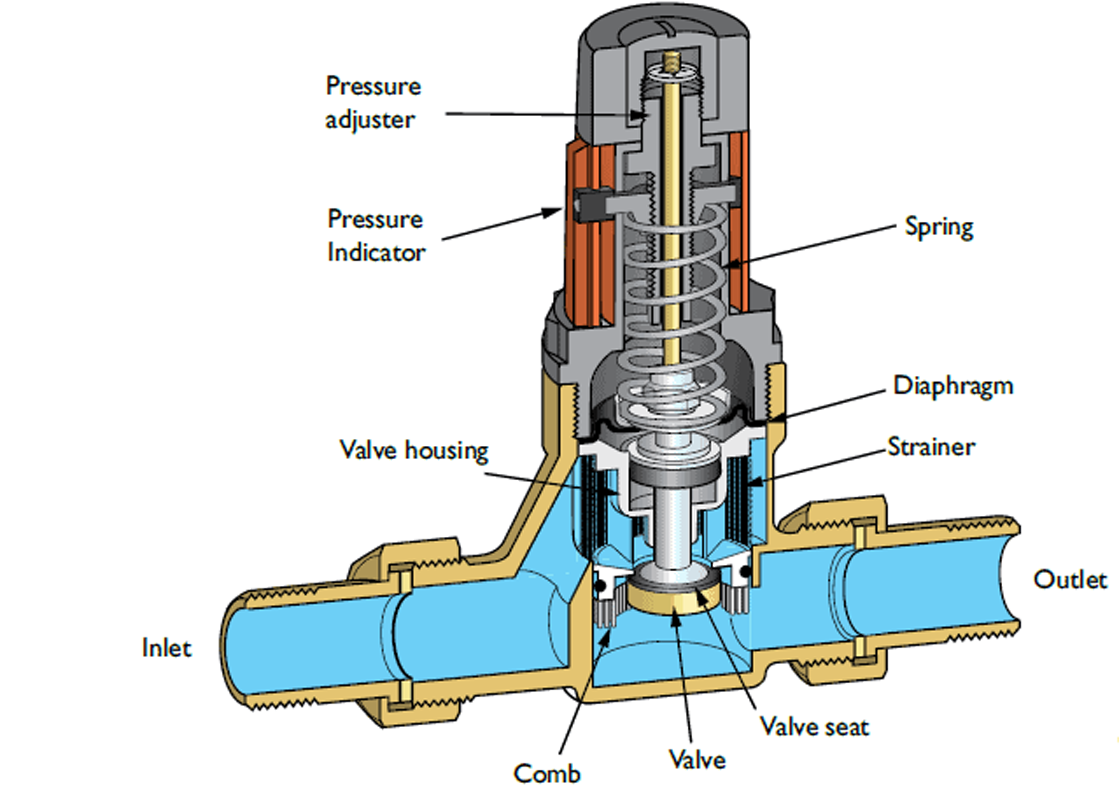
To understand leakage, it is necessary to look at how sealing works inside a pressure valve regulator. The valve typically uses a combination of a valve seat, sealing surface, and internal components such as a diaphragm or piston.
When downstream pressure reaches the set value, the valve closes, and the sealing surfaces must achieve tight contact to prevent flow. Even small imperfections in this interface can cause continuous leakage.
In systems like home water pressure regulator valve installations, this issue often manifests as slow pressure increase or constant downstream flow even when all outlets are closed.
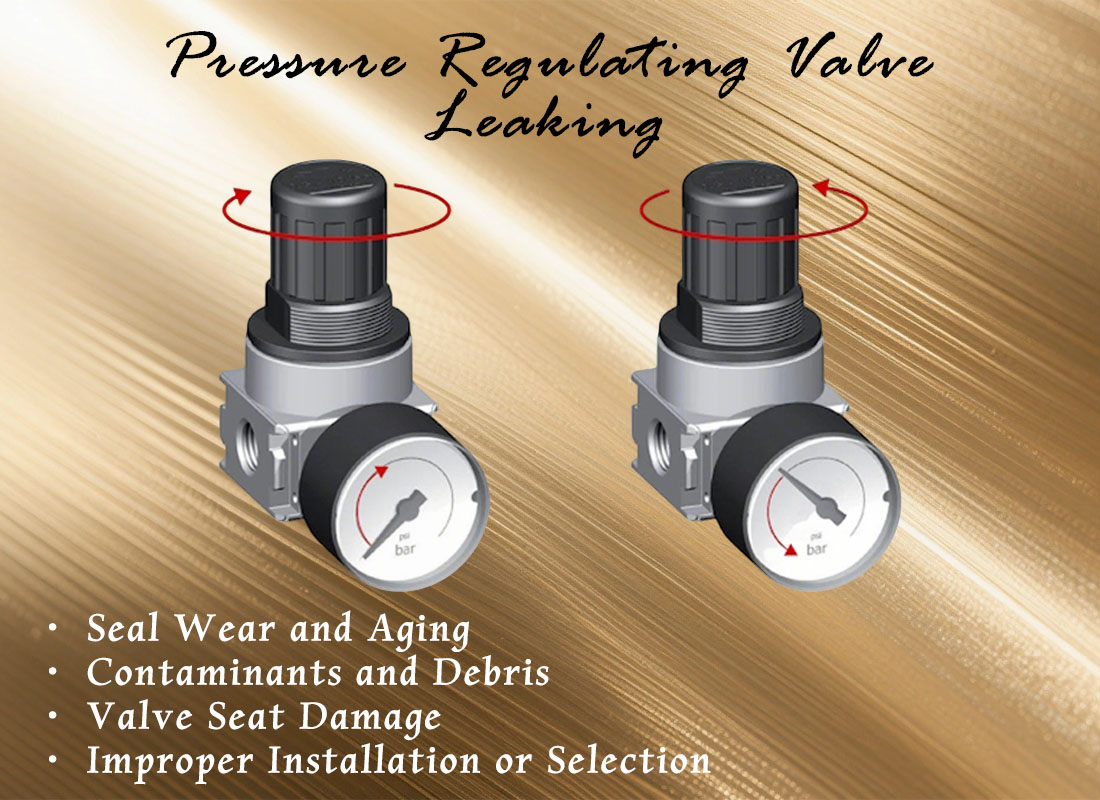
One of the most frequent causes is seal wear. Over time, sealing materials degrade due to friction, temperature, and chemical exposure.
In a gas pressure regulator valve or water system, worn seals lose elasticity and cannot maintain proper contact with the valve seat. This results in persistent internal leakage.
Another major factor is contamination. Particles such as rust, scale, or dust can enter the valve and become trapped between sealing surfaces.
Even a small particle can prevent full closure in a water valve pressure regulator, causing continuous leakage. This is especially common in older pipelines or systems without proper filtration.
The valve seat is critical for sealing. If it becomes scratched, eroded, or deformed, the valve cannot shut off completely.
In high-frequency systems such as air compressor pressure regulator valve applications, repeated opening and closing cycles accelerate seat wear. Once damaged, leakage becomes unavoidable without repair or replacement.
Incorrect valve sizing or installation can also contribute to leakage.
For example, using an undersized 1 inch pressure regulator valve in a high-flow system may cause excessive velocity, leading to erosion of internal components. Similarly, incorrect installation angles or lack of upstream filtration can shorten valve life.
The following table summarizes common leakage symptoms and their likely causes (data source type: maintenance reports and manufacturer service manuals):
| Symptom | Possible Cause | Impact on System | Recommended Action |
|---|---|---|---|
| Constant downstream pressure rise | Worn seal | Pressure instability | Replace sealing components |
| Slow pressure drop after shutdown | Debris in valve | Inefficient control | Clean internal parts |
| Continuous air or water flow | Damaged valve seat | Energy loss | Replace valve or seat |
| Fluctuating outlet pressure | Improper sizing | Unstable operation | Recalculate valve size |
A leaking pressure regulating valve affects more than just pressure control.
In compressed air systems, leakage leads to increased compressor load and higher energy consumption. In water systems, it may cause overpressure downstream, damaging equipment such as heaters or filters.
Additionally, continuous leakage accelerates wear on internal components, reducing the overall lifespan of the valve.
Proper maintenance is essential to reduce leakage risks and extend valve life.
Regular inspection of internal components helps detect early signs of wear. In many cases, replacing seals is more cost-effective than replacing the entire pressure regulator valve for house systems.
Installing upstream filters can significantly reduce contamination-related issues, especially in industrial environments.
For critical applications, selecting valves with higher-quality sealing materials and hardened valve seats improves long-term reliability.
To minimize leakage problems in pressure regulator systems:
◆ Use filtration to prevent debris entering the valve
◆ Inspect sealing components periodically
◆ Replace worn diaphragms and seals in time
◆ Avoid operating valves beyond rated flow capacity
◆ Verify correct valve sizing during system design
(FK9025)
You May Interest In


Get a free sample

FOKCA ©1998-2025 All Rights Reserved Sitemap