- sales@fokca.com info@fokca.com
- WhatsApp: +86 150 5749 1870

Custom Cylinders & System Solutions Manufacturer | Est. 1998
Custom Cylinders & System Solutions Manufacturer | Est. 1998

Mar 24, 2026
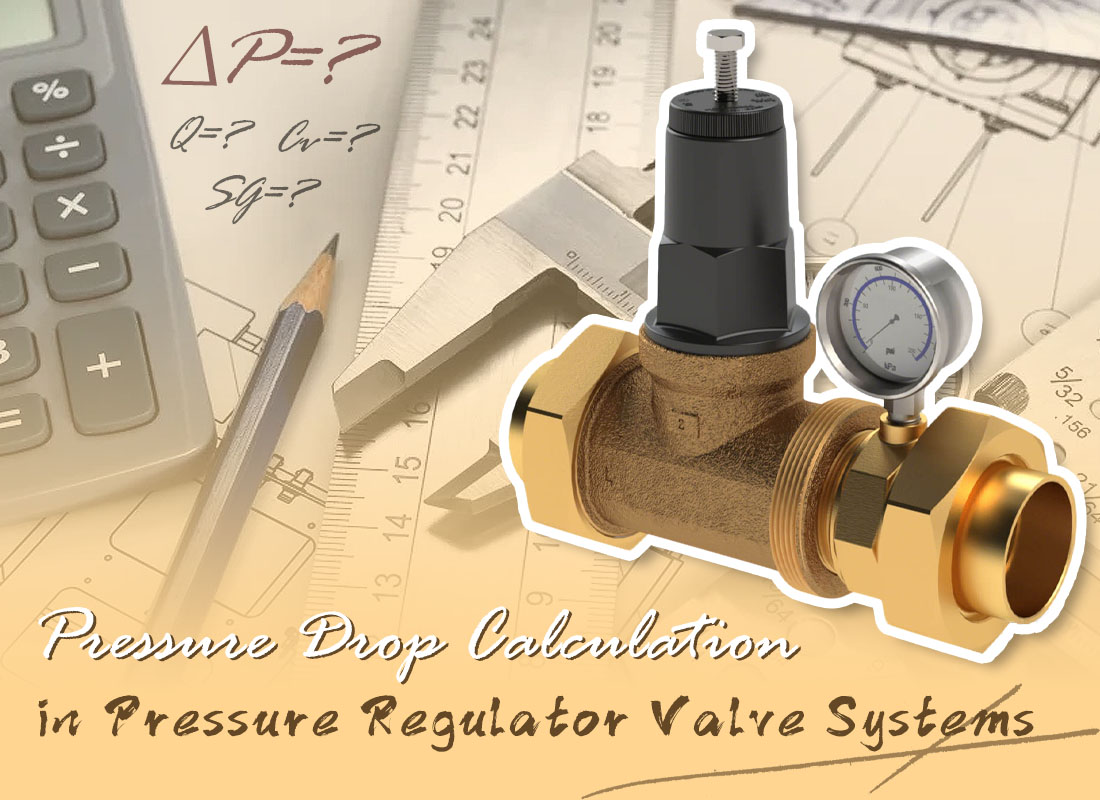
In any pressure regulator valve application, pressure drop is not just a result—it is a design parameter that directly determines system efficiency. Pressure drop refers to the difference between inlet pressure and outlet pressure after regulation.
In a typical pressure regulating valve for water or compressed air system, this drop is necessary to achieve stable downstream pressure. However, excessive pressure drop can lead to energy loss, unstable flow, or even failure to meet process requirements.
For engineers working with air pressure regulator valve or gas pressure regulator valve installations, understanding how to calculate this value is essential for both sizing and troubleshooting.
The most common way to calculate pressure drop across a pressure valve regulator is based on flow rate and valve flow coefficient (Cv). The simplified formula is:
ΔP = (Q / Cv)² × SG

This formula is widely used in water pressure regulator valve sizing and industrial fluid control. It provides a quick estimation of how much pressure loss occurs when fluid passes through the valve.
Consider a 1 inch pressure regulator valve installed in a water pipeline. The system parameters are:
◆ Flow rate: 10 m³/h
◆ Valve Cv: 8
◆ Fluid: water (SG = 1)
Using the formula:
ΔP = (10 / 8)² × 1 = 1.56 bar
This means the water pressure regulating valve will create a pressure drop of approximately 1.56 bar under these conditions.
In practical terms, if the inlet pressure is 6 bar, the outlet pressure after regulation and flow loss may fall close to 4.4 bar, depending on adjustment settings.
The following table shows typical pressure drop ranges for common valve sizes and flow conditions (data source type: manufacturer selection guides and engineering handbooks):
| Valve Size | Flow Rate (m³/h) | Typical Cv | Estimated Pressure Drop (bar) | Application |
|---|---|---|---|---|
| 1/2 inch | 2 – 5 | 3 – 5 | 0.5 – 1.2 | Small systems |
| 3/4 inch | 5 – 10 | 5 – 8 | 0.8 – 1.8 | Residential water |
| 1 inch | 8 – 15 | 8 – 12 | 1.0 – 2.5 | Industrial water |
| 1-1/4 inch | 12 – 25 | 12 – 18 | 0.8 – 2.0 | Compressed air |
These values help in selecting a suitable pressure regulator valve for house or industrial systems without excessive pressure loss.
Pressure drop is closely related to system efficiency. In a compressed air pressure regulating valve, excessive pressure loss increases compressor load and energy consumption.
In water systems, high pressure drop can lead to insufficient downstream supply, especially in multi-point usage scenarios such as home water pressure regulator valve installations.
Another common issue is instability. When pressure drop fluctuates due to changing flow demand, the pressure regulator valve adjustment may not respond quickly enough, causing oscillation in outlet pressure.
Several factors determine how much pressure drop occurs in a valve system.
First, flow rate is the most direct variable. Higher flow increases velocity, resulting in exponentially higher pressure loss.
Second, valve size and Cv value play a key role. Undersized valves in a water valve pressure regulator system often create unnecessary pressure drop.
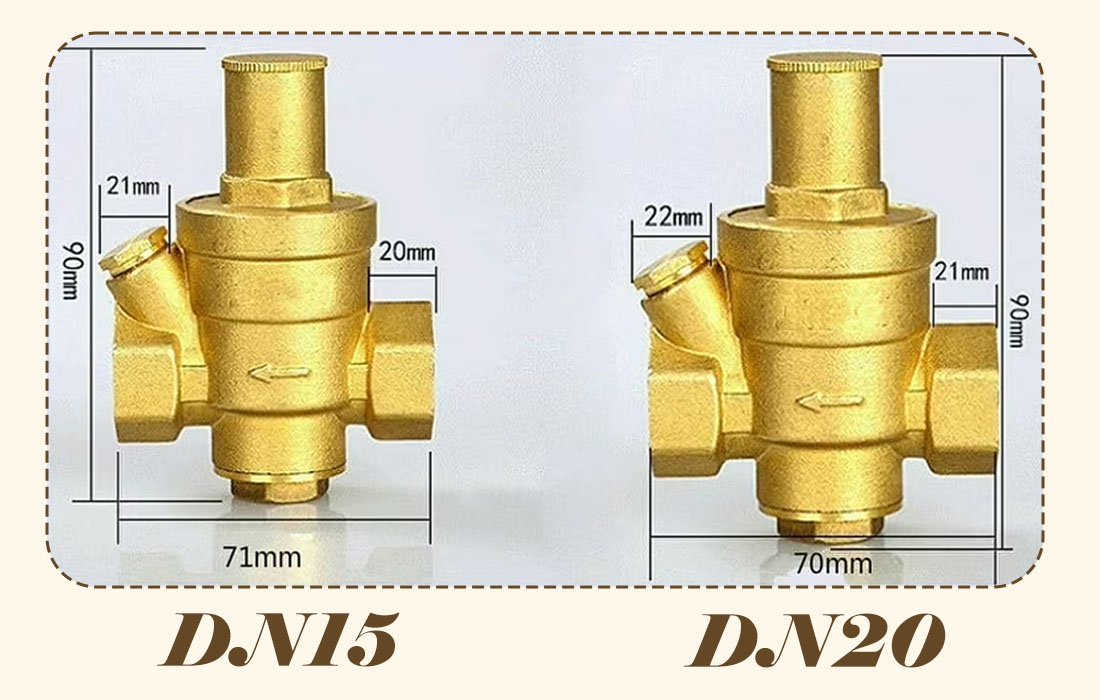
Third, fluid properties such as density and viscosity affect resistance. For example, a steam pressure regulating valve behaves differently from a water system due to compressibility.
Installation conditions, including pipe length and fittings, also contribute to total system pressure loss.
To reduce unnecessary pressure drop, proper valve selection and system design are critical. Engineers often balance between control accuracy and flow efficiency.
In many cases, selecting a slightly larger pressure regulator valve for water heater or industrial application can significantly reduce pressure loss while maintaining stable control.
Additionally, ensuring correct installation—such as straight pipe sections before and after the valve—improves flow characteristics and reduces turbulence.
For engineers and system designers, maintaining optimal pressure drop ensures both performance and energy efficiency:
◆ Select valve size based on actual flow, not pipe size
◆ Avoid operating near maximum Cv capacity
◆ Monitor pressure drop during commissioning
◆ Use stable upstream pressure to prevent fluctuation
◆ Recalculate pressure drop when system demand changes
(FK9025)
You May Interest In








Get a free sample

FOKCA ©1998-2025 All Rights Reserved Sitemap