- sales@fokca.com info@fokca.com
- WhatsApp: +86 150 5749 1870

Custom Cylinders & System Solutions Manufacturer | Est. 1998
Custom Cylinders & System Solutions Manufacturer | Est. 1998

Mar 26, 2026
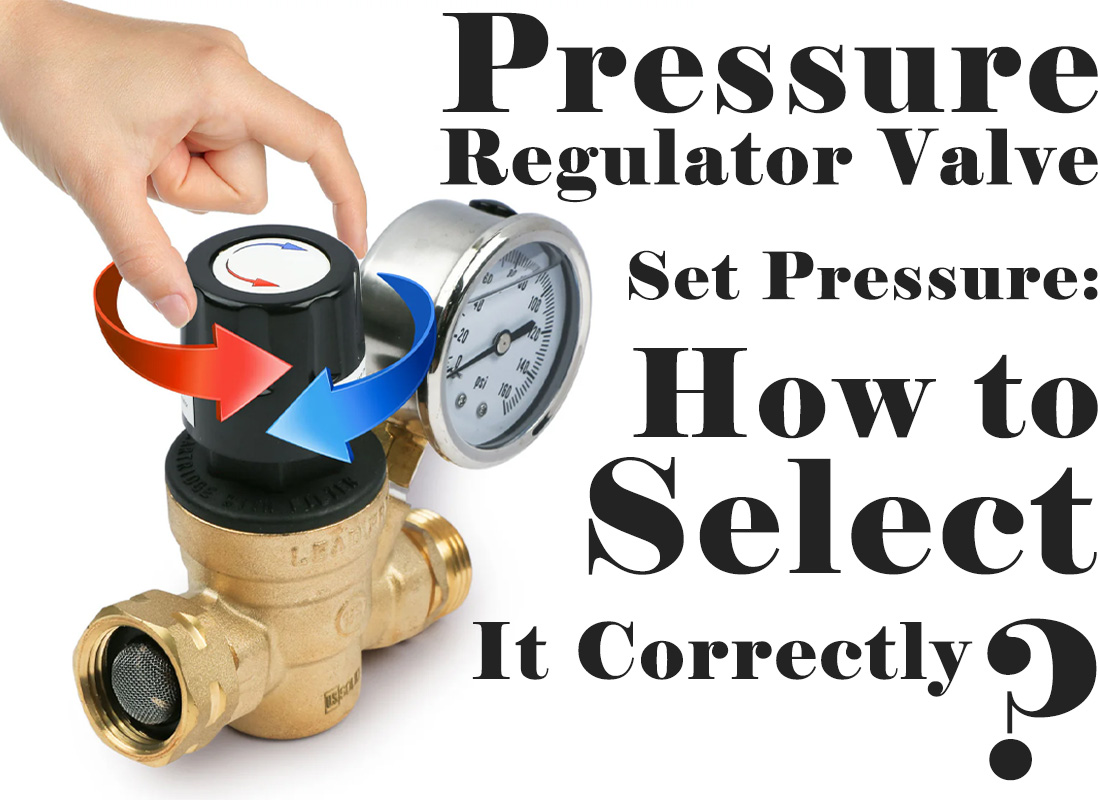
In any pressure regulator valve application, the set pressure determines how the system behaves under real operating conditions. It defines the downstream pressure maintained by the valve and directly affects equipment safety, energy efficiency, and process stability.
In a typical water pressure regulator valve installation, the set pressure must match the actual demand of downstream equipment rather than simply being chosen based on upstream pressure. For example, a household system may only require 2–4 bar, while industrial processes may demand tighter control ranges.
If the set pressure is mismatched, even a well-designed pressure regulating valve cannot deliver stable performance.
Setting the pressure too high is a common issue in both gas pressure regulator valve and water systems. While it may seem safer to allow more pressure margin, this often introduces hidden risks.
Excessive set pressure can cause overloading of downstream equipment, especially in systems like pressure regulator valve for house installations where pipes, heaters, and fittings have limited pressure ratings.
In addition, higher pressure increases leakage probability and accelerates wear on seals and valve seats. Over time, this leads to higher maintenance frequency and reduced valve lifespan.
On the other hand, setting pressure too low can result in insufficient flow or unstable operation.
In an air pressure regulator valve used for automation, low pressure may fail to provide enough force for actuators, leading to incomplete movements or delayed response.
Similarly, in a pressure regulator valve for water heater, insufficient pressure may cause inconsistent heating performance or failure to meet peak demand.
Low set pressure also reduces system responsiveness, especially in applications where pressure fluctuations are frequent.
Selecting the correct set pressure requires understanding multiple system parameters.
First, the actual demand pressure of downstream equipment must be clearly defined. This is the baseline for any pressure regulator valve adjustment.
Second, system fluctuations should be considered. In many pressure regulator valves, upstream pressure may vary significantly, so a safety margin is necessary.
Third, valve characteristics such as flow capacity and response time also influence the effective set pressure. A 1 inch pressure regulator valve operating near its limit may require a slightly higher set point to maintain stability.
The following table provides general guidance for selecting set pressure in common applications (data source type: engineering design manuals and manufacturer recommendations):
| Application | Typical Set Pressure Range | Key Consideration | Valve Type |
|---|---|---|---|
| Residential water system | 2 – 4 bar | Pipe safety, comfort | Home water pressure regulator valve |
| Industrial water system | 3 – 6 bar | Process stability | Water pressure regulating valve |
| Compressed air system | 5 – 8 bar | Actuator performance | Air pressure regulating valve |
| Gas distribution | 1 – 3 bar | Safety and control | Gas pressure regulator valve |
These values serve as a starting point, but actual selection must be adjusted based on system-specific conditions.
In real projects, engineers often follow a structured approach to determine the correct set pressure.
First, identify the minimum and maximum pressure requirements of downstream equipment. This defines the acceptable operating range.
Second, analyze system pressure fluctuations, including peak demand scenarios. This ensures the pressure valve regulator can maintain stability under varying loads.
Third, select a valve with appropriate Cv and size, ensuring it operates within an efficient range rather than at its limits.
Finally, perform on-site adjustment and testing. Even after calculation, fine-tuning the pressure regulator valve adjustment is necessary to achieve optimal performance.
In many real-world cases, improper set pressure is not discovered until system instability appears. For example, a packaging line using compressed air may experience inconsistent clamping force due to incorrect regulator settings.
By slightly increasing or decreasing the set pressure and observing system response, engineers can quickly identify the optimal range.
It is also important to consider long-term operation. Factors such as wear, temperature changes, and system expansion may require periodic adjustment of the pressure regulating valve.
For engineers, distributors, and end users aiming for reliable system performance:
◆ Match set pressure with actual equipment requirements
◆ Avoid excessive safety margins that increase wear
◆ Verify pressure stability under peak load conditions
◆ Adjust and test valves during commissioning
◆ Recheck settings periodically during maintenance
(FK9025)
You May Interest In






Get a free sample

FOKCA ©1998-2025 All Rights Reserved Sitemap