- sales@fokca.com info@fokca.com
- WhatsApp: +86 150 5749 1870

Custom Cylinders & System Solutions Manufacturer | Est. 1998
Custom Cylinders & System Solutions Manufacturer | Est. 1998

Jan 19, 2026
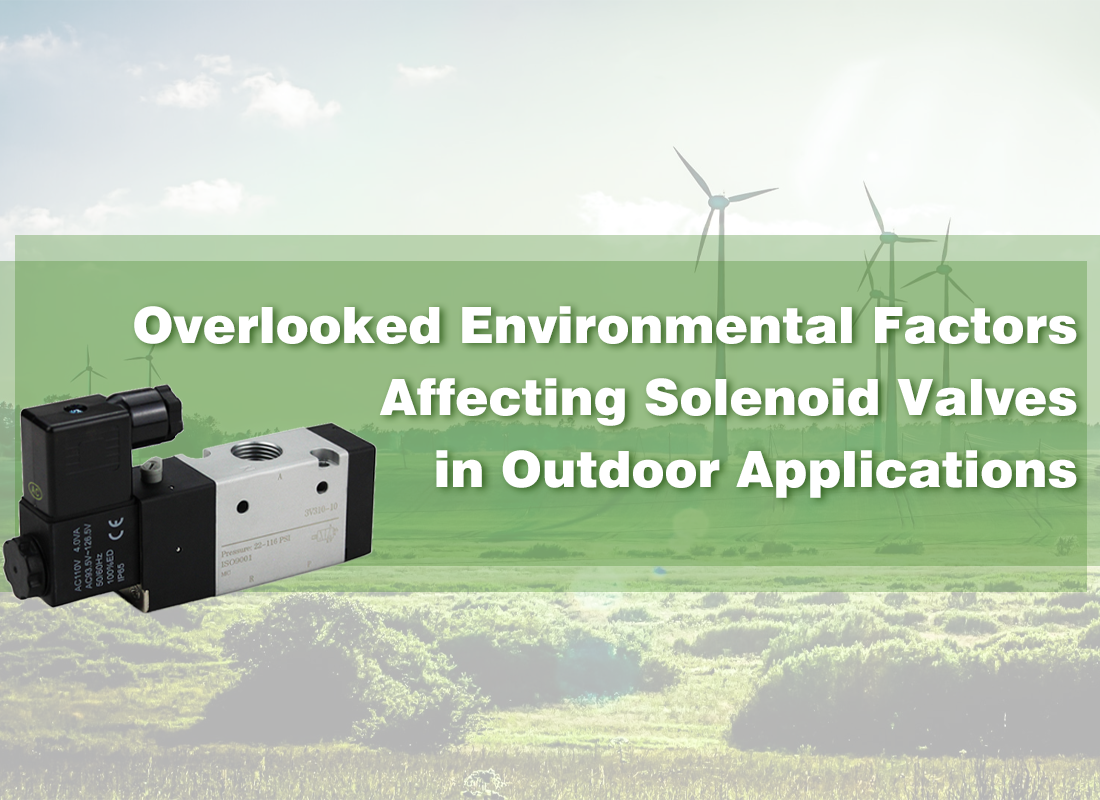
When selecting a solenoid valve, engineers often focus on pressure rating, port size, and voltage, while environmental conditions receive far less attention. In outdoor applications, temperature fluctuations, humidity, and dust rarely cause immediate failure, but they gradually affect reliability and lead to unstable operation over time.
Most outdoor solenoid valve issues are not caused by incorrect sizing, but by underestimated environmental stress.
Outdoor installations are exposed to significant day–night temperature changes. Under direct sunlight, the valve body heats up, while at night it cools rapidly. These repeated cycles cause thermal expansion and contraction, directly affecting the clearance between the spool and guide sleeve.
At lower temperatures, increased friction may prevent full actuation, even when the electrical signal is correct. This is a common problem in low temperature solenoid valve applications where ambient conditions were not fully considered during selection.
Even with a high ingress protection rating, condensation remains a major risk. Warm, humid air can enter the coil housing during the day and condense when temperatures drop at night. This internal moisture gradually damages insulation and electrical contacts.
Over time, condensation leads to unstable solenoid valve operation, increased coil resistance, and shortened service life. This explains why failures still occur in outdoor systems using an IP65 solenoid valve.
In cold climates, freezing is one of the most direct threats to solenoid valves. Residual moisture inside the valve or water-containing media can freeze when ambient temperatures fall below zero.
Ice formation restricts valve spool movement, preventing proper opening or closing. Repeated freeze–thaw cycles also accelerate seal wear, increasing the risk of internal leakage. In such conditions, direct acting solenoid valves or heating solutions are often more reliable choices.
Outdoor environments expose valves to dust, sand, and industrial particles. Even if contaminants do not enter the fluid path, they can infiltrate through venting or cable entry points.
Accumulated particles increase friction and gradually reduce solenoid valve performance. This issue is especially common in industrial solenoid valve installations operating continuously in open air.
| Environmental Factor | Typical Impact on Solenoid Valve | Common Result |
|---|---|---|
| Temperature fluctuation | Thermal expansion mismatch | Slow or failed actuation |
| Condensation | Coil insulation degradation | Unstable operation |
| Low temperature freezing | Blocked spool movement | Valve stuck open/closed |
| Dust and particles | Increased friction | Shortened service life |
While environmental factors cannot be eliminated, their impact can be minimized. Engineers should define ambient temperature ranges clearly, select sealed solenoid valves designed for outdoor use, and avoid installation positions where condensation can accumulate.
Routine inspection of coil condition and actuation smoothness helps detect problems early. For distributors and purchasing teams, understanding these factors also reduces unexpected failures and after-sales disputes.
(FK9025)
You May Interest In





Dec 31, 2025 Blog
Pneumatic Solenoid Valve Manual Button Explained




Get a free sample

FOKCA ©1998-2025 All Rights Reserved Sitemap