- sales@fokca.com info@fokca.com
- WhatsApp: +86 150 5749 1870

Custom Cylinders & System Solutions Manufacturer | Est. 1998
Custom Cylinders & System Solutions Manufacturer | Est. 1998

Feb 16, 2026
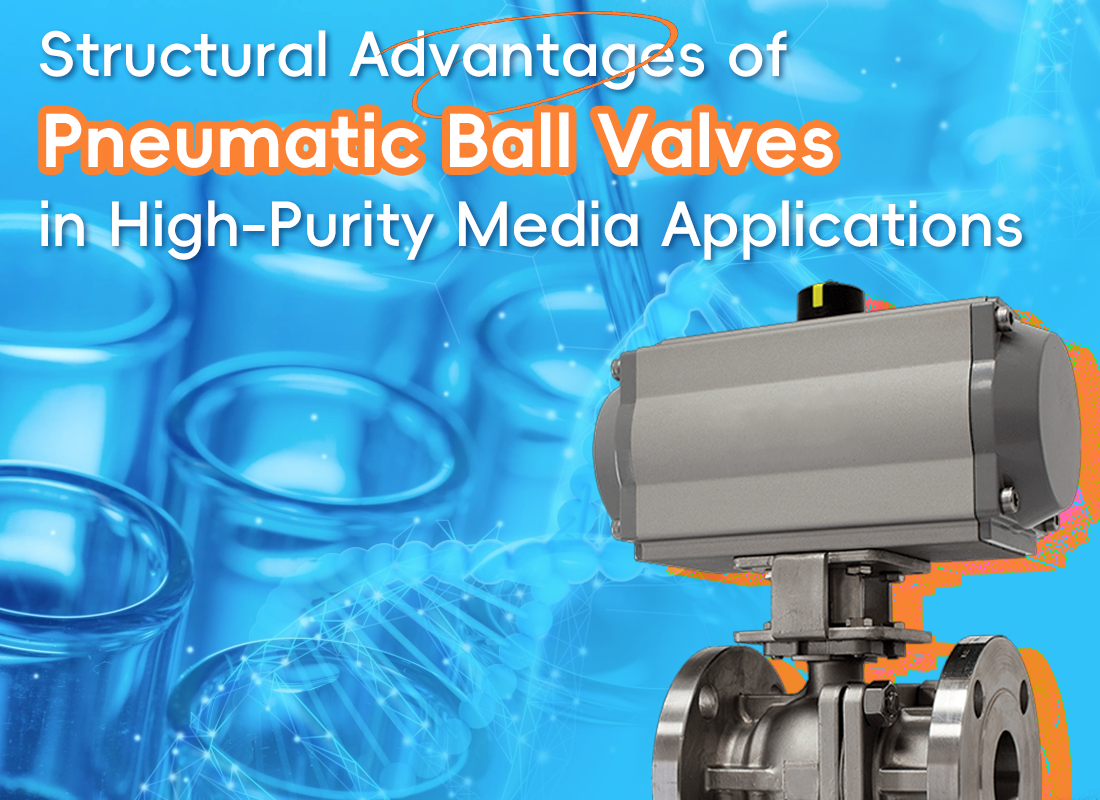
In industries such as semiconductors, pharmaceuticals, and biotechnology, high-purity media systems are extremely sensitive to internal valve residue. Even minimal fluid retention inside a valve can introduce contamination, disrupt process stability, or compromise product quality. Under these conditions, valve structure becomes a critical selection factor, and pneumatic ball valves are widely recognized for their structural suitability.
High-purity fluids and gases require strict control over contamination sources. Any dead zone inside a valve can trap residual media, making complete flushing difficult during cleaning cycles. Over time, these trapped residues may degrade, react, or release particles back into the system. This is why valve geometry plays a decisive role in clean system performance.
A key structural advantage of a ball valve for clean media is its straight-through flow path. When fully open, the ball bore aligns with the pipeline, allowing fluid to pass with minimal turbulence. This design significantly reduces the formation of low-velocity zones where media could accumulate.
Compared with valves that rely on directional flow changes, the internal geometry of a pneumatic ball valve supports efficient drainage and flushing, making it well suited for clean-in-place processes.
In high-purity applications, surface finish matters as much as valve type. Full bore ball valves with smooth internal surfaces help prevent adhesion of particles or liquid films. The absence of complex internal cavities allows for faster purging and more predictable cleaning results.
Field experience shows that, under identical operating conditions, ball valves consistently exhibit lower internal residue than globe valves or other throttling valves. This performance advantage stems directly from structural simplicity rather than material alone.

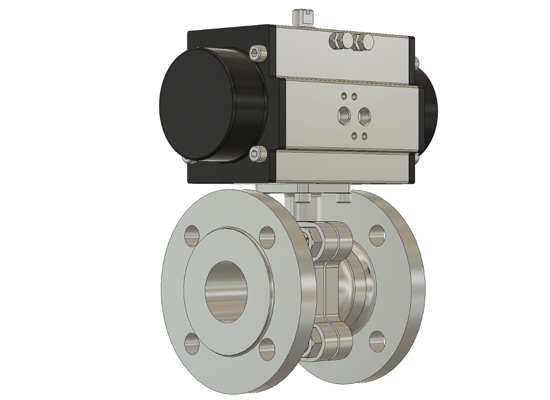
Using a pneumatic actuated ball valve further enhances system cleanliness. Pneumatic actuation keeps heat-generating components and electrical elements outside the valve body, reducing contamination risks and simplifying compliance with cleanroom or explosion-proof requirements.
For automated production lines handling high-purity gases or liquids, pneumatic actuation also ensures reliable operation without introducing additional internal complexity.
| Valve Type | Flow Geometry | Residue Potential | Cleaning Efficiency | Common Use |
|---|---|---|---|---|
| Ball Valve | Straight-through | Minimal | High | High-purity fluids |
| Globe Valve | Directional turns | High | Limited | Flow control |
| Angle Seat Valve | Mild deflection | Low | Moderate | Steam systems |
| Diaphragm Valve | Isolated chamber | Very Low | High | Biotech processes |
From a design standpoint, industrial pneumatic ball valves offer an effective balance between cleanliness, durability, and automation compatibility.
Choosing the right ball valve still requires attention to detail. Stainless steel ball valves with polished internal surfaces are preferred for clean media. Seal material compatibility, bore diameter, and connection style all influence long-term system performance.
In high-purity environments, selecting the wrong internal finish or seat material can be more problematic than choosing the wrong valve category. Experienced engineers often evaluate these structural details early to avoid costly retrofits later.
(FK9025)
You May Interest In


Jan 08, 2026 Blog
Why Globe Valves Cannot Fully Replace Ball Valves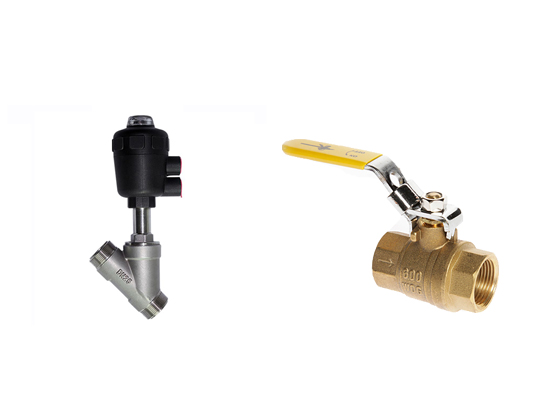



Get a free sample

FOKCA ©1998-2025 All Rights Reserved Sitemap