- sales@fokca.com info@fokca.com
- WhatsApp: +86 150 5749 1870

Custom Cylinders & System Solutions Manufacturer | Est. 1998
Custom Cylinders & System Solutions Manufacturer | Est. 1998

Jan 26, 2026
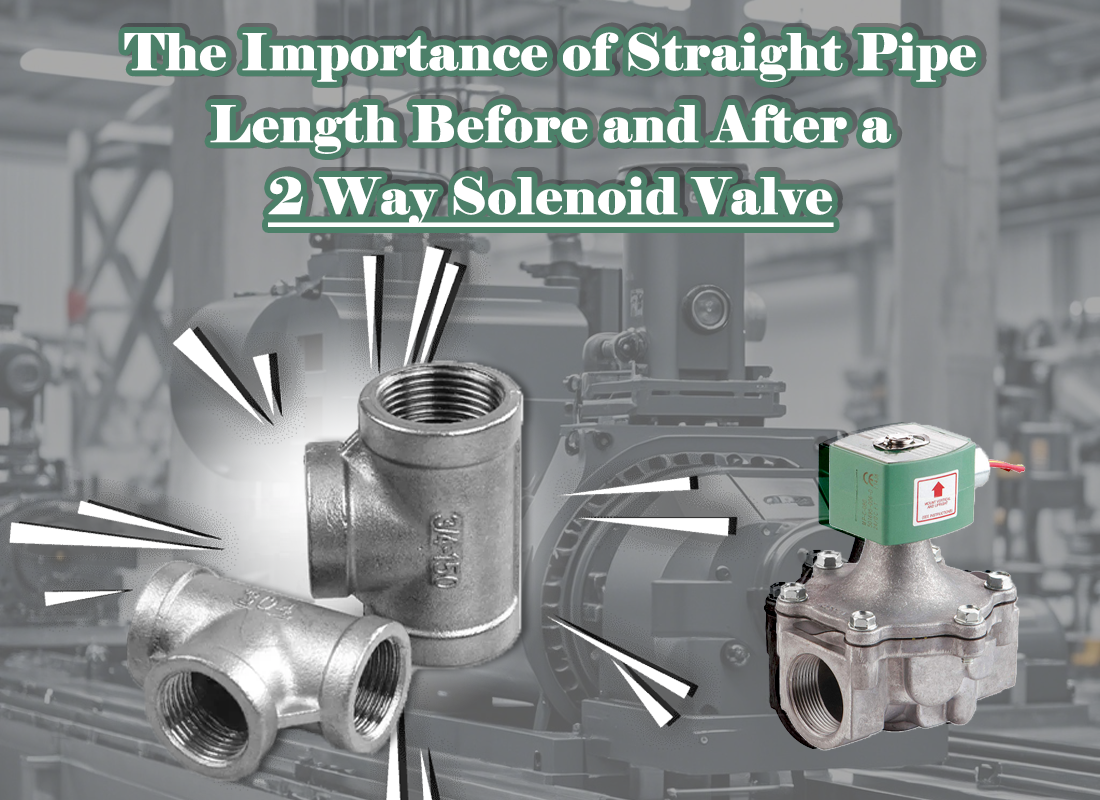
In many fluid control systems, attention is often focused on valve specifications such as voltage, pressure rating, or port size. However, for a 2 way solenoid valve, installation conditions can be just as critical as the valve itself. One of the most underestimated factors is the straight pipe length before and after the valve.
When fluid enters the valve body under unstable flow conditions, turbulence and velocity distortion can directly affect valve core movement. Over time, this leads to inconsistent switching, noise, and even premature failure. Understanding why straight pipe sections matter helps engineers avoid problems that cannot be solved by changing the valve alone.
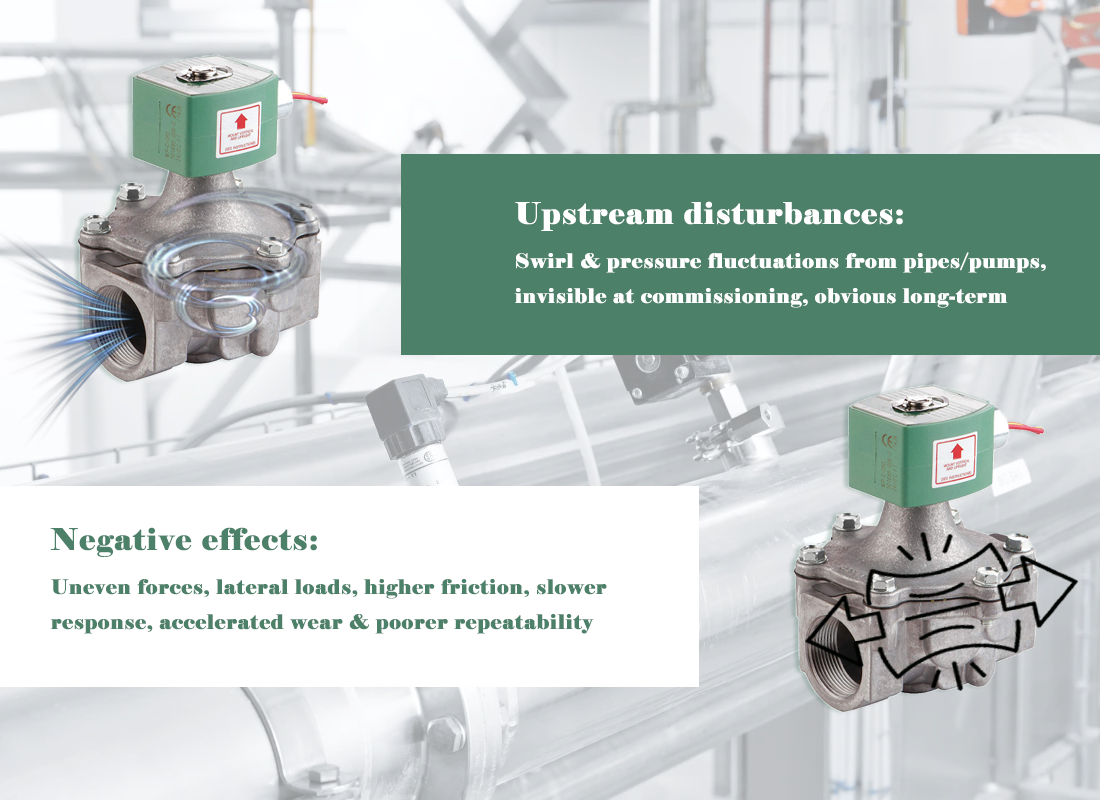
Fluid rarely enters a solenoid valve 2 way in a perfectly uniform state. Upstream elbows, tees, reducers, or pumps introduce swirl, asymmetric velocity profiles, and pressure fluctuations. These disturbances are often invisible during commissioning but become obvious during long-term operation.
For 2-way solenoid valves with small internal clearances, turbulent inflow can apply uneven forces on the plunger or diaphragm. Instead of moving smoothly along its axis, the valve core may experience lateral loads, increasing friction and slowing response. In high-cycle applications, this effect accelerates mechanical wear and reduces repeatability.
Inside a 2 way solenoid valve, electromagnetic force is carefully balanced against spring force and fluid pressure. When turbulence enters the valve body, this balance is disrupted. Rapid pressure oscillations can momentarily oppose coil force, especially during opening and closing transitions.
This is particularly noticeable in normally closed solenoid valve designs. During energization, unstable upstream flow may delay opening, while during de-energization, pressure surges can push the valve core against the seat unevenly. Over time, this behavior contributes to sealing wear and inconsistent shut-off performance.
A sufficient straight pipe section allows disturbed flow to redevelop into a more uniform velocity profile before reaching the valve. For most industrial solenoid valve applications, this stabilization significantly reduces turbulence intensity and pressure asymmetry.
As a general engineering guideline, installing straight pipe lengths of 5–10 times the pipe diameter upstream and 3–5 times downstream improves valve stability. While space constraints sometimes limit this ideal setup, even partial compliance can noticeably improve the performance of a 2 way solenoid valve in real systems.
While upstream conditions receive more attention, downstream piping also influences valve behavior. Rapid expansion, sharp bends, or immediate throttling after the valve can create backpressure fluctuations that reflect into the valve body.
In 2 way solenoid valves, these fluctuations may affect closing speed and seating consistency. In pneumatic systems, unstable downstream flow can cause vibration and noise. In liquid systems, it may contribute to pressure spikes that stress seals and internal components. Maintaining a short straight section after the valve helps dissipate these effects before they feed back into the valve.
| Installation Condition | Flow Stability | Valve Response Consistency |
|---|---|---|
| No straight pipe, elbow before valve | High turbulence | Unstable, delayed switching |
| Short straight pipe (2–3D) | Moderate turbulence | Improved but inconsistent |
| Recommended straight pipe length | Uniform flow | Stable and repeatable |
This comparison shows that installation quality often determines whether a valve performs as expected.
When selecting 2-way solenoid valves, engineers should consider not only flow rate and pressure but also available installation space. If straight pipe lengths are limited, choosing a valve with higher tolerance to flow disturbance or adjusting system layout may be more effective than oversizing the valve.
In compact systems, even minor layout changes—such as relocating an elbow a few diameters upstream—can significantly improve flow conditions at the valve inlet.
(FK9025)
You May Interest In





Dec 31, 2025 Blog
Pneumatic Solenoid Valve Manual Button Explained



Get a free sample

FOKCA ©1998-2025 All Rights Reserved Sitemap