- sales@fokca.com info@fokca.com
- WhatsApp: +86 150 5749 1870

Custom Cylinders & System Solutions Manufacturer | Est. 1998
Custom Cylinders & System Solutions Manufacturer | Est. 1998

Jan 22, 2026
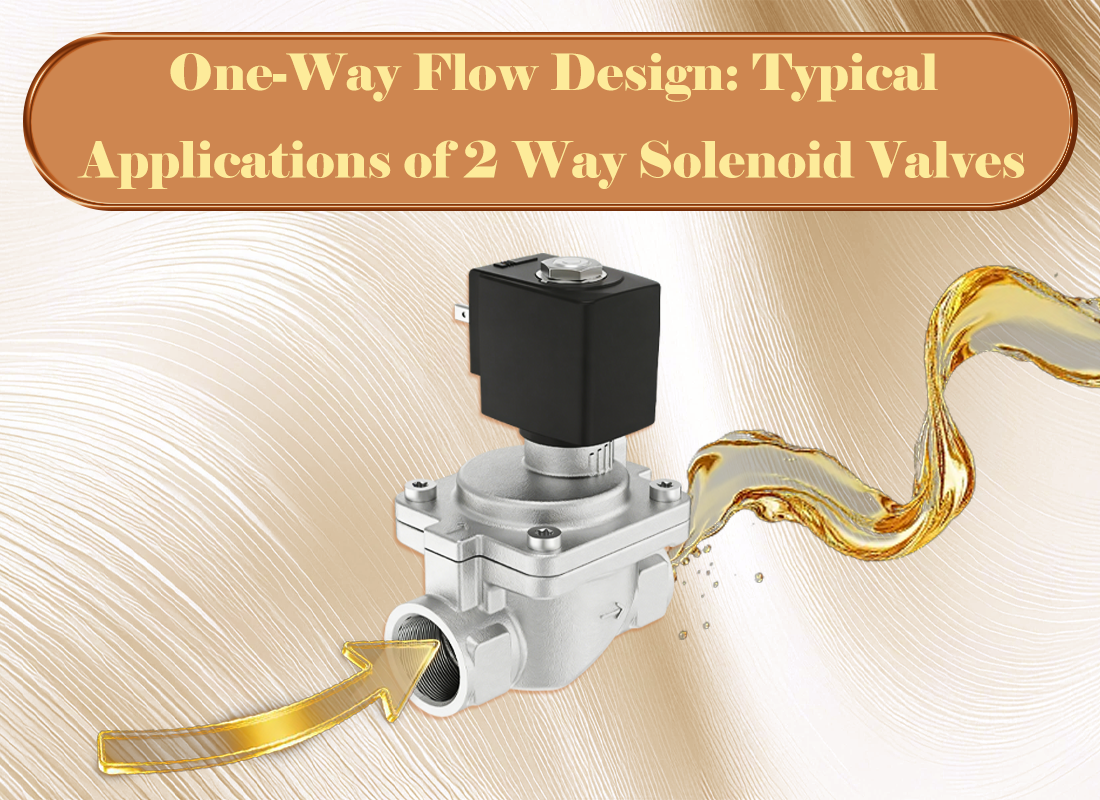
In industrial fluid control systems, 2 way solenoid valves are often considered simple on/off components with flexible installation. In reality, many field issues are not caused by electrical failure or poor quality, but by overlooking the one-way flow design built into certain valve structures.
Many medium and large size 2 way solenoid valves use a pilot-operated or semi-direct acting design. In these valves, electromagnetic force alone does not fully open the valve. Instead, system pressure in a defined direction assists the valve core movement.
This design allows a relatively small coil to control higher flow rates and pressures, improving energy efficiency. However, it also means that flow direction becomes a functional requirement, not a suggestion.
From an engineering perspective, one-way flow allows better force balance on the valve core. When pressure enters from the designed inlet, it supports the lifting or sealing action of the valve plug.
When flow direction is reversed, this balance disappears.
Reverse flow may apply pressure to the wrong side of the sealing surface, leading to incomplete opening, unstable movement, or sealing failure.
In many 2 way solenoid valves, the sealing system is not symmetrical. Valve seats, elastomer seals, and plug geometry are optimized for pressure from one direction only.
When fluid flows backward, pressure can lift the seal away from the seat instead of pressing it tighter. In water or low-viscosity media, this often results in micro-leakage that worsens over time.
Field technicians frequently encounter situations where a solenoid valve is energized but fails to open consistently. After electrical checks, the root cause is often reversed installation.
Under reverse pressure, the valve core must fight both the spring force and the medium pressure itself. Even if the coil initially pulls in, the core may quickly drop back, causing vibration, noise, or delayed response.
One-way flow solenoid valves are commonly used in systems where flow direction is predictable:
◆ Water treatment supply and discharge lines
◆ Steam condensate drain branches
◆ Compressed air distribution systems
◆ Industrial washing and rinsing equipment
◆ Low-pressure circulation systems
In these applications, correct flow orientation ensures stable operation and long service life.
| Feature | Single Direction 2-Way Solenoid Valve | Bi-Directional 2-Way Solenoid Valve |
|---|---|---|
| Flow Direction | Fixed | Either direction |
| Sealing Design | Direction-dependent | Symmetrical |
| Reverse Flow Tolerance | Low | High |
| Typical Structure | Pilot-operated | Direct-acting |
| Power Consumption | Lower | Higher |
| Installation Flexibility | Limited | High |
Many buyers focus on voltage, port size, and material, while ignoring the flow arrow on the valve body. That arrow often determines whether the valve will operate reliably or fail prematurely.
A good rule of thumb: if reverse pressure or backflow is possible, never assume a standard 2 way solenoid valve is bi-directional.
For distributors, clearly communicating whether a 2 way solenoid valve is designed for one-way flow helps reduce after-sales issues. For engineers, understanding the force balance inside the valve enables better decisions in complex systems.
Valves rarely fail on their own — they fail when system conditions violate their design assumptions.
(FK9025)
You May Interest In







Dec 31, 2025 Blog
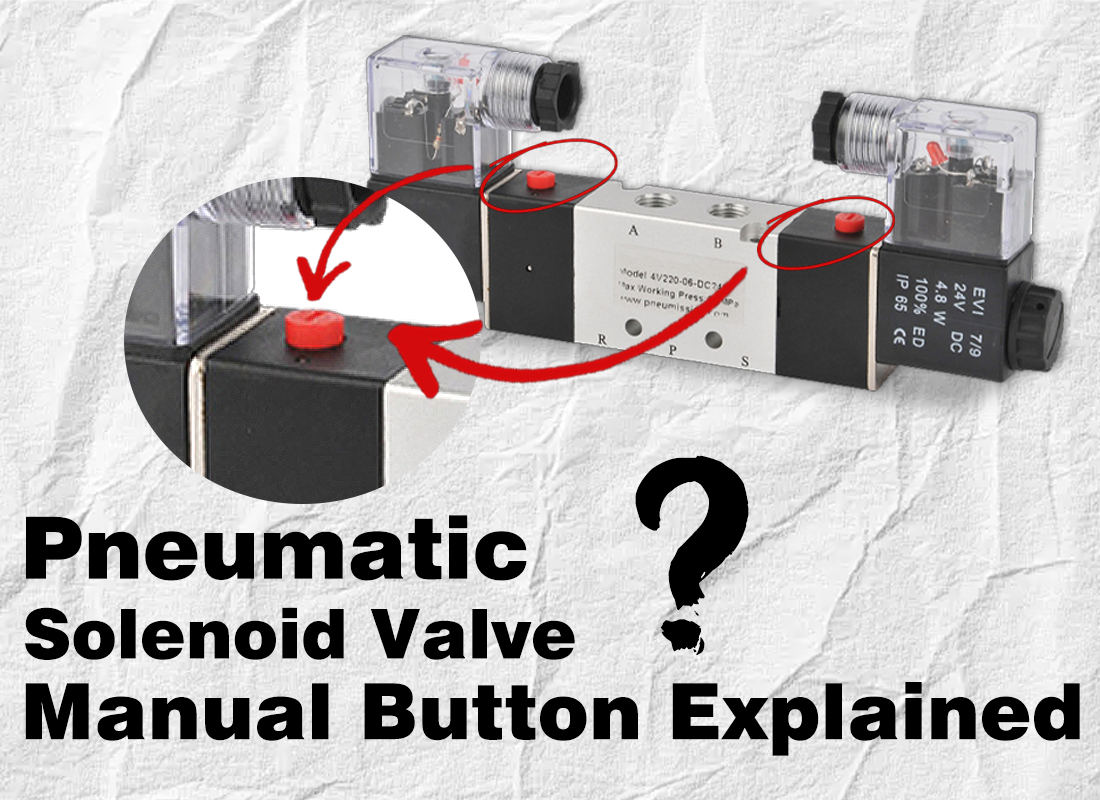
Pneumatic Solenoid Valve Manual Button Explained



Get a free sample

FOKCA ©1998-2025 All Rights Reserved Sitemap