- sales@fokca.com info@fokca.com
- WhatsApp: +86 150 5749 1870

Custom Cylinders & System Solutions Manufacturer | Est. 1998
Custom Cylinders & System Solutions Manufacturer | Est. 1998

Jan 28, 2026
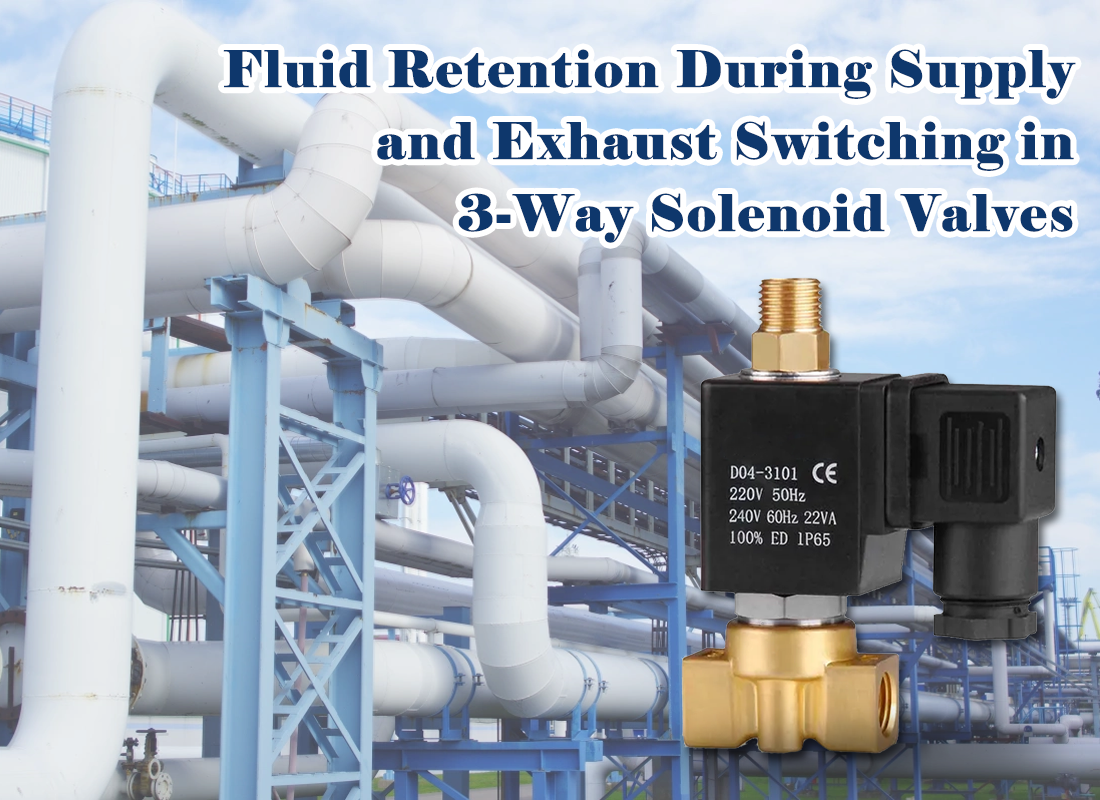
In pneumatic and fluid control systems, a 3-way solenoid valve is often selected for its ability to alternate between supply and exhaust within a compact structure. This switching capability makes it common in cylinder control, air actuators, and industrial automation solenoid valves. However, the same internal structure that enables flexible flow routing also introduces a subtle but critical issue: temporary fluid retention during switching.
Unlike a simple on–off valve, a 3/2 way solenoid valve must briefly isolate ports during transition. This momentary isolation creates a closed internal volume where fluid or compressed air can be trapped, even if only for milliseconds. In high-speed or repetitive applications, that trapped medium begins to influence the next cycle.
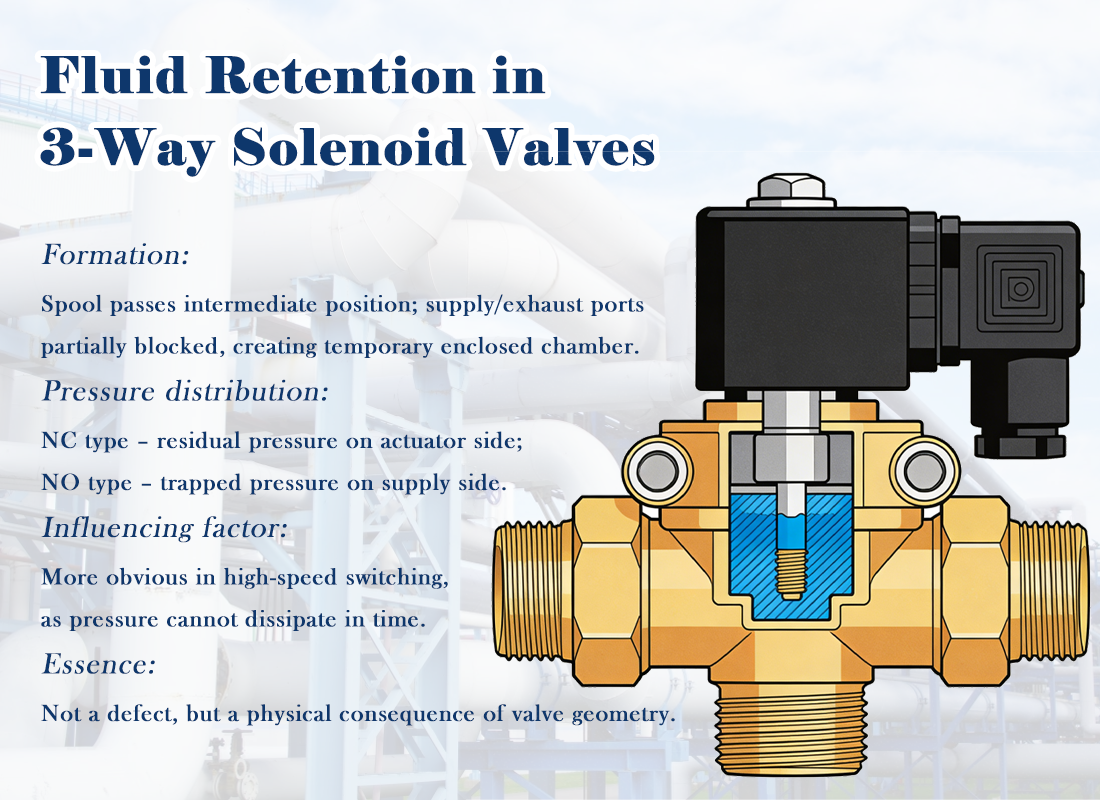
Whether it is a 3 way pneumatic solenoid valve or a compact 3 way solenoid valve mounted on a manifold, the internal spool or poppet must move through an intermediate position. During this movement, the supply port and exhaust port are both partially blocked. The result is a short-lived enclosed chamber.
In a 3 way normally closed solenoid valve, residual pressure often remains on the actuator side after exhaust. In a 3 way normally open solenoid valve, trapped pressure may appear on the supply side instead. The phenomenon is more noticeable in high speed 3 way solenoid valve switching, where the valve cycles faster than the trapped pressure can dissipate naturally.
This behavior is not a defect; it is a physical consequence of directional valve geometry.
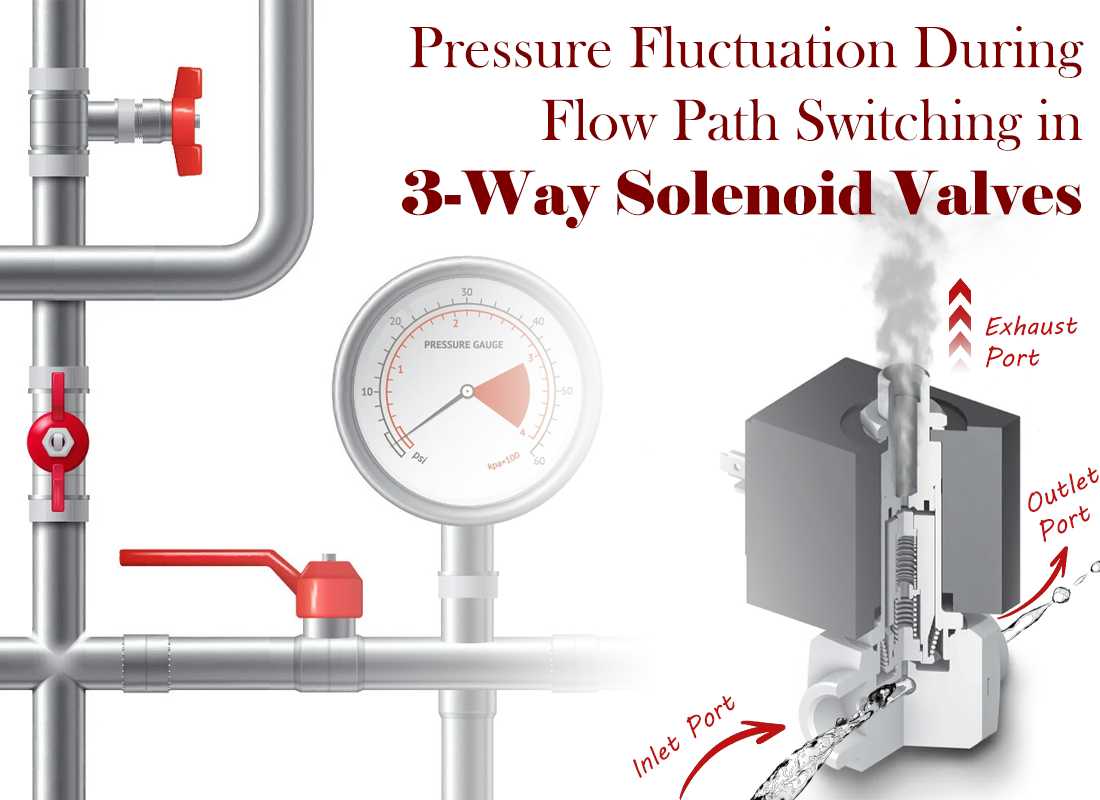
Residual pressure affects more than just pressure readings. In practical systems, it alters valve response and actuator behavior. Engineers often observe delayed exhaust, inconsistent cylinder return speed, or incomplete stroke during the next cycle.
For a 3 way valve for pneumatic cylinder, retained air can act like a spring, resisting the initial motion when the valve reopens. In pilot-operated vs direct acting 3 way valve designs, pilot-operated models are generally more sensitive because pilot pressure relies on clean pressure decay.
In pressurized liquid systems, retained fluid can cause pressure spikes when flow resumes, especially in 3 way valve for pressurized systems where compressibility is low.
The choice between a 3 way direct acting solenoid valve and a 3 way pilot operated solenoid valve directly influences how retention behaves.
| Valve Type | Sensitivity to Residual Pressure | Typical Application |
|---|---|---|
| Direct Acting 3-Way Valve | Low | Small flow, fast response |
| Pilot Operated 3-Way Valve | Medium to High | Larger flow, lower coil power |
Direct-acting designs physically move the sealing element, allowing trapped media to dissipate faster. Pilot-operated designs depend on pressure differentials, making them more sensitive to incomplete exhaust.
An often-overlooked factor is the exhaust port valve 3 way configuration. Small exhaust passages or shared exhaust channels in modular manifold solenoid valves slow down pressure release. This is especially relevant in pneumatic directional control valve assemblies used in automation lines.
Adding silencers, tubing, or long exhaust paths increases the chance that residual air remains inside the valve body between cycles.
In industrial fluid control solenoid valve selection, fluid retention should be considered when:
◆ Cycle frequency is high
◆ Actuator positioning accuracy is critical
◆ System pressure is unstable
◆ Compact 3/2 pneumatic solenoid valve designs are used
For automation control solenoid valve systems, engineers often mitigate retention by slightly extending exhaust time in the control logic or selecting valves with optimized internal venting.
Understanding fluid retention is not about avoiding 3-way valves—it is about applying them with realistic expectations and informed design margins.
(FK9025)
You May Interest In



Get a free sample

FOKCA ©1998-2025 All Rights Reserved Sitemap